Cloud Ops Engineer
Keeps your cloud environment healthy.
Reports to
 Maya Chen, VP Cloud Infrastructure
Workspace
Cloud Ops (IT)
Budget
$200/mo
Skills
Alert correlation
Cost optimizing
+4
Works in





The AI Coworker that correlates alerts, chases cost anomalies, and runs compliance checks across your cloud infrastructure so your engineers can focus on the roadmap.
Keeps your cloud environment healthy.
Reports to
Maya Chen, VP Cloud InfrastructureWorkspace
Budget
Skills
Works in






Full CLI and API
access across every
service

Compute, storage, cost, and identity in one pass

Cluster health before your platform team wakes up

Cross-check alert metrics against the source

Escalate only what the evidence supports

Quantify the savings, not just the flag
Think of the Cloud Ops Engineer as the engineer who takes the first look at everything, works out what’s wrong, and acts on it within the access given.
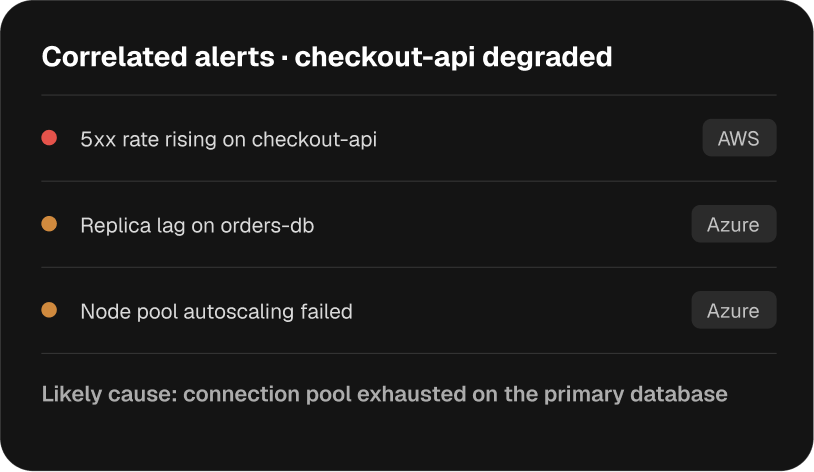


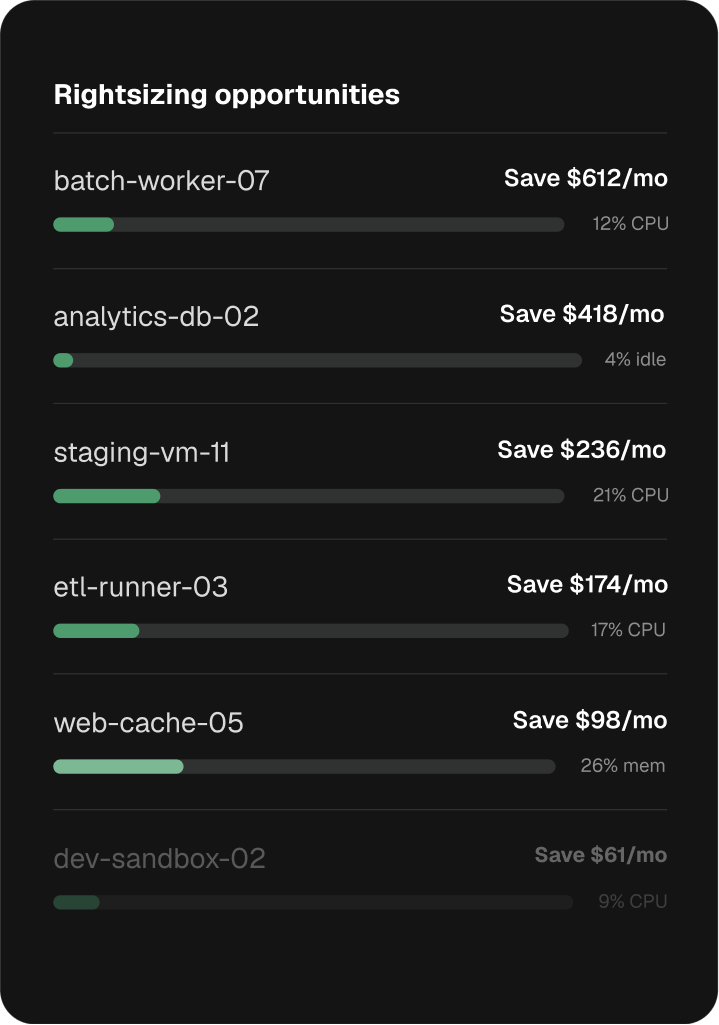
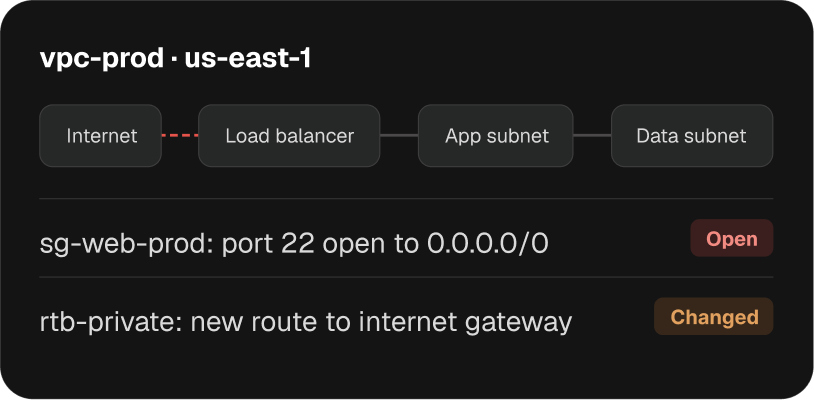

The Cloud Ops Engineer reads the signals, works out the best approach, and follows through within its operating principles.
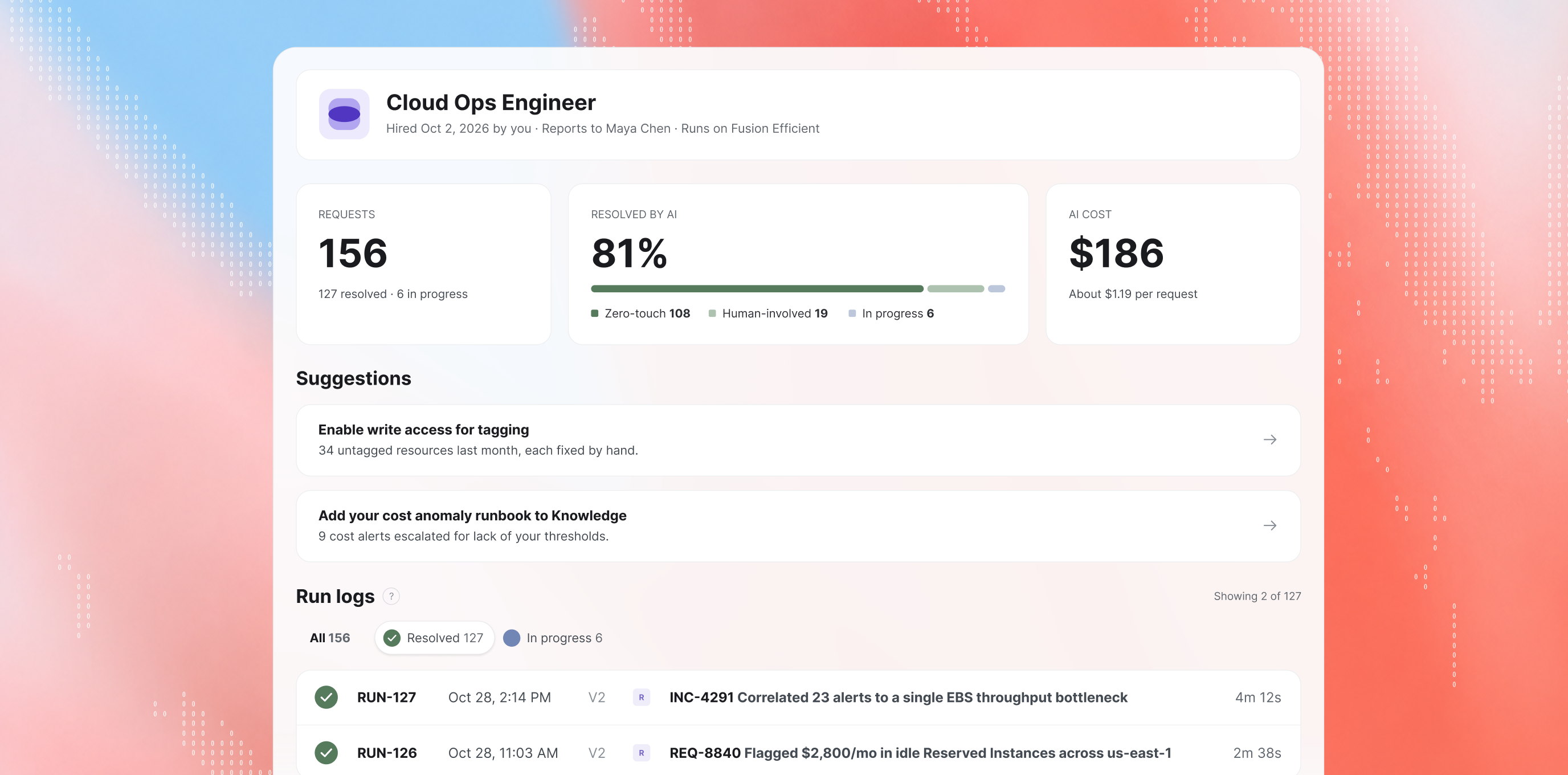
Every cloud environment has its own problems. See how the Cloud Ops Engineer pulls the signals, finds the root cause and routes the fix.



Reporting manager
All escalations route through them. Adjust scope and permissions anytime.
Budget controls
Monthly spend cap with full cost-per-investigation visibility. Every dollar accounted for.
Audit trail
Every action logged with full context. See what it checked, found, and skipped.
Drift detection
Flags when behavior drifts from your rules. Patterns surface before they become problems.
When a problem goes beyond the cloud, the Cloud Ops Engineer passes it to the right specialist.




A certified AI Cloud Ops Engineer is an AI Coworker trained and tested to investigate cloud infrastructure across AWS and Azure. It correlates alerts, identifies root causes, detects cost anomalies, checks compliance, and verifies backups. It validates findings across connected systems and recommends next steps, while your team approves every infrastructure change.
The Cloud Ops Engineer supports AWS and Microsoft Azure, with integrations for Kubernetes, Datadog, PagerDuty, and AWS Trusted Advisor. It detects which cloud environments are connected and automatically follows the appropriate investigation playbook. Teams running both AWS and Azure can investigate issues across their hybrid cloud infrastructure.
No. It operates read-only by default. It will diagnose, recommend, and surface what needs to change, but any mutation (terminating an instance, changing a security group, applying a patch) goes through your approval workflow first.
Yes. It analyzes cloud spending and resource utilization to detect cost anomalies, identify idle or overprovisioned resources, and quantify potential savings. It investigates the root cause and routes recommended actions for approval.
The Cloud Ops Engineer monitors Kubernetes-related infrastructure across Amazon EKS, Azure AKS, and ECS. It checks cluster health, node pool status, and add-on versions to identify potential infrastructure issues. Its visibility focuses on the control plane rather than individual pod-level or deployment-level workloads. Issues requiring deeper application or workload investigation are routed to your platform engineering team.
The Cloud Ops Engineer reports to a manager you name, who receives its escalations and can adjust its scope and permissions. It works within a monthly spend cap, and every action is logged with what it checked, found and skipped.