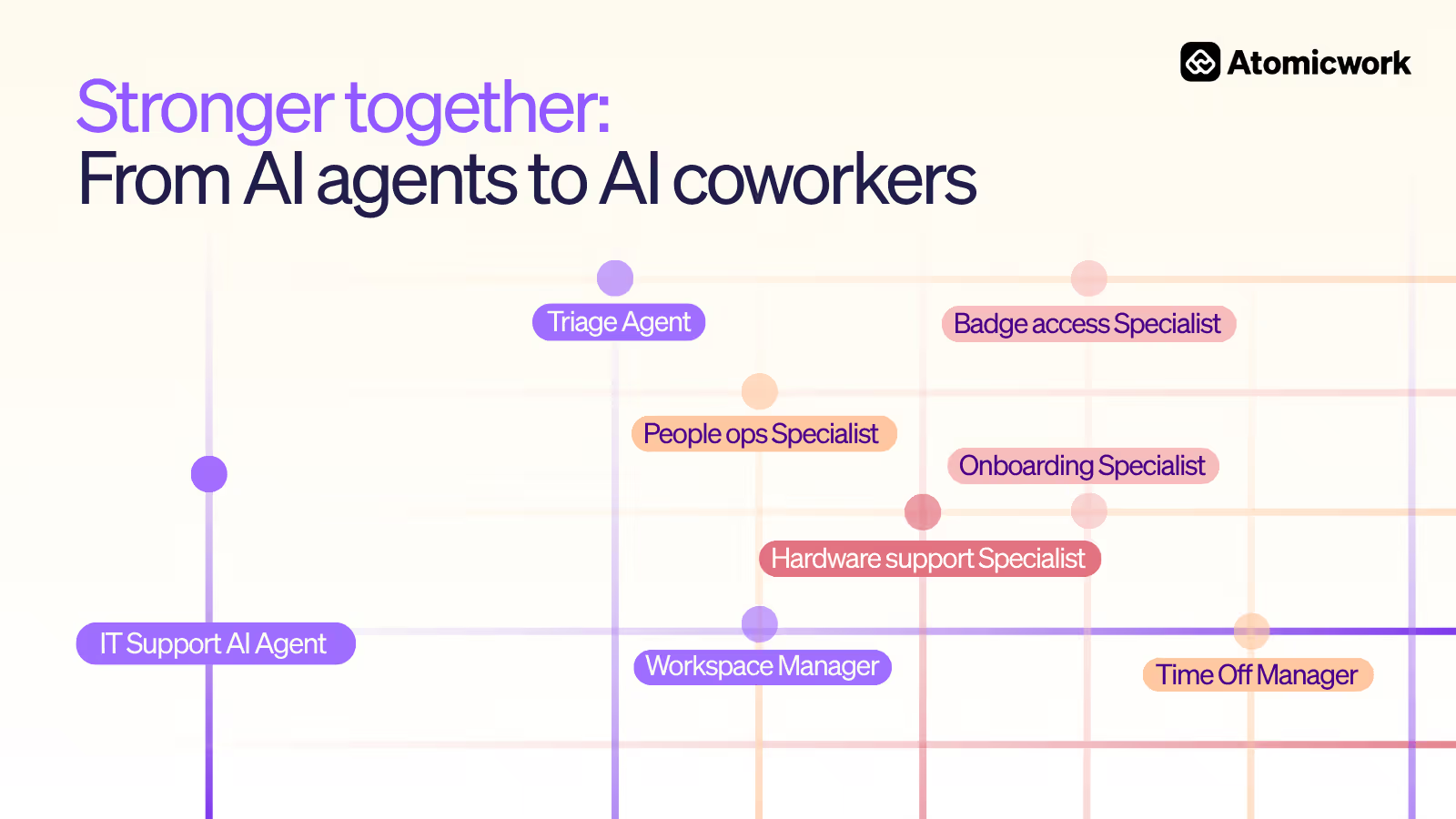
FUSION'26 Recap: Where technology leaders rewrote the playbook for the AI workforce

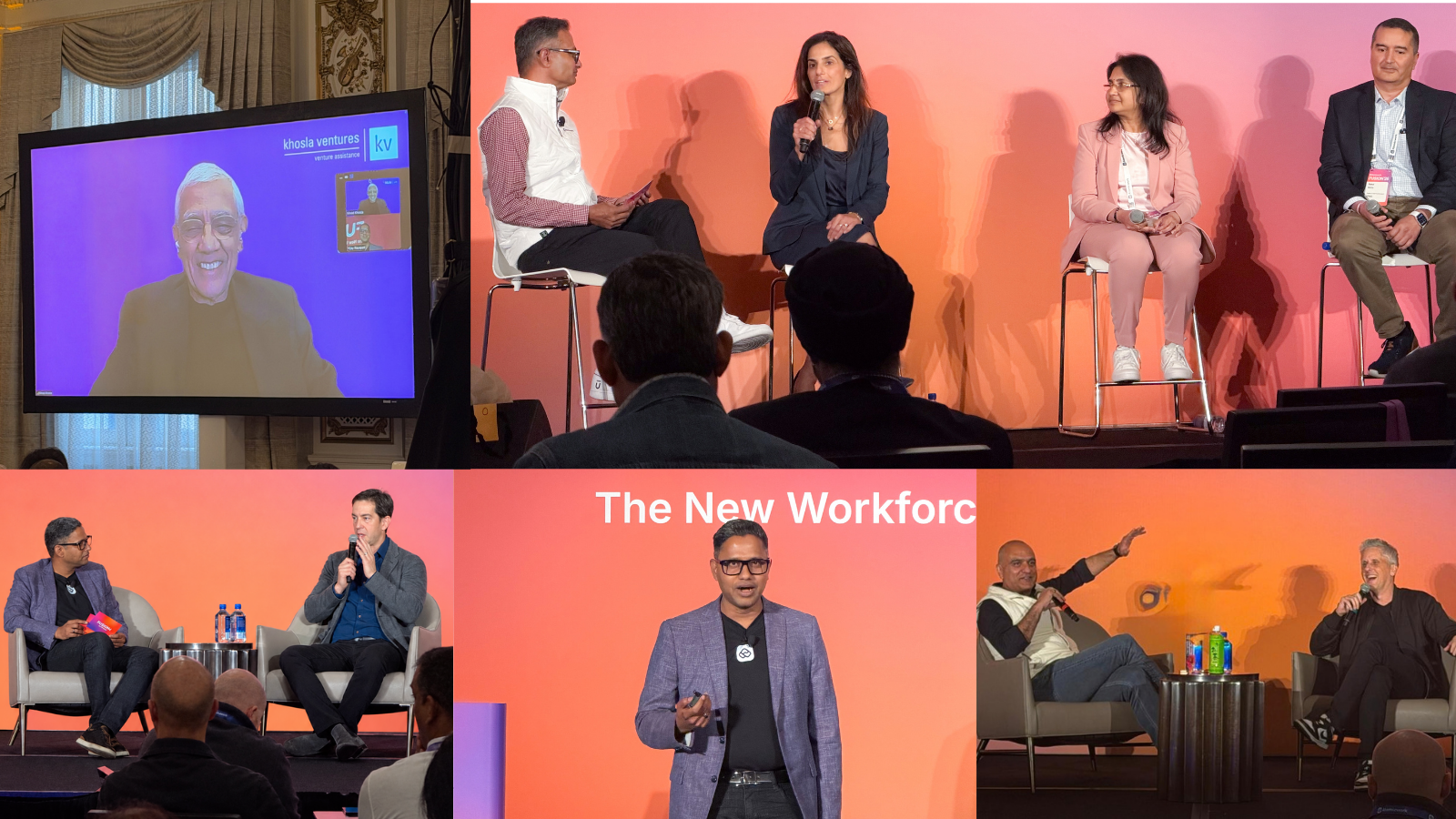
The floor of the Gold Ballroom in the historic Palace Hotel in San Francisco was buzzing with just one topic: how fast the industry was moving with AI Coworkers, and how much there was to learn about how to deploy and govern the hybrid workforce to accelerate the business without compromising on security.
“I kept coming back to the basics. Clear ownership. Trusted data. Strong identity and access controls. Workflows that reflect how people actually work. Governance that is built into the operating model.”
— Chris Asing, VP of Business Technology, Data Engineering & AI Transformation at Ironclad
Here’s what the day actually looked like, and the moments that stuck with us.
The new operating model
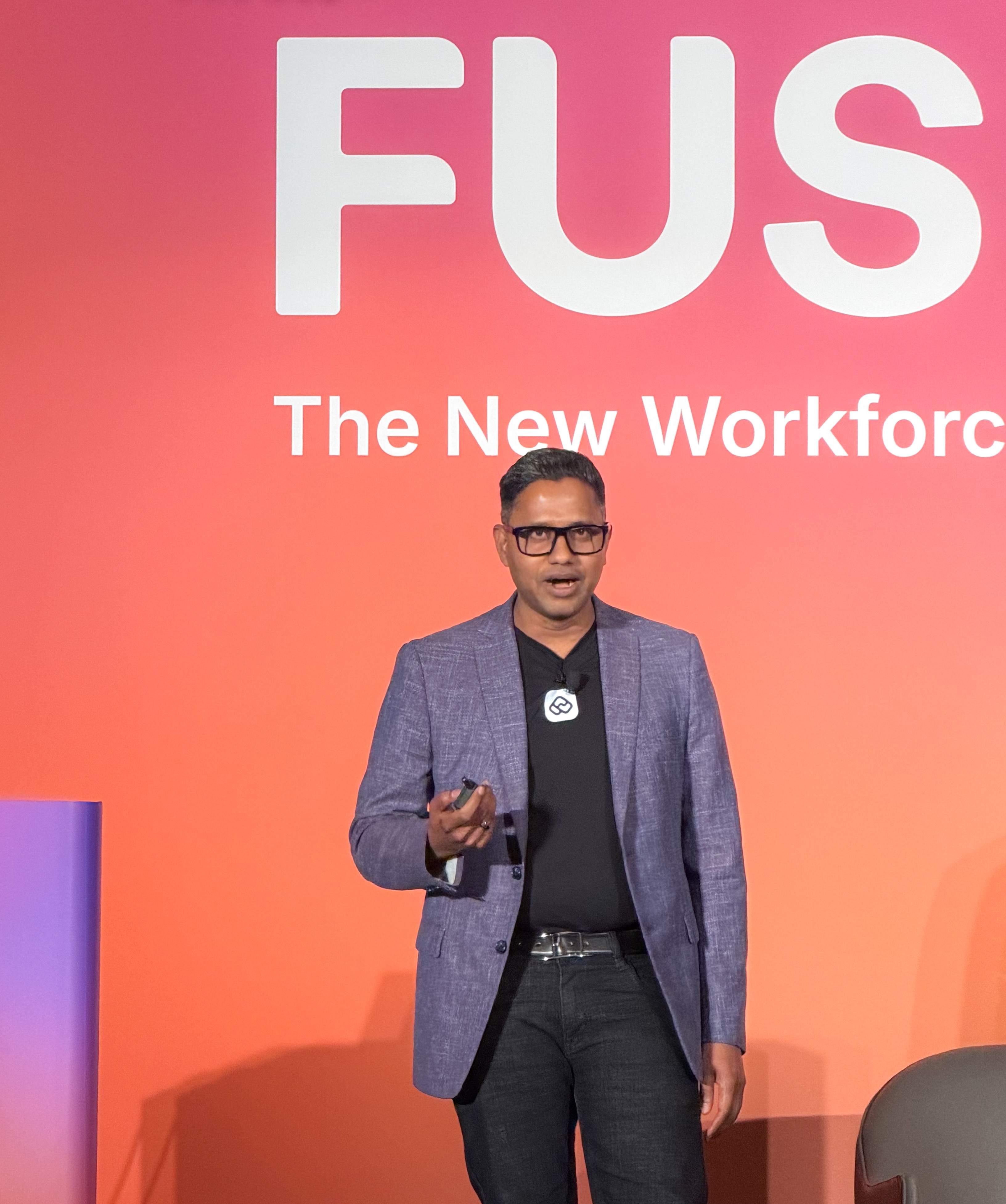
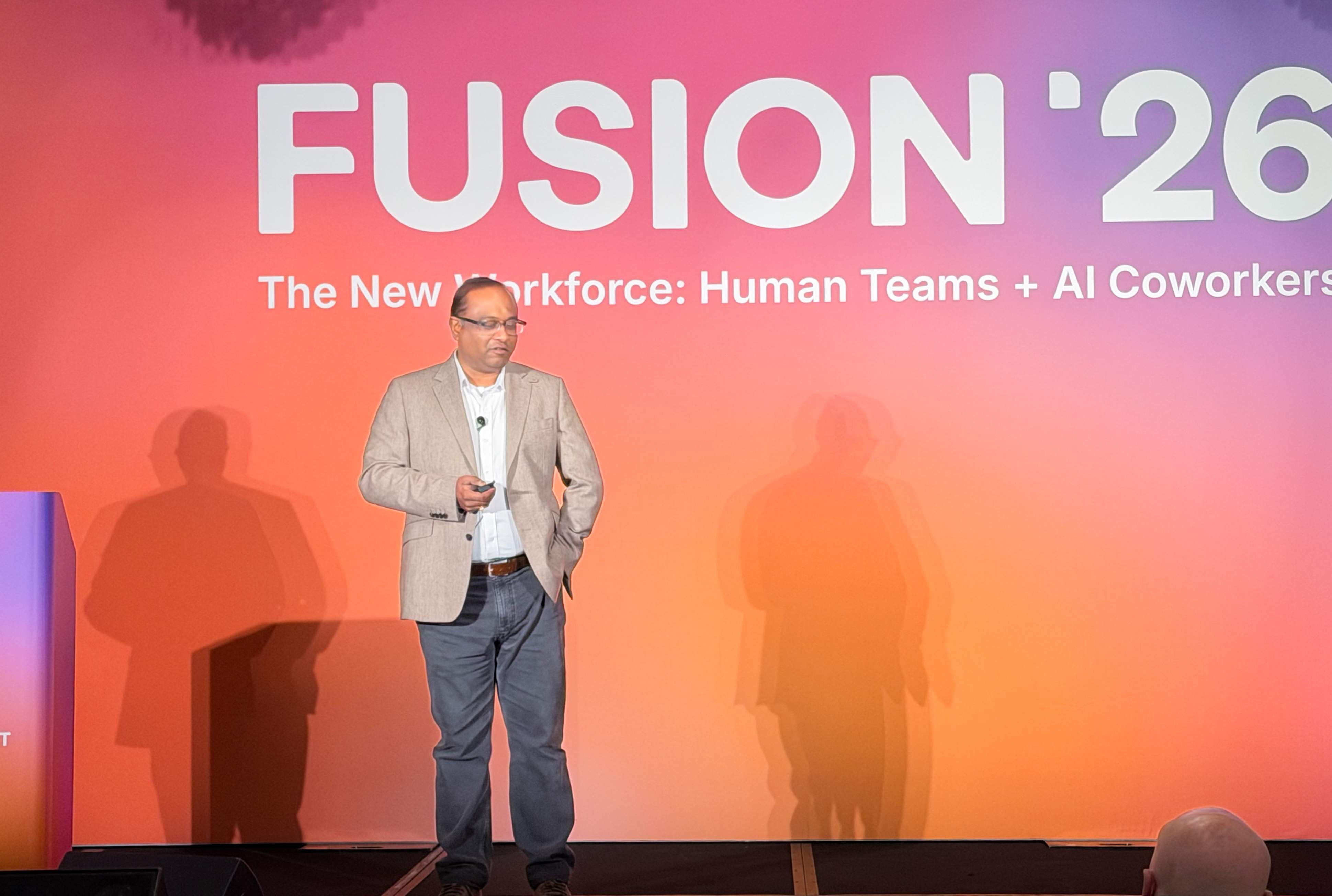
In his keynote, Vijay Rayapati traced AI’s progression through five stages — from simple chat to a full enterprise AI workforce — and pointed to a widening gap behind it: technology moving exponentially, organizations adopting logarithmically. Most enterprises, he noted, are still stuck at individual or team-level pilots, which is exactly why they haven’t seen ROI.
“We believed the moment AI could actually do the work, the queue itself would stop being the problem,” he said of the shift already underway in customer support, developer workflows, and IT operations alike.
Vijay Rayapati’s framework — Identity, Intelligence, Infrastructure, Innovation, and Impact — echoed a theme running through the week, days after Okta CEO Todd McKinnon introduced his own blueprint for the secure agentic enterprise at Oktane. Where McKinnon’s answer was visibility and control, Rayapati’s was a workforce an enterprise can actually hire into a role — “with a manager and a performance bar, same as anyone else on that chart.”
Identity in the age of AI coworkers: Todd McKinnon on being late without being wrong
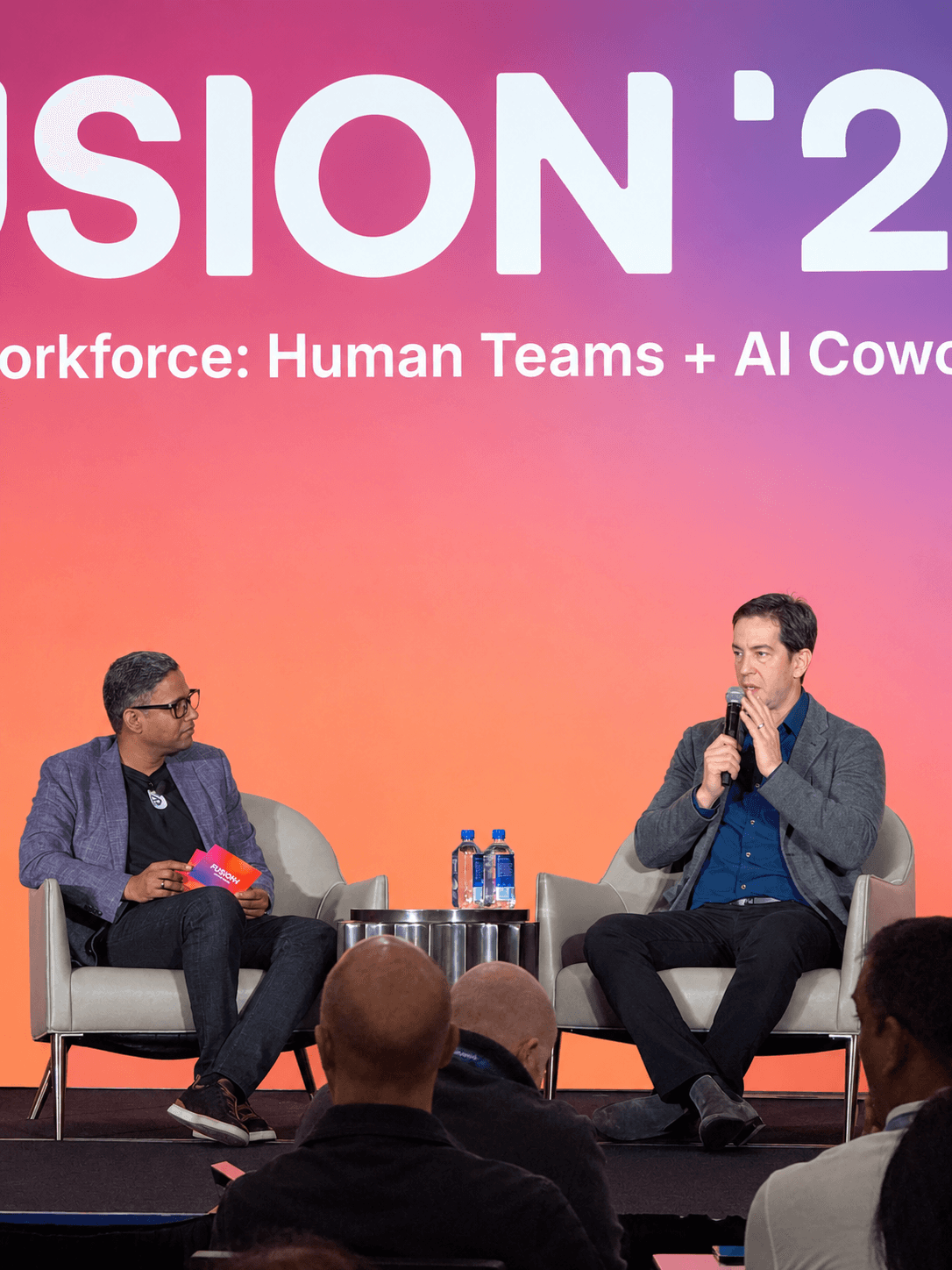
This was the session where the stakes shifted the most. Todd runs identity for a living, which means he’s spent two decades thinking about “who’s allowed to do what,” and now he’s watching that question get applied to entities that don’t sleep, don’t quit, and don’t file an HR complaint. On stage, he didn’t let the room off the hook, but he didn’t scold it either. He gave everyone a way out that didn’t require pretending they weren’t behind:
“There’s still tremendous opportunity, because for the vast majority of people, it’s not their fault. The headlines are unsettling, the technology is unsettling. There’s tremendous opportunity for anyone who grasps this and takes the technology foundations out there and puts them to productive use.”
That line is worth reading twice. Once because it’s true, and once because it’s the kindest way anyone’s framed being late to something this big.
Book launch: Aysha Khan on clarity over capability
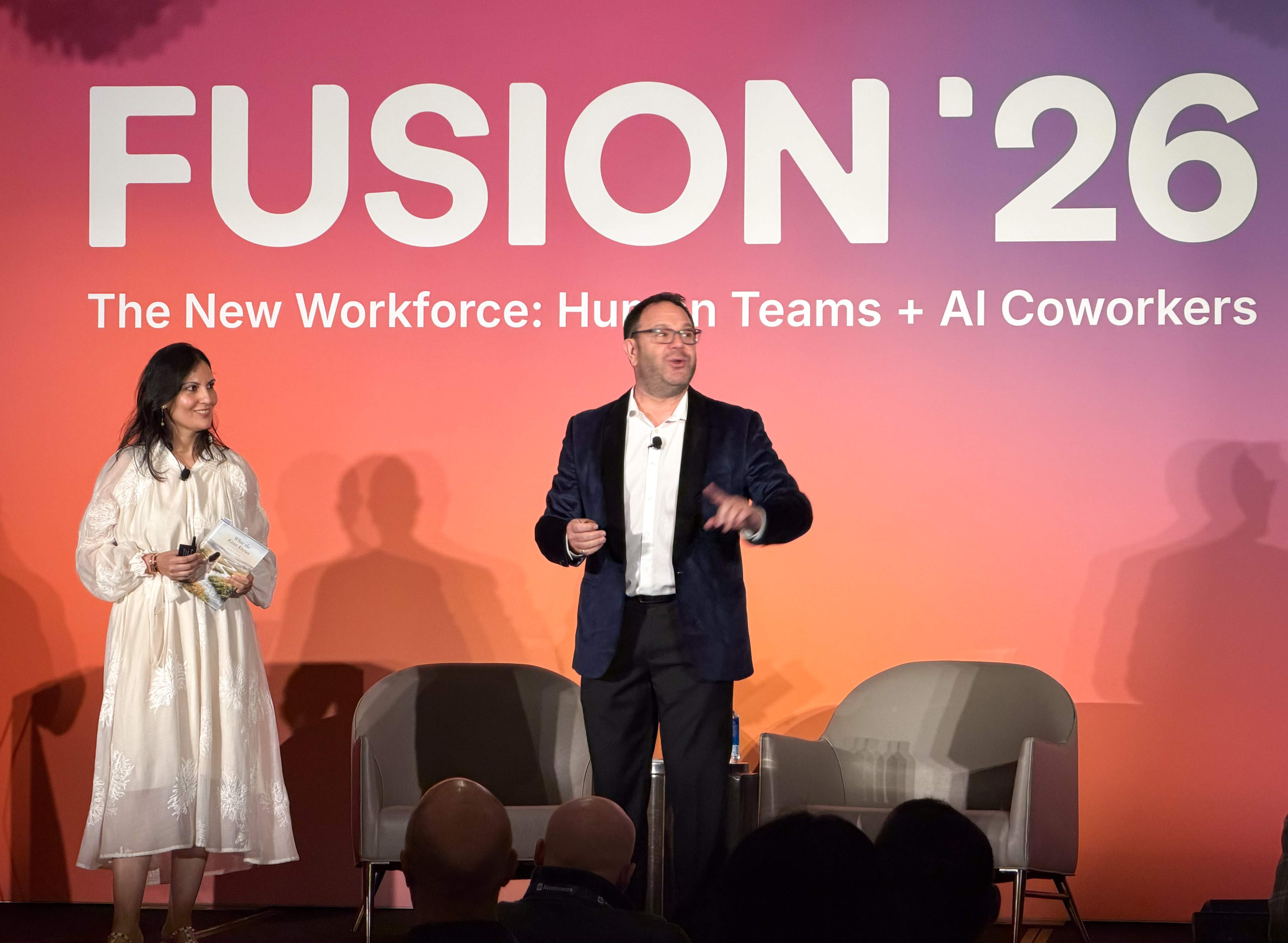
What the River Knows argues that most leaders weren’t missing capability, they were missing clarity, and Aysha built a watercolor, coffee-table version of that idea instead of another framework deck.
It landed as a breath in the middle of a very dense day, reminding the attendees that we are all water, and water always finds its way home.
Betting before the inflection point: Vinod Khosla on the bet that arrived early
A lot of founders will tell you they saw something coming.
Vinod is one of the few who actually placed the bet before the thing was obvious, because he placed it in 2018, with no guarantee the breakthrough would come in four years or fifteen. On stage, he was disarmingly honest about the part most people leave out:
“I was both right on the impact AI can have, and wrong in a good way: the timing happened much faster than I had planned.”
.jpg)
Building, governing and managing the AI Workforce
After Vinod Khosla’s fireside chat (which involved a debate about the Seahawks vs the 49ers), three panels got into the nitty-gritty of building, governing, and managing the AI Workforce.
Writing code is the easy part now. The word “coworker” gets earned somewhere past that, in whether an agent can act reliably in the real world, click through a browser, hold context across a long task, not just produce something that looks right in a demo. That was the line the Builders panel kept returning to, moderated by Kanu Gulati (Investor, Khosla Ventures) with Amol Jain (Head of Product Engineering at Replit), Manohar Paluri (former VP of AI at Meta), Paul Klein IV (CEO of Browserbase), and Nikola Mrkšić (CEO of PolyAI) as panelists.
Similarly, everyone is raring to deploy AI Coworkers but no one wants to sit with what happens to compliance, access, and audit trails once those coworkers are actually doing the work instead of assisting with it. It was the hottest topic on the floor as well, so the panel had a lot of lively discussion and received a lot of Q&A. The panel was moderated by Aparna Chugh (Head of Product at Atomicwork) with Anand Oswal (EVP of Palo Alto Networks), Steven Tamm (SVP, Okta), Swamy Kocherlakota (Chief AI Officer, Zscaler), and Archana Rao (CIO, Klaviyo).
.jpg)
The follow-up to this panel involved a conversation on innovation and implementation of the AI Workforce by the decision makers: Padmaja Dasari (Head of Enterprise Technology at OpenAI), Alvina Antar (CDO of F5), and Rahul Mehta (Partner, AI and Transformation, KPMG US). A good pilot and an actual transformation are separated by one question: what changes at the business level once agentic AI stops being a proof of concept. The throughline here matched everything else about the day: the technology was rarely the hard part. The operating model around it was.
.jpg)
Karthik Chakkrapani, CIO and Head of Enterprise AI at Coursera + Udemy, closed the panel portion of the day with the most operational session on the agenda: the day-to-day reality of running a workforce where people and AI coworkers share accountability. Less theory, and a dose of practical advice as well as a good view of the unglamorous plumbing that makes the rest of the day’s ideas actually work in practice.
The economics of the human + AI workforce
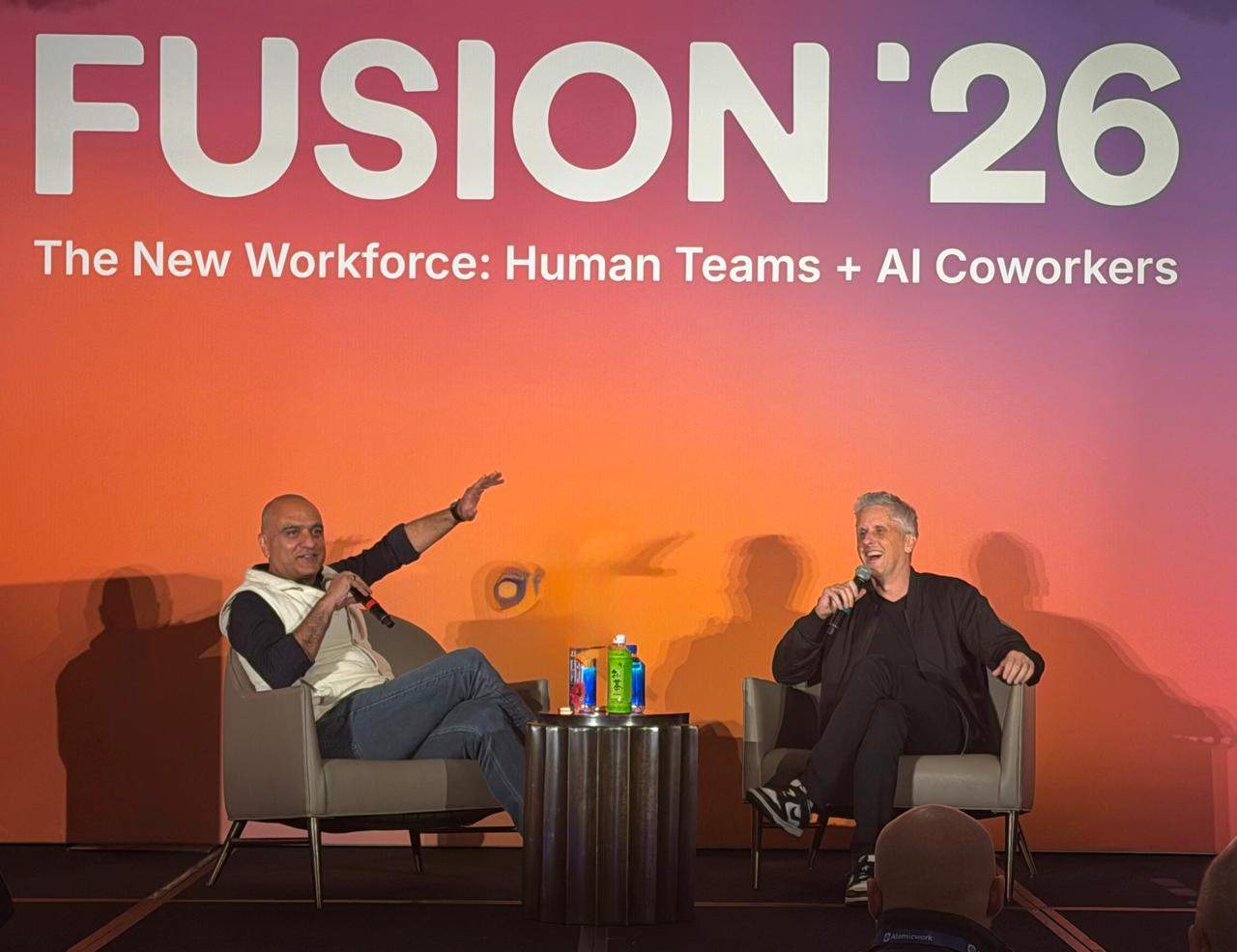
The day ended with the question sitting under every other session: what does this actually cost, and how does that math compare to the headcount model it’s replacing? Dheeraj Pandey (CEO and Cofounder of DevRev) and Aaron Levie (CEO and Cofounder of Box) didn’t resolve it neatly, which felt honest. Both leaders have strong personalities and points of view, so there was a healthy debate and lively Q&A at the end of their session.
After hours
Atomic cocktails, the Pied Piper, and a table stacked with signed copies of What the River Knows for everyone who’d missed the reveal earlier.
Stay tuned for more Fusion coverage as we dig into each pillar — the new cross-app access partnership with Okta, Atomicwork’s shift to outcome-based pricing, and what Khosla Ventures’ Vinod Khosla had to say about betting before the consensus arrives.


.avif)