From one IT win to an org-wide AI strategy: Insights from Zuora

Every IT team has that one ticket category they'd love to make disappear. For Zuora, it was password resets with 200 to 300 of them per quarter, making up 30 to 40% of all L1 requests. But the real problem was what the volume represented: a support model that wasn't built for a global, always-on workforce.
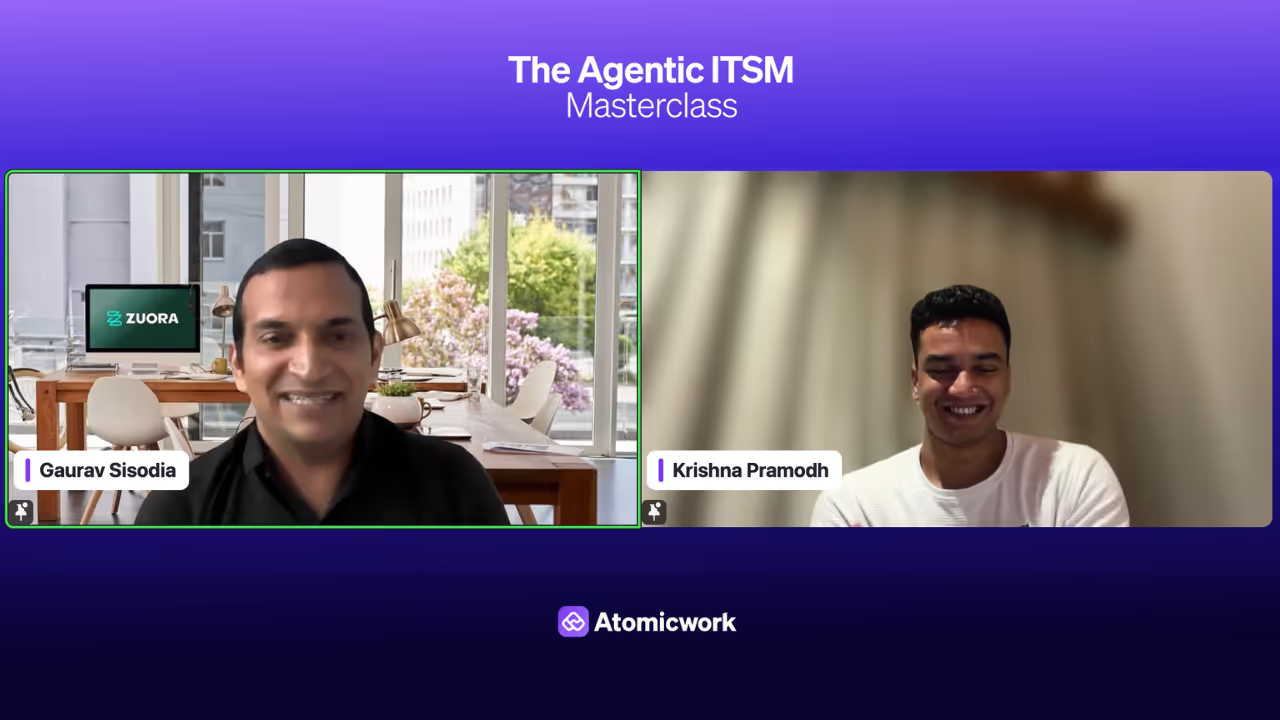
I co-hosted Session 4 of the Agentic ITSM Masterclass with Gaurav Sisodia from Zuora's Enterprise AI team, and the story he shared is one of the most complete before-and-after transformations I've seen in how an entire organization thinks about employee support.
Identifying the system that wasn’t working for anyone
Zuora powers the subscription economy for over 1,000 companies, including Zoom, General Motors, and New York Times, with 1,400+ employees spread across China, India, the US, Australia, and the UK. Their IT support team of 30+ engineers operates across multiple time zones.
On the surface, the challenges were familiar: password resets, employees not knowing where to find information, tickets getting routed to the wrong agents. But the deeper issue was structural. When a ticket landed with an engineer at the tail end of their shift, it could sit untouched for 12 hours. Resolution times stretched to 5 to 10 days. Employees, unable to get timely help, did what everyone does: they found a friend on the support team and sent them a Slack message.
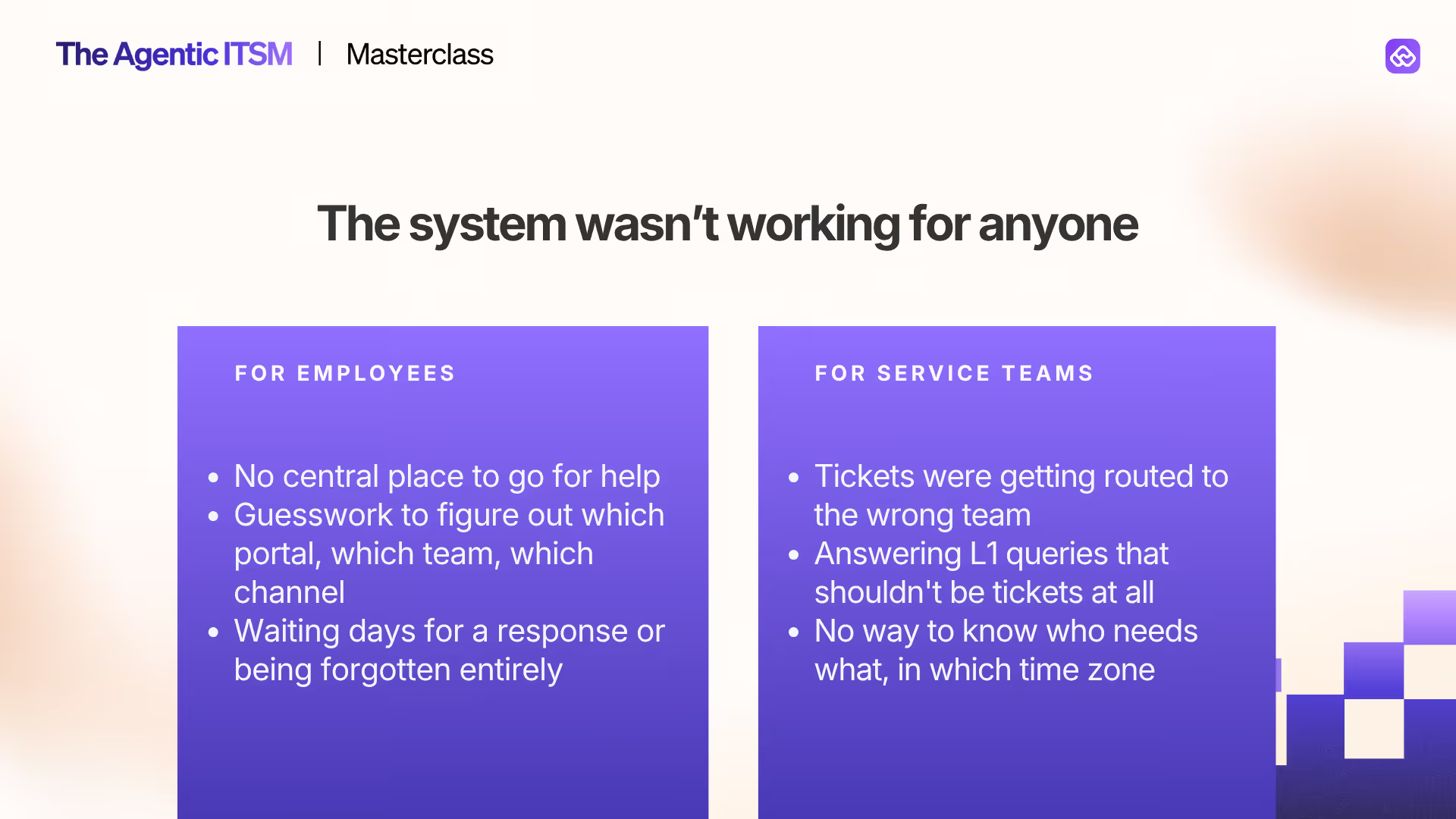
The information existed. The processes existed. But there was no centralized place for employees to go, and no intelligent layer to make sure requests reached the right person at the right time.
Zuora's transformation with the agentic experience
Gaurav walked through the results after a year of running their agentic AI experience, and they're striking:
- IT channel messages dropped by 80%.
- Password reset tickets went from 200–300 per quarter to zero with employees now sending a single prompt to Zoe, Zuora's Slack-based AI assistant that handles the reset.
- Mean time to resolution fell from 5–10 days to under 24 hours and case volume is down over 10%.
- 400 to 500 unique employees use the system weekly.
Gaurav mentioned they haven't received a single rating below four stars. In a company of 1,400 people, that's fundamentally a different employee experience.
If you're interested to see the detailed mechanics behind these numbers, you should read their entire success story here.
How they got org buy-In for AI(without forcing it)
This is the part of the conversation I always find most valuable on customer conversations, because the technology is only half the equation. Getting people to actually use it is where most implementations stall.
Zuora's approach was refreshingly simple: don't tell employees to use AI but empower them with the skills to use it themselves. They ran AI training sessions, asked employees to identify their own repetitive tasks, and let people see the value firsthand. Once someone saved 30 minutes on a task they used to spend hours on, curiosity did the rest. It became a train-the-trainer culture.
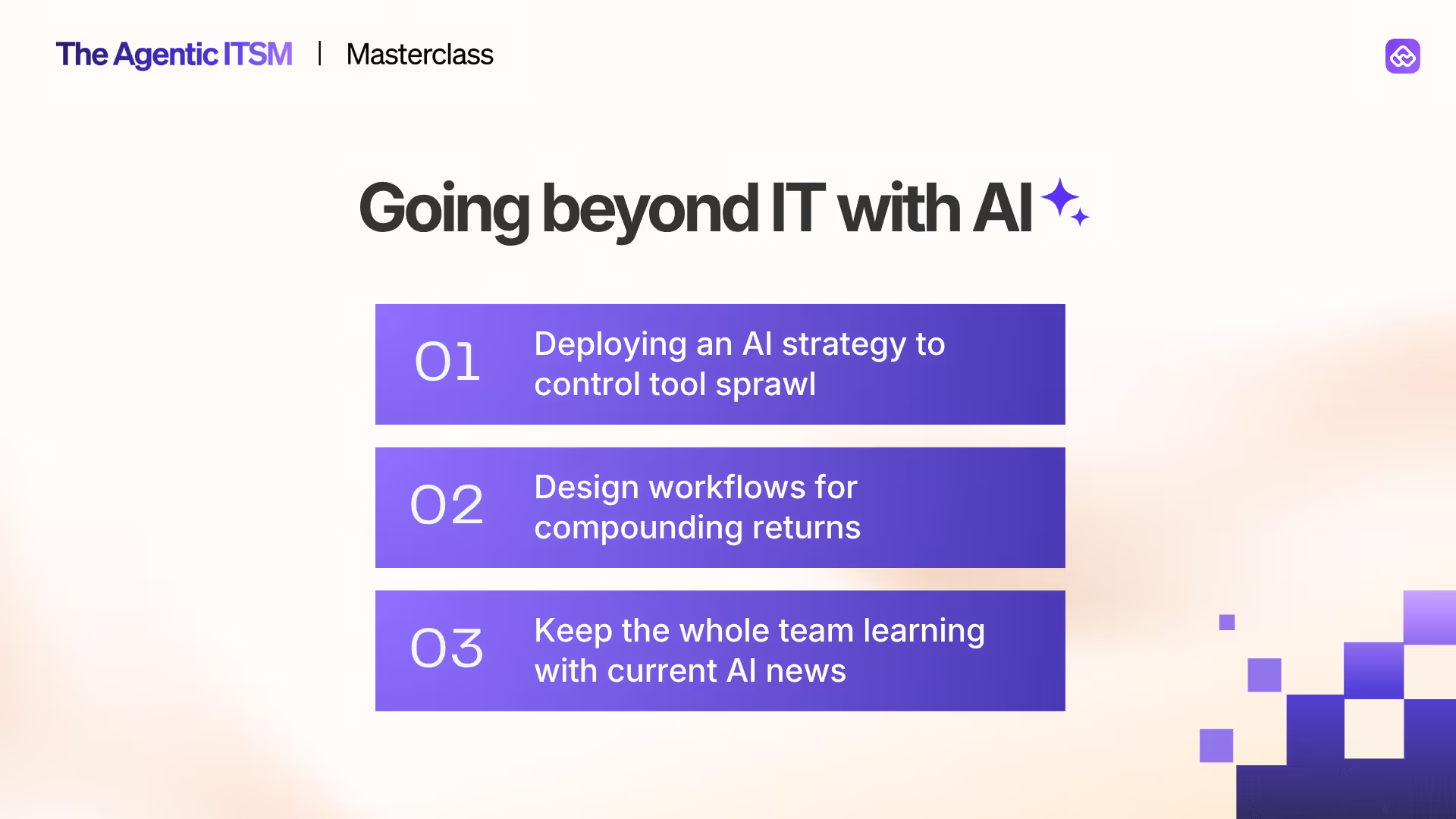
Gaurav also built two Slack channels that I thought were clever. #AIDailyDose delivers the top 10 industry news items every morning at 7 AM. AI Daily News shares one technical AI concept per day, pulled from Wikipedia and other sources. No extra apps, no separate portals but just information showing up where people already are. It's a small thing, but it keeps the whole organization engaged with what's possible.
And here's what happened next: HR and Finance came to them. After seeing what the IT team had achieved, other departments asked to get onboarded. Zuora evaluated thousands of HR emails and found that 100+ per cycle were purely informational with employees asking for things like verification letters or pay check access that could be handled through self-service. Today, five to six departments run on the same centralized experience through Zoe.
The biggest mistake they made
Gaurav was candid about where they went wrong early on. They spent about a quarter and a half building an AI solution focused purely on self-service. It was a model that could answer questions but didn't address the broader employee experience. It didn't scale. It didn't solve the support engineer's problems. It was just another interface layered on top of existing tools.
The pivot was shifting from "give employees answers" to "give employees a complete front door."
One place to ask questions, raise tickets, get resolutions, and track progress. That reframe changed everything.
Knowledge IS the underlying engine
One theme Gaurav kept returning to: your AI is only as good as your knowledge base.
Case in point, when Zuora moved offices from Redwood City to Foster City, they had 30 to 40 articles referencing the old location with printer setups, EV charging, conference room layouts, food options. The team made sure every article was updated on day one at the new office.
That discipline helped keep deflection rates high and employee trust intact. If someone asks Zoe how to connect to a printer and gets outdated information, you've lost them.
Now is the time to make the agentic shift
If there's a signal that it's time to move to an agentic approach, Gaurav put it simply: look at your data. If 20% or more of your tickets are repetitive and informational, the opportunity is right there. The rest comes down to execution: centralize the experience, keep your knowledge current, empower your people with skills instead of mandates, and start with the problems your employees are already telling you about.
As I said during the session: agentic ITSM is really about giving IT the freedom to do the job they were hired to do.
P.S: This session is a part of the Agentic ITSM Masterclass, a virtual series where IT practitioners share how they're navigating AI in real environments. You can access all the session replays here→