Announcing the State of AI in IT 2026 report

Last year’s State of AI in IT report captured an industry still finding its footing with AI. This year, AI has significantly shifted from experimentation to activation. And as we go into 2026, things are moving towards demonstrating real value and business impact from AI investments.
We’ve collaborated with ITSM.tools for the 2026 edition of the State of AI in IT, and the signal is clear. Across industries, AI adoption has reached an all-time high with 98% of organizations now using AI or planning pilot projects.
You can read the full report here.
AI adoption is at its highest point yet
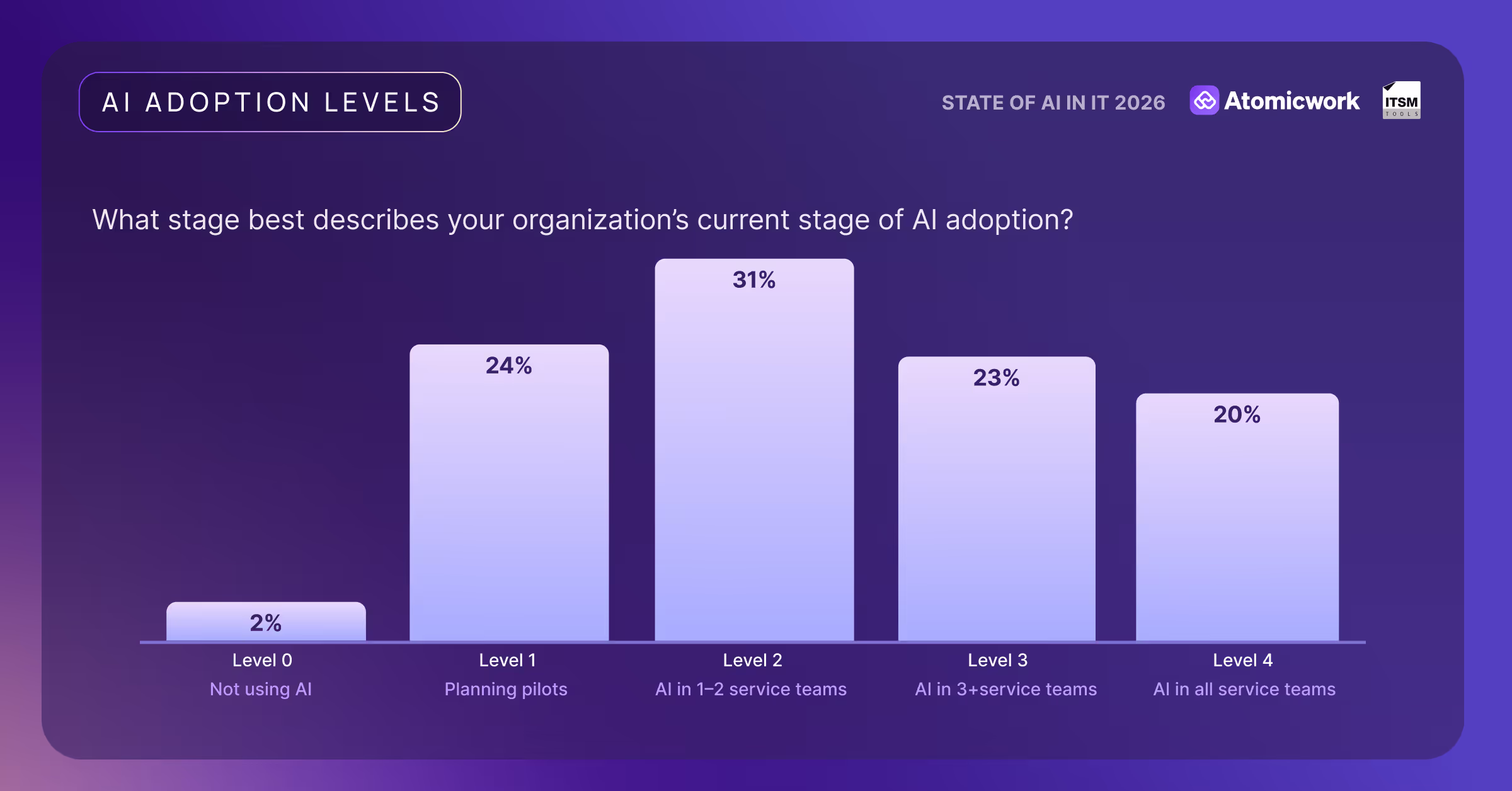
The AI adoption curve shows a shift in maturity across levels. Although the levels were defined differently, we saw a normal distribution like last time, with a majority of organizations stacked towards the advanced levels of AI maturity.
Three-quarters of the IT professionals we surveyed use AI in at least one service management function. One in five, or 20% of organizations, have fully embedded AI across all service management teams, like IT, HR, Finance, etc.
Organizations are realizing value, and trust grows as value grows
Return on AI investment is no longer nebulous. 82% of IT professionals say their organizations have realized value from their AI investments, and 67% describe their AI ROI as positive.
As we saw from last year, organizations that trust AI invest more and deploy a deliberate strategy. This results in positive ROI, which reinforces the trust, leading to a flywheel effect. Organizations that trust AI less make a smaller investment and end up seeing negative ROI. More of a downward spiral than a flywheel.
When we looked at where businesses anticipated the biggest benefits from AI, we noticed a shift from focusing on cost to employee/customer experience and productivity gains, implying alignment with business outcomes and impact.
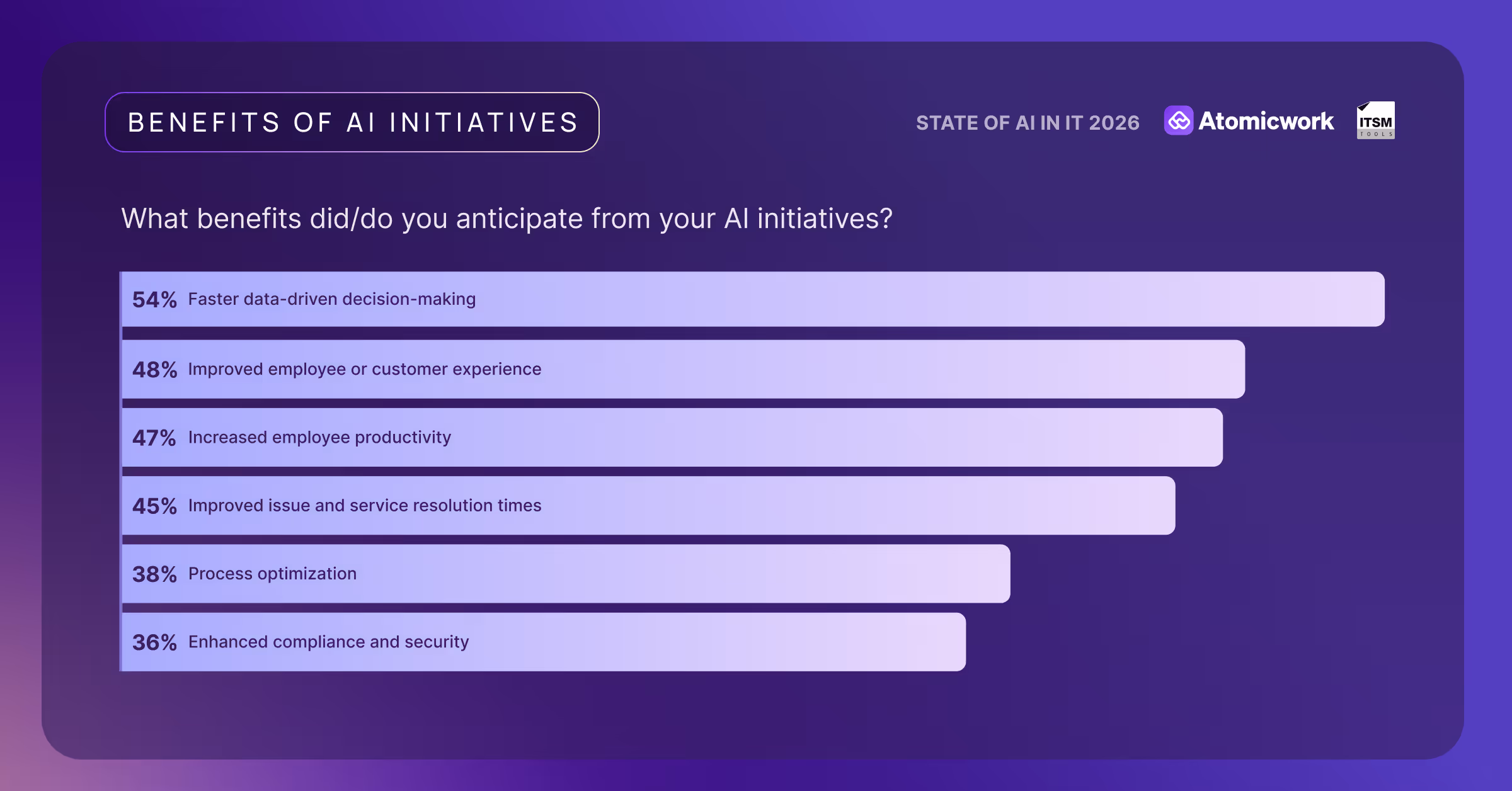
‘Process optimization’ dropped to 38% and ‘Reduced operational costs’ fell to 25%. Cost reduction is still a back-of-mind benefit, but not the primary narrative anymore.
AI in IT has certainly matured from an efficiency tool into an intelligence layer.
Three key correlations that define the 2026 AI landscape
When we dissected this year’s data, three relationships consistently surfaced. Together, they describe the new AI maturity curve.
1. AI maturity strongly correlates with ROI
Organizations further along the AI maturity curve were significantly more likely to report both tangible value and positive ROI outcomes. This reinforces what we saw in 2025: most negative ROI outcomes come from organizations underfunding AI or waiting too long to get started.
2. ROI strongly influences trust
This year, the correlation tightened. Trust in AI is highest in organizations that can measure impact, and lowest where AI investments have yet to pay off. This echoes last year’s finding that: AI trust leads to AI success, which in turn leads to more trust.
3. Where AI initiatives originate determines how much trust they create
A striking insight: IT leadership-initiated AI projects had the highest success rate and the highest trust lift. Conversely, AI initiatives originating within IT teams (bottom-up) were responsible for over half of all “reduced trust” responses, often because these initiatives lacked the cross-functional alignment required for wide adoption.
Diving deeper into what stopped organizations from fully embracing AI, we discovered the following barriers to adoption:
- Data privacy and security risks- 57%
- High implementation costs- 50%
- Inaccurate or biased outputs- 34%
A notable shift is that ‘Governance and compliance’, last year’s top barrier at 51%, has dropped out of the top three altogether. This could be because organizations are becoming more mature in terms of security, governance, and compliance when it comes to AI adoption.
The 2026 takeaway: AI in IT has crossed its inflection point
Three years of data now show a consistent trend, indicating the proliferation of AI in the enterprise:
The market has moved from asking “How can AI help IT?” to “How can IT maximize business impact by leveraging AI?”
The State of AI in IT 2026 report captures this exact moment of acceleration, a point where readiness, trust, and ROI are converging to reshape how businesses will operate, scale, and win in this new world.
Download the full report here.