Designing deflection paths that actually work: What we learned from TubeScience's journey

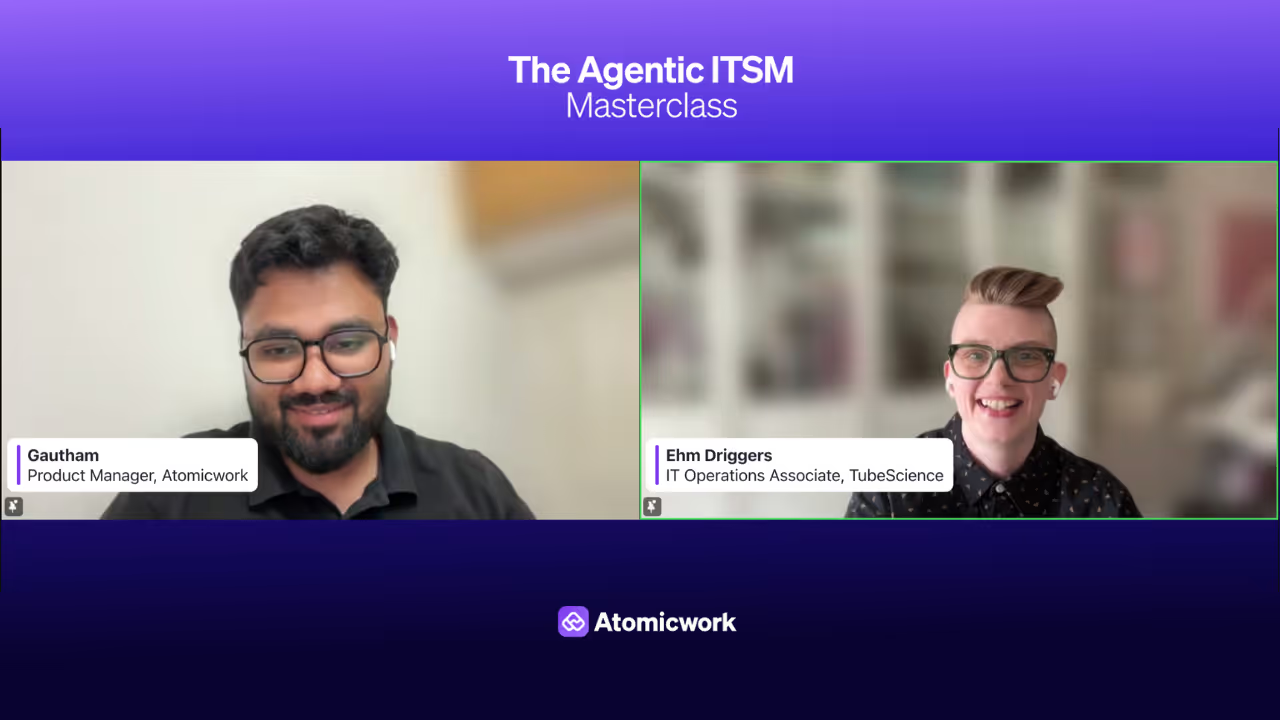
We kicked off the Agentic ITSM Masterclass with a question every IT team has definitely wrestled with: how do you stop being the bottleneck for requests that don't actually need you?
Ehm Driggers, IT Operations Associate at TubeScience, joined me for Session 1 to walk through exactly how their team designed deflection paths that now handle a significant chunk of their IT workload without sacrificing employee experience.
Here's what stood out.
The scale problem that forced a change
TubeScience is Meta's largest creative partner, managing $2 billion in annual ad spend for some of the world's biggest DTC brands. But their IT team? Three and a half people (contract employees) supporting 380 employees. That gap between company scale and IT headcount is exactly why deflection couldn't just be a nice-to-have but it had to work.
The reality they had to face: users ignored pre-fill forms and buttons in favor of free-text "write-in" tickets.
Slack became the primary channel for IT requests and skilled IT staff spent significant time on queries that didn't require their expertise. A good portion of their IT team's time went to routing tickets to Engineering, Data, or Facilities with no visibility into what happened after the handoff.
Decoding the 4 Ds of deflection
Ehm walked us through a framework they developed internally: the 4 Ds of Deflection: Demand, Discovery, Design, and Definition. It's a practical way to think about building deflection from the ground up.
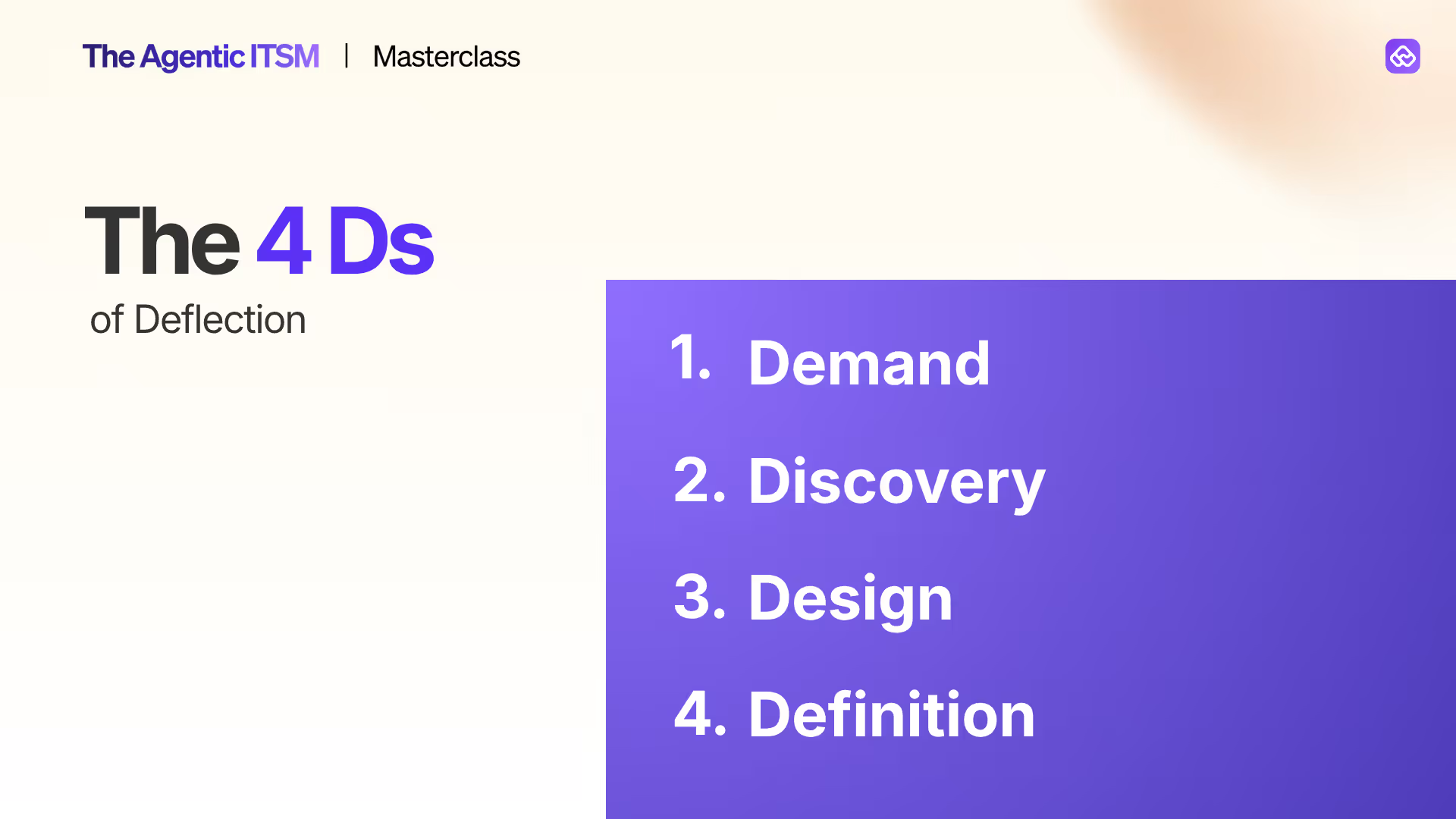
Demand starts with a hard truth: if it's not getting used, it's not really "simple." TubeScience had all the right intake mechanisms on paper, but employees bypassed them entirely. The demand patterns told the real story that people wanted to message someone on Slack, not navigate a service portal.
Discovery is about understanding what role IT actually plays. I really liked Ehm's analogy here. Ehm described IT departments as the "librarians" of their companies who are responsible for directing users to the correct tools and resources. The problem is that while IT teams may have the answers, providing them often means pulling resources away from work that genuinely requires an agent's specialized expertise.
This led to two questions that shaped their approach: Can we fix this with education? And where are our users actually communicating?
You can't evaluate a tool against a process you haven't documented.
This was one of the sharpest insights from the session. When TubeScience started evaluating vendors, they quickly realized something: they couldn't assess any tool without first documenting their own workflows.
That audit turned out to be one of the most valuable exercises they did. It forced the team to map out how requests actually moved through the organization and not how they were supposed to move.
What agentic AI made possible for better deflection
Once the processes were documented, TubeScience knew they needed three things from an AI-powered solution: a Slack-first product (because that's where their users already were), LLMs for intake (to understand free-text requests without forcing rigid forms), and the ability to leverage existing documentation for both deflection and routing.
The Design phase came down to two litmus tests for deciding what could be deflected.
First: does answering this require human judgment, or just human knowledge?
Second: if the same question came in 10 times, would the answer change? If the answer is consistent and knowledge-based, it's a deflection candidate.
In the Definition phase that defined routing, the questions were: is the right person being asked this question? And how can we get them there without IT playing middleman?
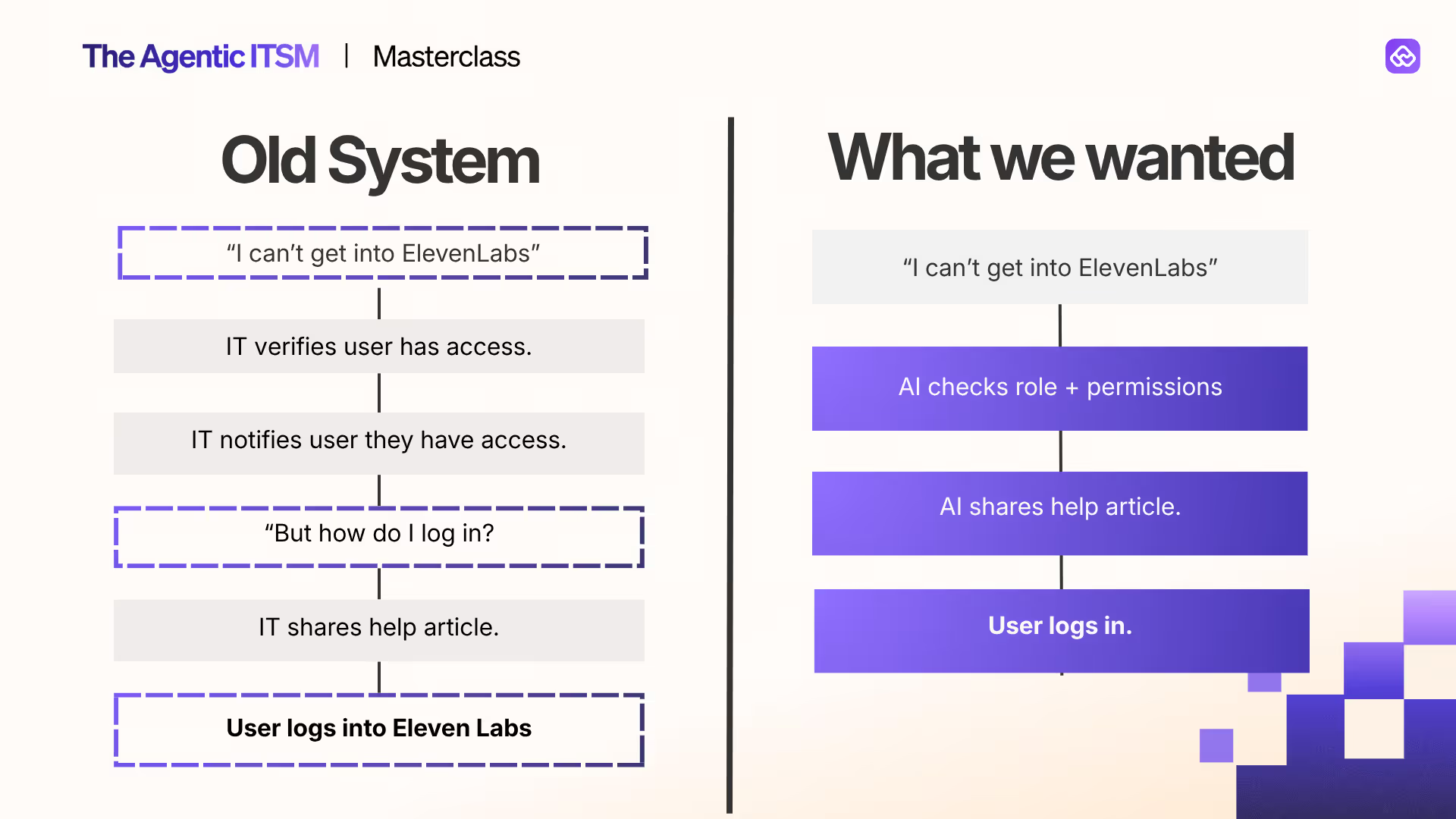
Ehm shared a before-and-after that made this tangible. In the old system, a user saying "I can't get into ElevenLabs" would trigger a back-and-forth where IT verified access, told the user they had access, then fielded the follow-up question about how to log in, and finally shared a help article.
In the new system, AI checks the user's role and permissions, surfaces the relevant help article, and the user logs in with no IT involvement needed.
The same pattern applied to routing. A request like "I can't see the Data Dashboard" used to bounce from IT to the user and then to the Data team. Now, AI recognizes the request belongs to the Data team and forwards it directly.
They were soon able to see 34.5% deflection across workspaces, 4 teams now running on Atomicwork, and 25% of requests auto-routed without any IT intervention.
The real secret sauce, as Ehm underscored, is documentation. Without well-maintained, accurate documentation, AI-powered deflection simply doesn't work. The AI is only as good as the knowledge base it draws from.
Where are you at your deflection journey?
If there's a shortlist from this session, it's this: stop being librarians. Your team's expertise should go toward problems that actually need it. Be where your users are to meet employees in the tools they already use. Figure out routing. Not everything that reaches IT belongs with IT. And above all: document, document, document.
That's what Session 1 was all about. Deflection isn't a feature you toggle on but a path you design, starting with how work actually flows through your organization today.
P.S: The Agentic ITSM Masterclass is a virtual series where IT practitioners share how they're putting AI to work in real environments. You can access all the sessions on-demand here ->