How delightful employee experiences begin with HR+IT: Lessons from Cascade Clarity's John Cuellar

Ask any IT or HR leader what their onboarding process actually looks like: the email chains, the Slack DMs, the "wait, did anyone provision their laptop?" moments and the story is daunting.
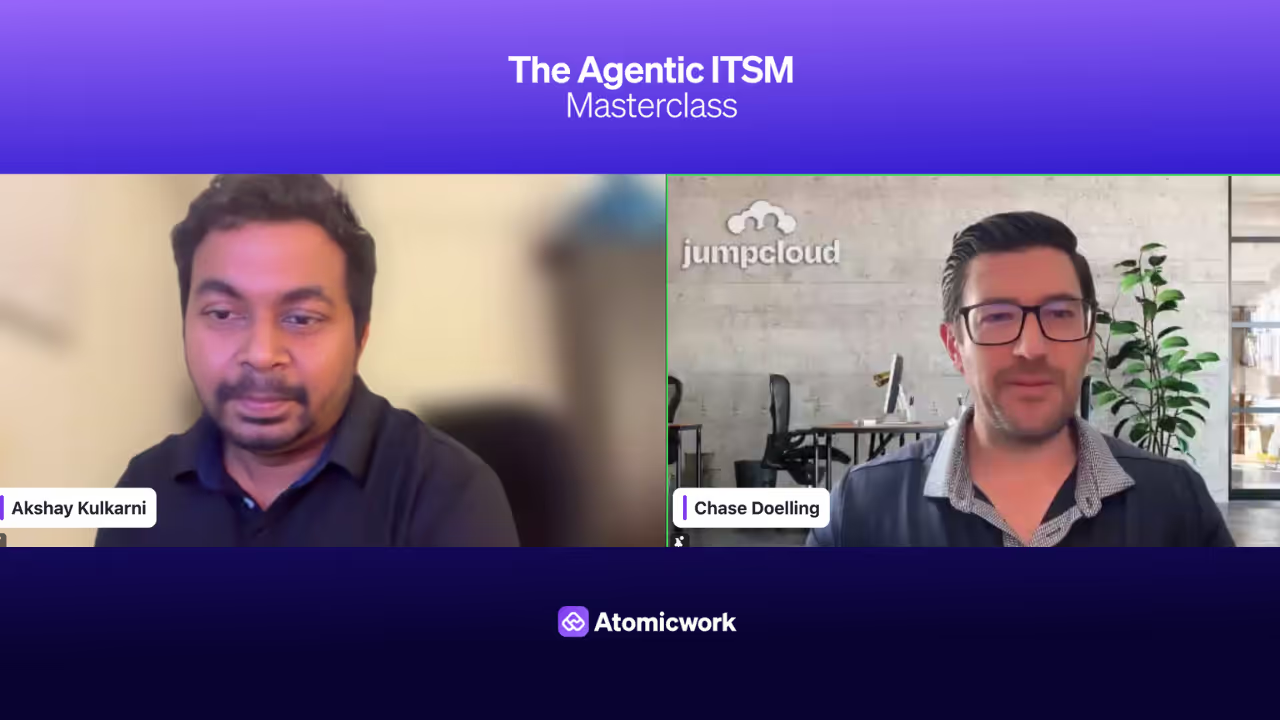
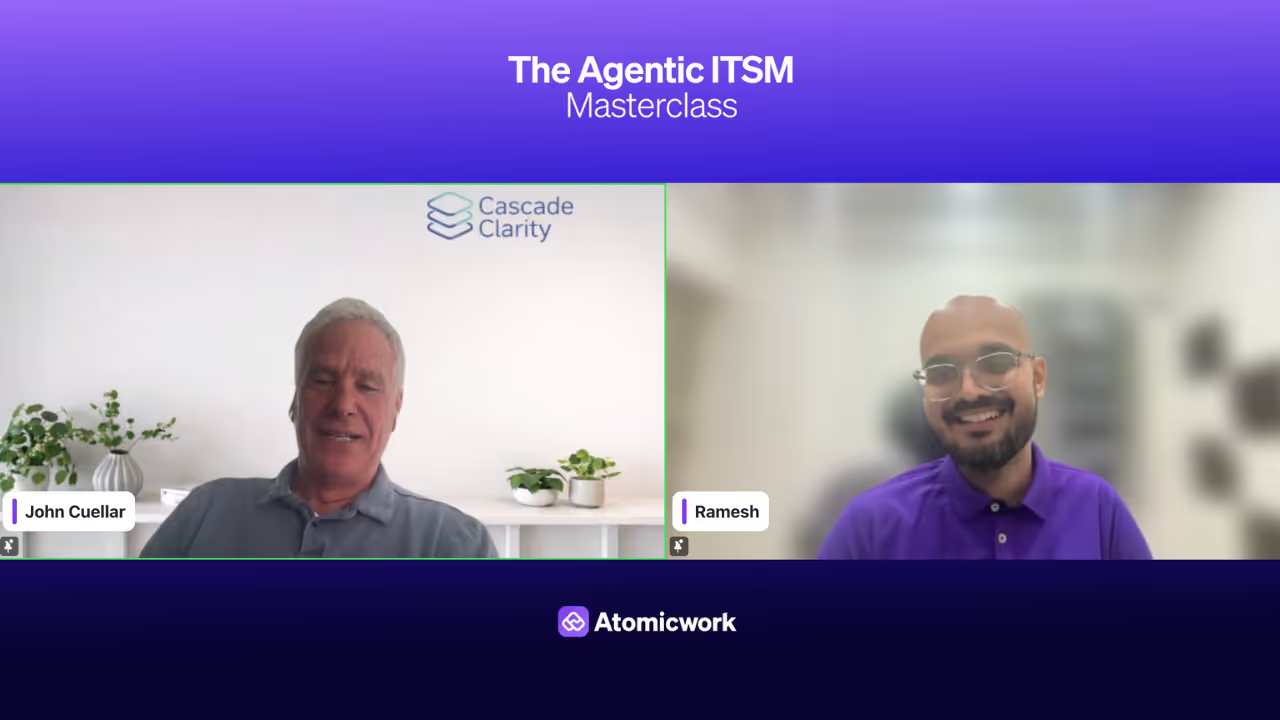
That gap between designed process and lived experience is exactly what John Cuellar, Founder of Cascade Clarity, dug into during Session 3 of the Agentic ITSM Masterclass. With decades of experience in business process automation, including scaling these workflows at Dell, John mapped the challenges, demoed solutions, and made a compelling case for the missing layer between your people and your platforms.
Why, despite best intentions, do employee journeys break?
John opened with a detailed flow chart of the onboarding process, and the first thing that hits you is the number of swim lanes: hiring manager, HR ops, IT support, and finance. Each one has its own systems of HRIS, applicant tracking, identity management, CRM, FP&A tools and they're all designed to serve their respective organizational unit.
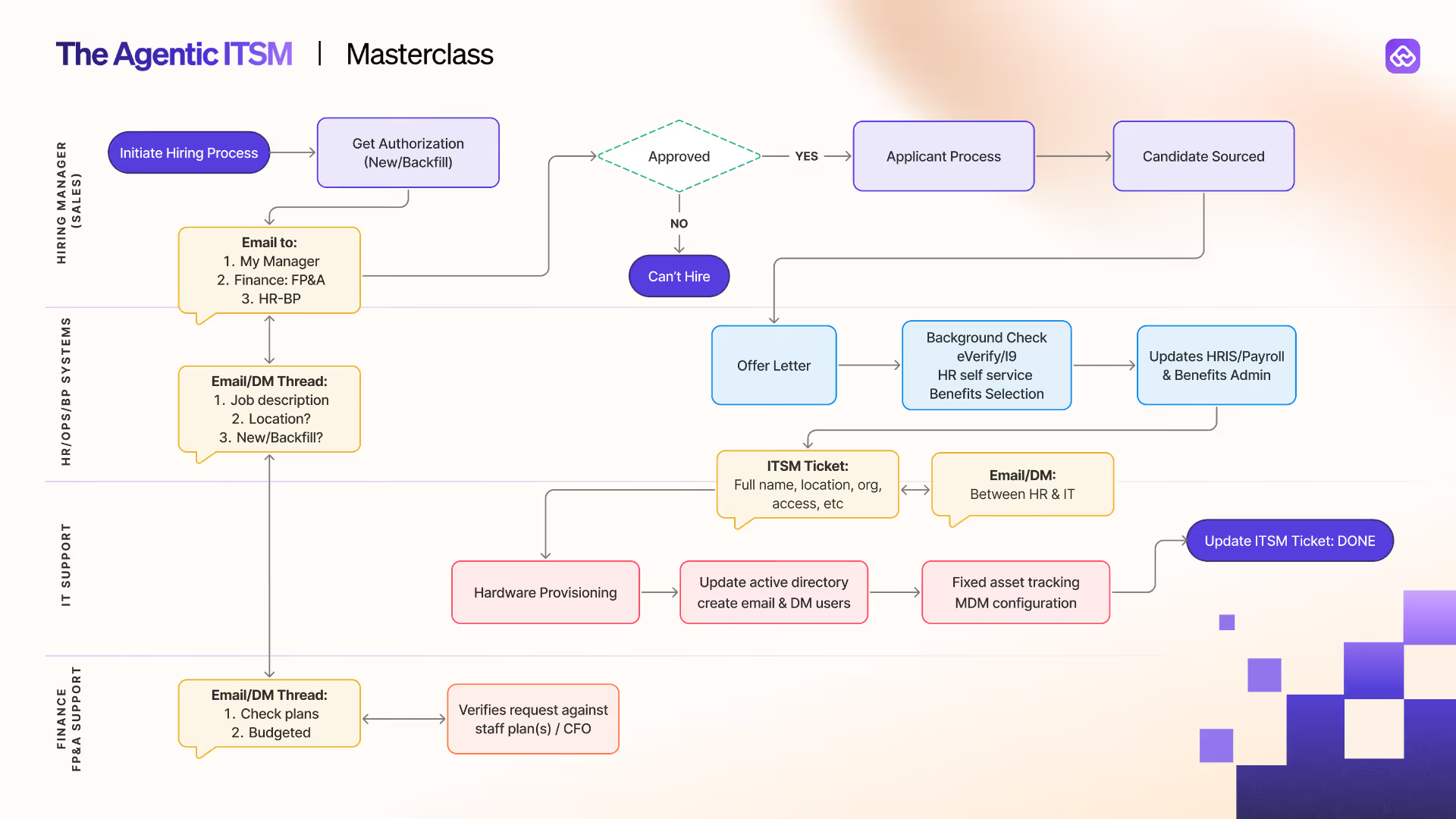
The problem is the communication between these lanes happens through email, Slack, and Teams. Unstructured, hard to track, and easy to lose.
A hiring manager initiates a request, emails get exchanged with FP&A to confirm it's in the staff plan, HR starts tracking, the applicant tracking system kicks in, an offer gets made, background checks happen, and eventually IT gets a message — often through another email — to provision access and hardware.
Every handoff is a potential delay and every email is an audit trail that nobody can search. And the further you get from the hiring decision, the more likely something falls through.
John shared an example from his time working with Dell: employee movements like transfers, promotions, location changes took an average of 30 days to complete. That meant the actual state of the business was always out of date. Headcount, distribution, reporting structures were all lagging behind reality. With the right automation, that same process can take less than a day.
It's not a people or platform problem
If you're wondering where the issue lies, the bottleneck isn't your team and it isn't your platforms. It's the gap between them.
HR systems are built for HR. IT platforms are built for identity management. CRMs serve sales. Each platform does its job well within its own swim lane, but none of them are designed to orchestrate across organizational boundaries. The people in between are the ones coordinating via email, chasing approvals, manually triggering the next step and they're the glue. However, they're overloaded.
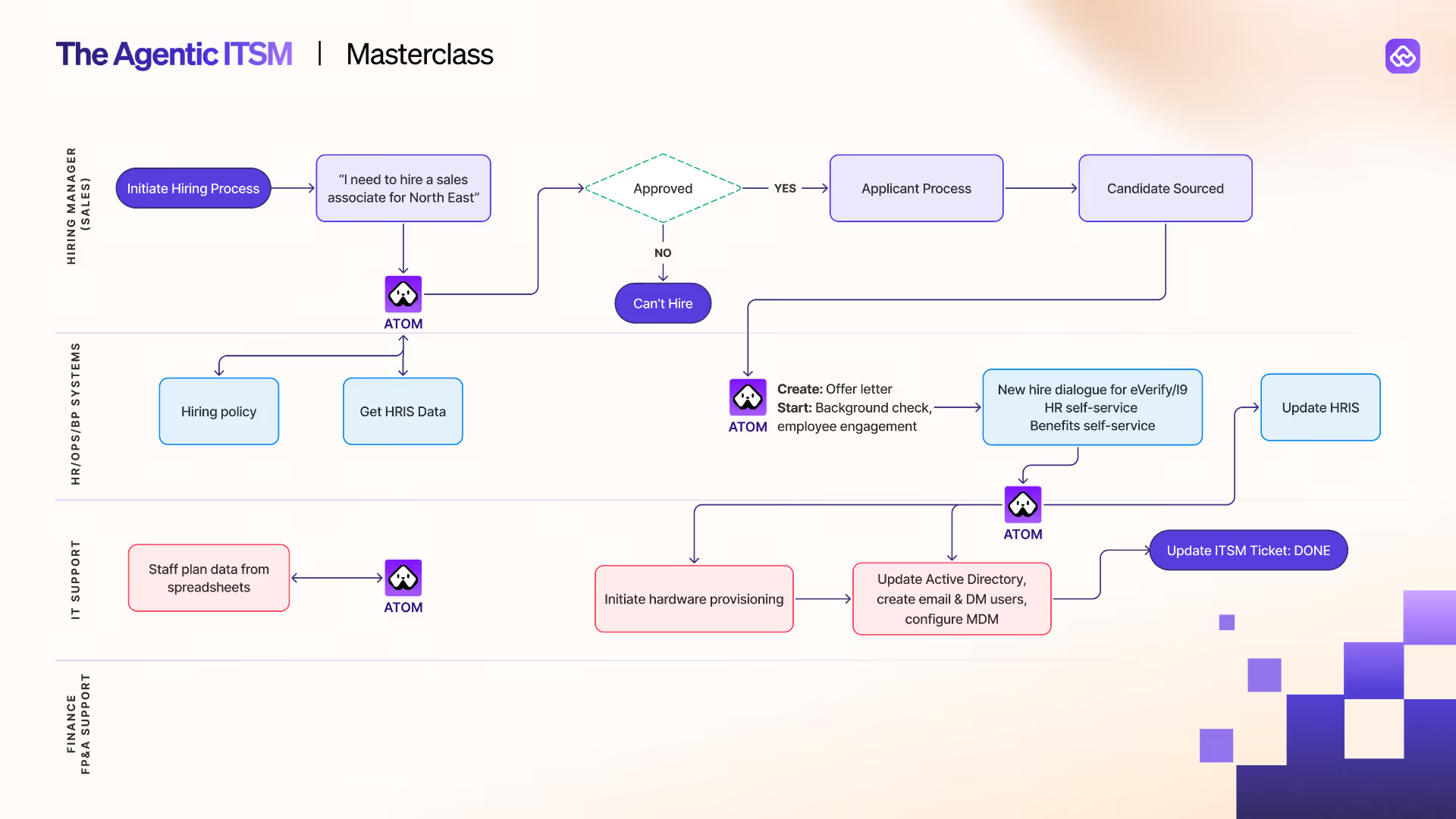
What's been missing is a layer that lets people communicate the way they naturally do, in natural language through Slack or Teams, while still capturing structure, enforcing workflows, and maintaining an audit trail. That's the gap agentic AI fills. Not replacing the platforms, not replacing the people, but sitting in between to orchestrate the handoffs.
Natural language in, structure out
John made an observation that organizations have tried for 25+ years to automate these processes with forms and browser-based applications. And every time, people abandon the forms and fall back to email. Not because the tools are bad, but because natural language is how humans prefer to work.
The breakthrough with agentic AI isn't forcing people back into structured interfaces. It's meeting them where they already are and extracting the structure behind the scenes. The workflow gets tracked, data gets captured, and approvals happen in-line. And when structured input is genuinely needed (compensation details, compliance-sensitive data), it's limited to the people who are already used to working with that data and not the entire organization.
John demoed this live in Atomicwork: a hiring manager messages Atom in Teams to onboard a new hire, a ticket is created automatically, it's routed to HR for approval with human-in-the-loop, IT gets notified and provisions access, and a welcome email goes out. The whole flow which normally takes days of back-and-forth, gets completes in under half a day.
Additional complexities with offboarding and leave management
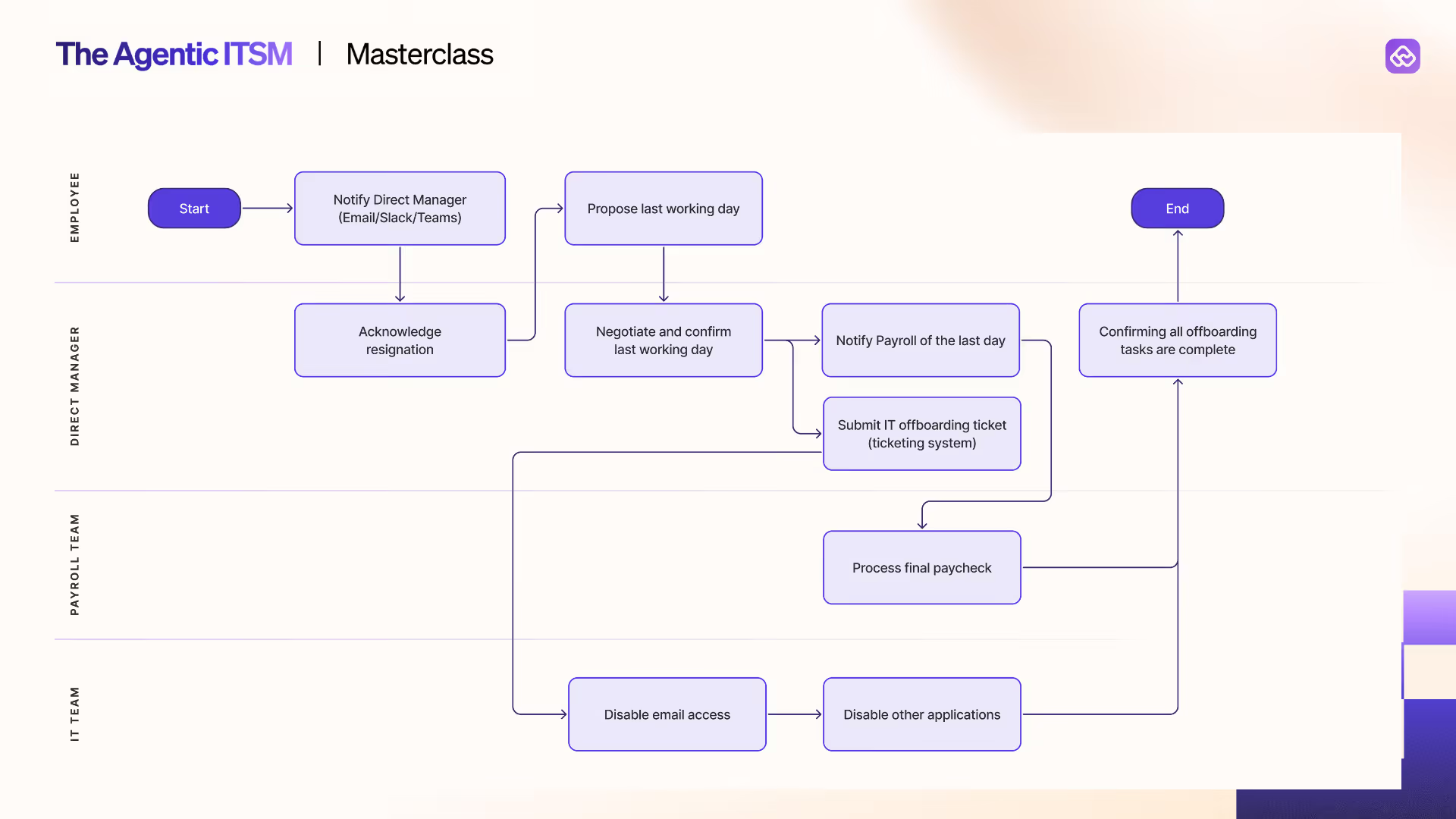
The session didn't stop at onboarding. John walked through the offboarding process, distinguishing between voluntary and involuntary terminations. Voluntary is relatively straightforward. Involuntary is where it gets sensitive when you can't revoke access or update systems before the termination meeting and without tipping off the employee. That requires careful, back-channel coordination that today happens entirely through unstructured messages.
Leave management is equally nuanced. John shared an example of someone at Indeed who lost all access during extended paternity leave which was actually the correct outcome, driven by legal requirements.
But managing those rules across regions, leave types, and local statutes? Most organizations are doing it through email threads.
All of this reinforces that the information exists, the policies exist, the people exist. What's missing is the connective tissue.
Bringing HR and IT on the same page for delightful employee journeys
John closed with three directional takeaways. First, velocity matters. These processes take too long today, and the business suffers because its data is always out of date. Second, humans shift from transactors to observers where people are still essential, still in the loop, but freed from the manual coordination work. Third, break down organizational barriers since enterprise AI only works when everyone gets on board, and the walls between HR, IT, and Finance start coming down.
And if you're wondering where to start? John's answer was unequivocal: onboarding. It touches every swim lane, every system, every organizational boundary. Get that right, and you've built the infrastructure for everything else.
P.S: This session is a part of the Agentic ITSM Masterclass, a virtual series where IT practitioners share how they're navigating AI in real environments. You can access all the session replays here→