Your new workforce won't be all human. Join the

conference to learn how to manage it.
request invite

Your vendor has very likely shipped ‘agentic features’ in the last release. You probably haven’t turned them on. Don’t worry, you're not alone.
Forrester expects fewer than 15% of organizations to actually enable the agentic capabilities sitting inside their automation platforms this year. The gap between a platform that has agents and an environment where agents run in production is where most AI budget is going to die.
Before you say that the reason is the models, nope, it’s that ‘agentic AI platform’ now describes at least three different things you’d buy and deploy in completely different ways, and most comparison guides line them up as if they were interchangeable.
We’ve sorted 14 platforms into three groups based on how you actually acquire and run them:
For each platform, you’ll get what it actually does, who it’s best for, where it falls short, and how it handles the governance question that determines whether your agents ever make it past a pilot.
Before looking at any specific platform, lock in the criteria that matter for your organization. Here’s the evaluation framework we’re using across all 15:
Most guides evaluate orchestration, integrations, and model support. Almost none frame governance — who the agent is, what it can access, how it’s audited, how it’s decommissioned — as the criterion that separates a platform that works in a demo from one that works in production.
McKinsey’s 2026 AI Trust Survey found only about 30% of organizations have reached maturity level 3 or above on strategy, governance, and agentic AI controls. That’s the real bottleneck and it’s not really the model, or the orchestration. Whether IT can manage these agents the way they manage every other resource in the environment is the real question.
If you’re already deep in an enterprise ecosystem — say, ServiceNow for ITSM, Salesforce for CRM, Microsoft 365 for productivity — the fastest path to agentic AI is turning on what your vendor just shipped. These platforms embed agents into workflows you already operate. The tradeoff is that they’re strongest inside their own ecosystem and weaker outside it.
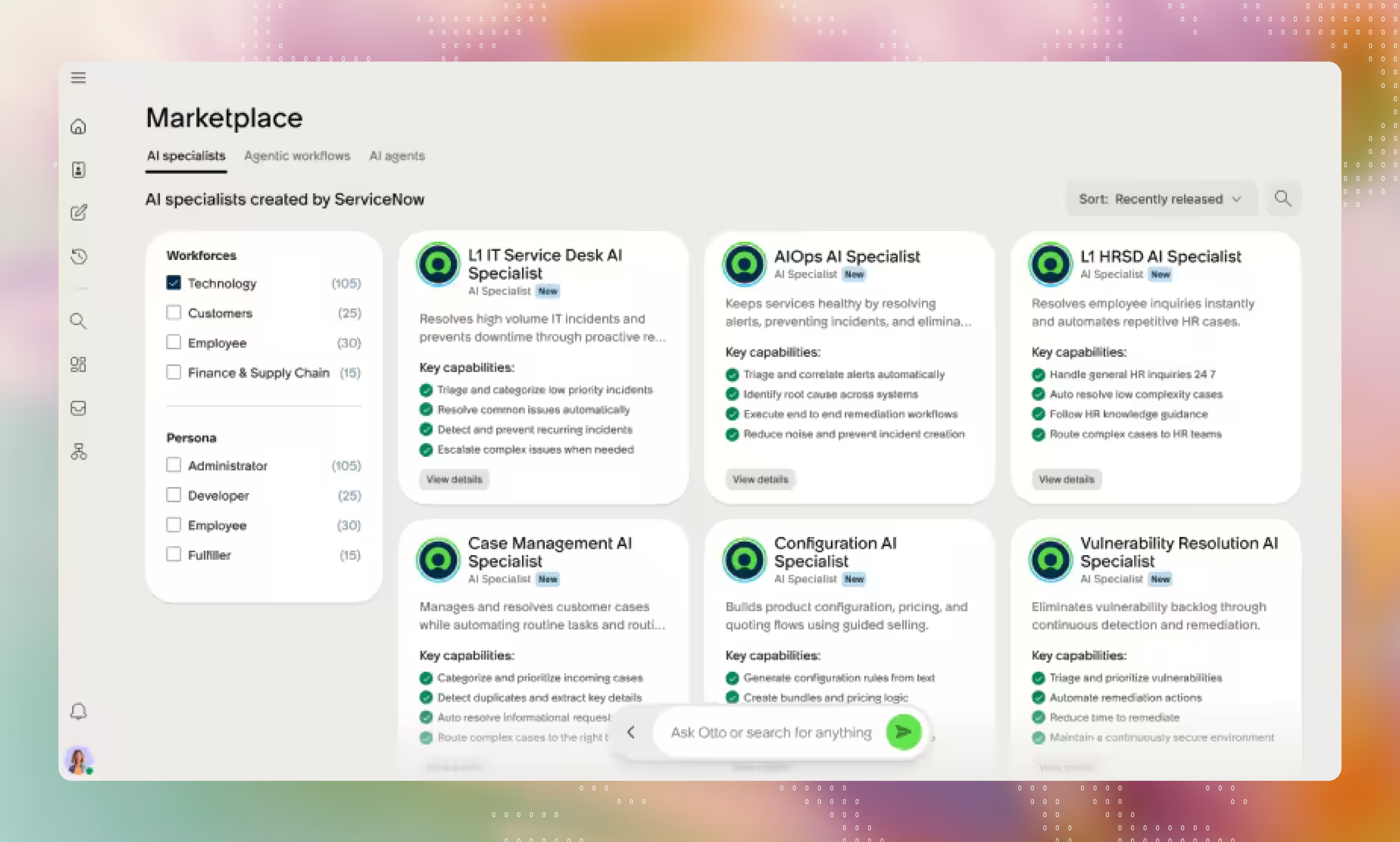
ServiceNow is the most aggressive incumbent in this space. The suite now includes AI Agent Studio (build custom agents), AI Agent Orchestrator (coordinate multi-agent workflows), AI Agent Fabric (connect to external agents), and AI Control Tower (centralized governance). At Knowledge 2026, ServiceNow introduced Otto, a unified AI experience that folds in Now Assist and the Moveworks acquisition alongside a new AI Experience layer.
On its own internal deployment, ServiceNow reports its Level 1 Service Desk AI Specialist resolves IT cases 99% faster than human agents, with its Autonomous Workforce handling more than 90% of internal employee IT requests.
The NVIDIA partnership now includes Project Arc, an autonomous desktop agent secured by NVIDIA’s OpenShell runtime and governed by AI Control Tower.
Best for: Large enterprises already running Now Platform for ITSM, HR, and CSM. Strongest governance story among incumbents.
Watch out for: Complexity — deployment requires a dedicated sn_aia.admin role before you begin. Pricing is opaque and enterprise-only. The three-tier structure (Foundation, Advanced, Prime) bundles AI across all tiers, but fully autonomous agents require Prime.
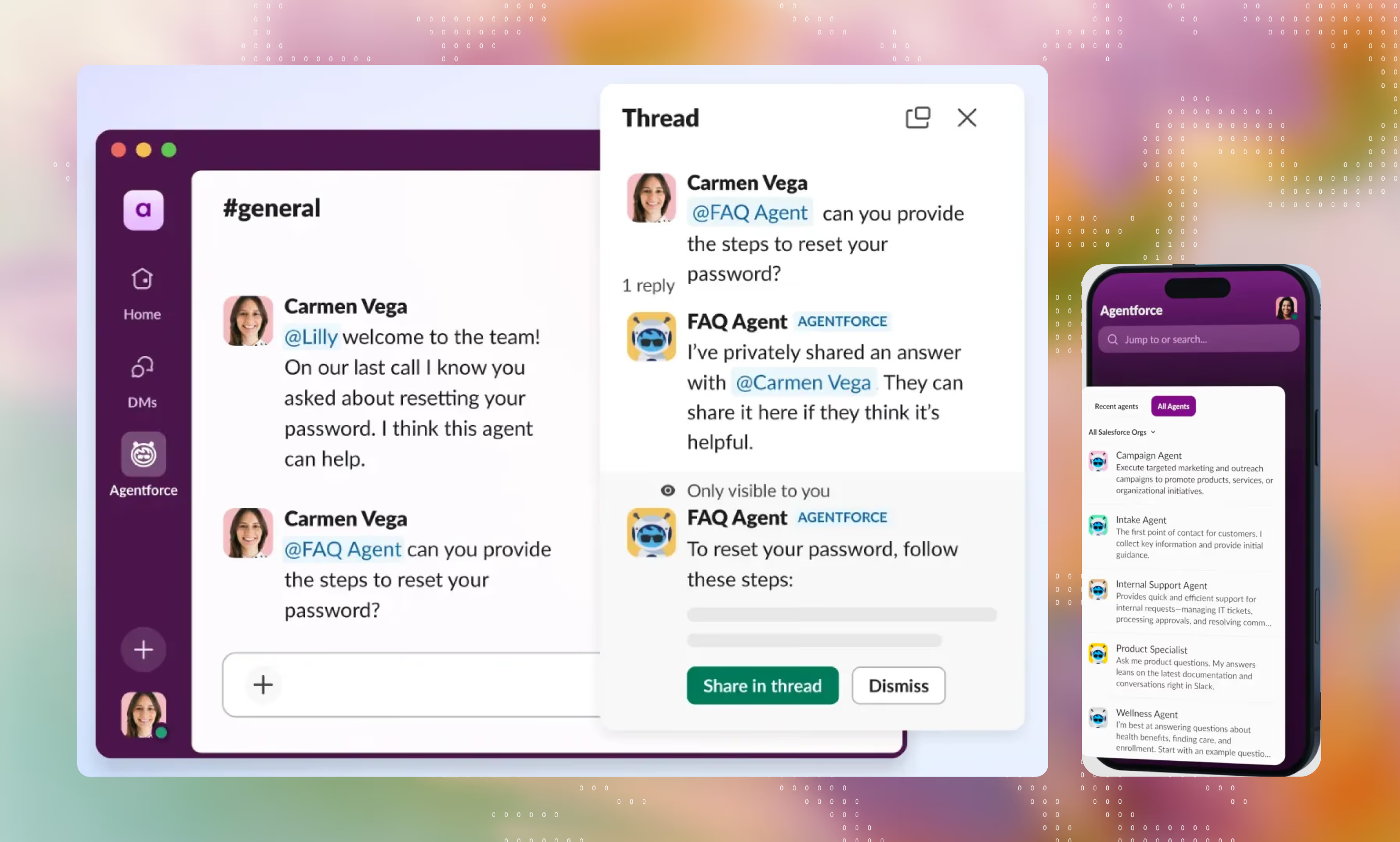
Agentforce runs on Salesforce’s Atlas Reasoning Engine with native access to Data Cloud. The Flex Credits model charges roughly $0.10 per standard action, transparent compared to most enterprise pricing, though complex and voice actions cost more, and high-volume workflows can scale unpredictably. Salesforce reported over 9,500 paid Agentforce deals as of its Q3 FY26 results in December 2025.
Best for: Sales, service, and CX teams running Salesforce CRM. If your workflow starts and ends inside Salesforce, Agentforce deploys fast.
Watch out for: Cross-system reach. If your process touches three systems and only one is Salesforce, you’re configuring custom integrations for everything else. Per-action pricing needs careful estimation at high volume.
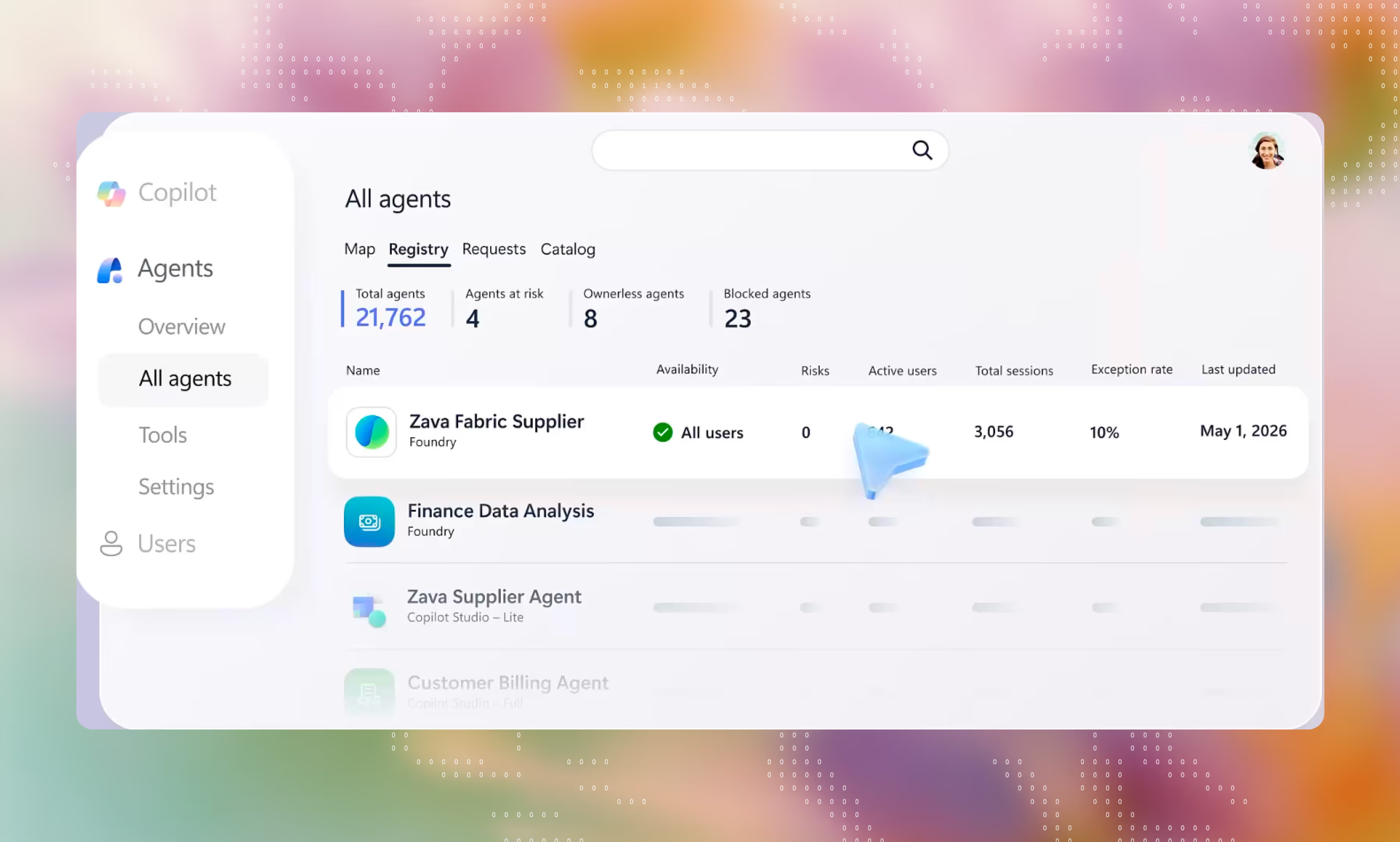
Copilot Studio is Microsoft’s low-code agent builder, native to M365 and Power Platform. It includes the Agent 365 control plane and GPT-5.5 integration. Pricing is credit-pack based: 25,000 credits for $200/month. For M365-centric organizations the deployment surface is large — agents operate across Teams, SharePoint, Outlook, and Dynamics.
Best for: Organizations where M365 is the center of gravity. The low-code builder is accessible to non-developers.
Watch out for: Same ecosystem limitation as Salesforce. Strong inside Microsoft, weaker for heterogeneous environments. Credit-pack pricing needs monitoring to avoid overages.
Google’s approach is code-first. The Agent Development Kit (ADK) hit stable v1.0 across Python, Go, Java, and TypeScript. It’s model-agnostic but Gemini-optimized. The standout is the A2A (Agent-to-Agent) protocol for cross-platform interoperability, now built into LangGraph, CrewAI, LlamaIndex, and AutoGen. Model Armor provides prompt-injection defense.
Best for: Google Cloud shops with engineering teams that prefer code-first agent development. Strong deployment story on Vertex AI Agent Engine and Cloud Run.
Watch out for: More engineering effort than ServiceNow or Salesforce. The ADK is a toolkit, not a managed platform. You build the governance layer yourself.
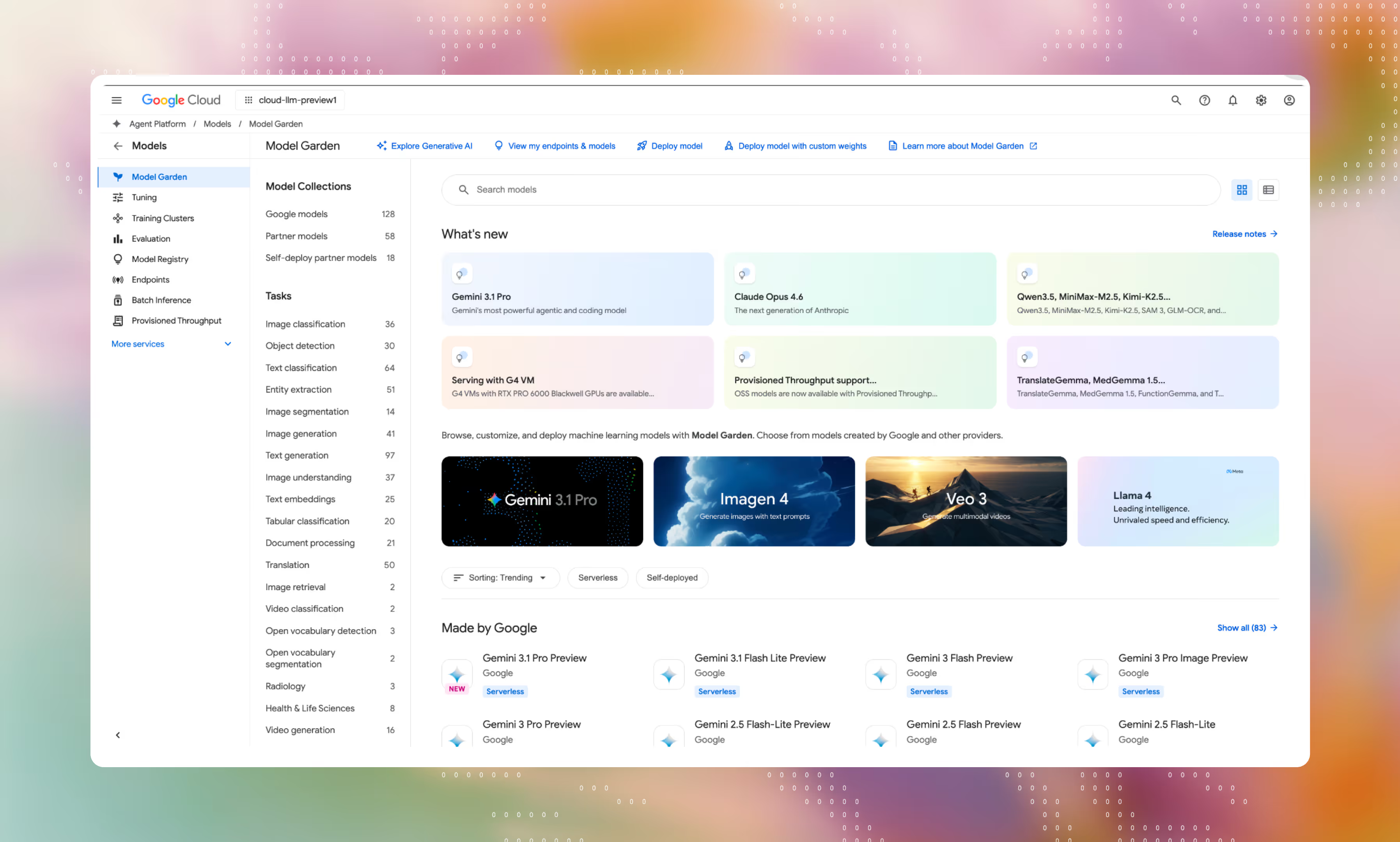
IBM leads with governance. The watsonx platform is built for regulated industries where audit trails and explainability are more than just ‘features’ — they’re requirements. The Bee Agent Framework is open source. The buzz is quieter than ServiceNow or Salesforce, but the compliance story is hard to match for banking, healthcare, and government.
Best for: Regulated industries (financial services, healthcare, government) where governance and compliance are non-negotiable.
Watch out for: Smaller partner ecosystem than the other four. Less community-contributed content and fewer third-party integrations.
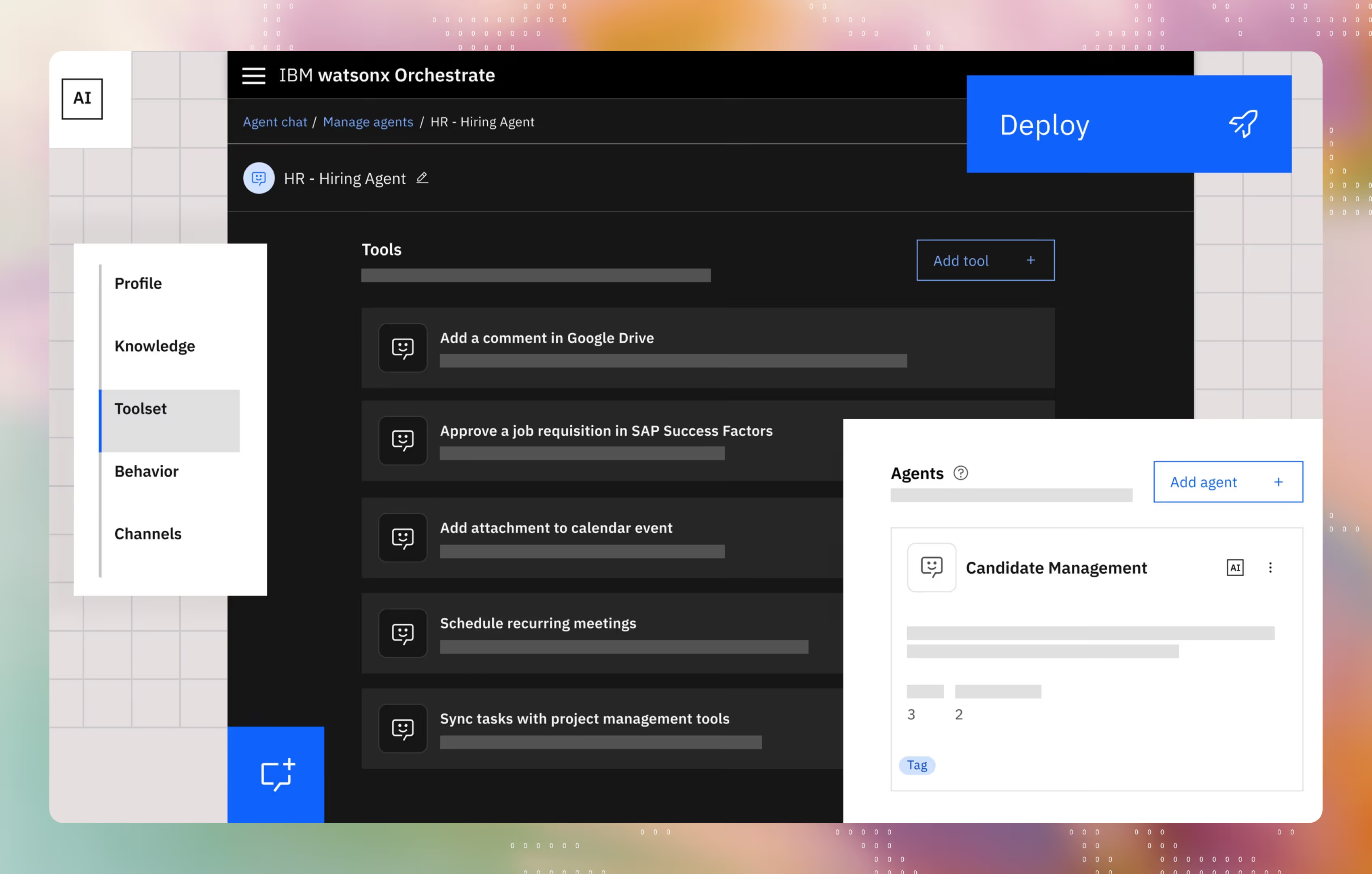
These platforms were designed for agentic AI from the start. You don’t need to be an existing ServiceNow or Salesforce customer. The buyer here has a specific use case — customer support, employee experience, or IT service management — and wants a platform built for it, not bolted onto a legacy stack.
Kore.ai launched the Artemis platform in May 2026, positioning it as an end-to-end enterprise agentic platform spanning both customer experience (CX) and employee experience (EX). The multi-agent orchestration engine acts as a control layer across the stack, and the agent management platform governs agents built on external frameworks, including LangGraph, CrewAI, and AutoGen. With hundreds of pre-built integrations and a deep Microsoft partnership (Azure Foundry, Dynamics 365).
Best for: Enterprises that need both CX and EX automation on one platform, especially those already in the Microsoft ecosystem.
Watch out for: Breadth can mean complexity. Organizations with a narrow use case (CX-only or EX-only) may find the scope more than they need.
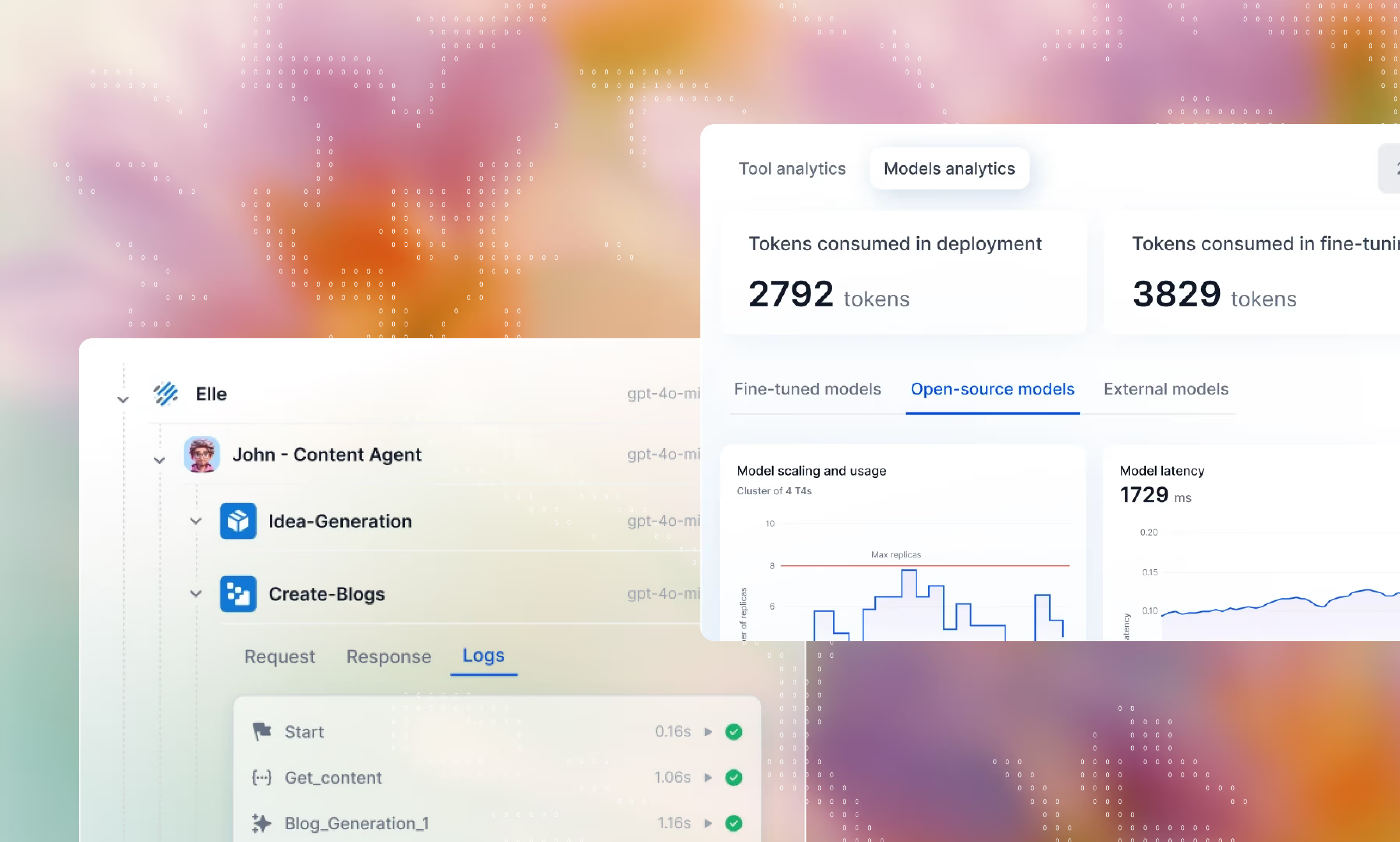
Decagon is a CX-focused platform that’s grown fast: a $250 million Series D in January 2026 at a $4.5 billion valuation, bringing total funding to $481 million, with a customer list that includes Notion, Rippling, Duolingo, and Chime. The platform uses Agent Operating Procedures (AOPs) — natural-language workflow definitions — to handle interactions across chat, email, voice, and SMS.
Best for: Customer support teams handling high-volume interactions. Strong for tech and financial-services companies running Zendesk or Salesforce as the helpdesk layer.
Watch out for: CX-only scope. Not designed for ITSM, employee support, or internal IT workflows. Enterprise-only, sales-led, with no self-serve option.
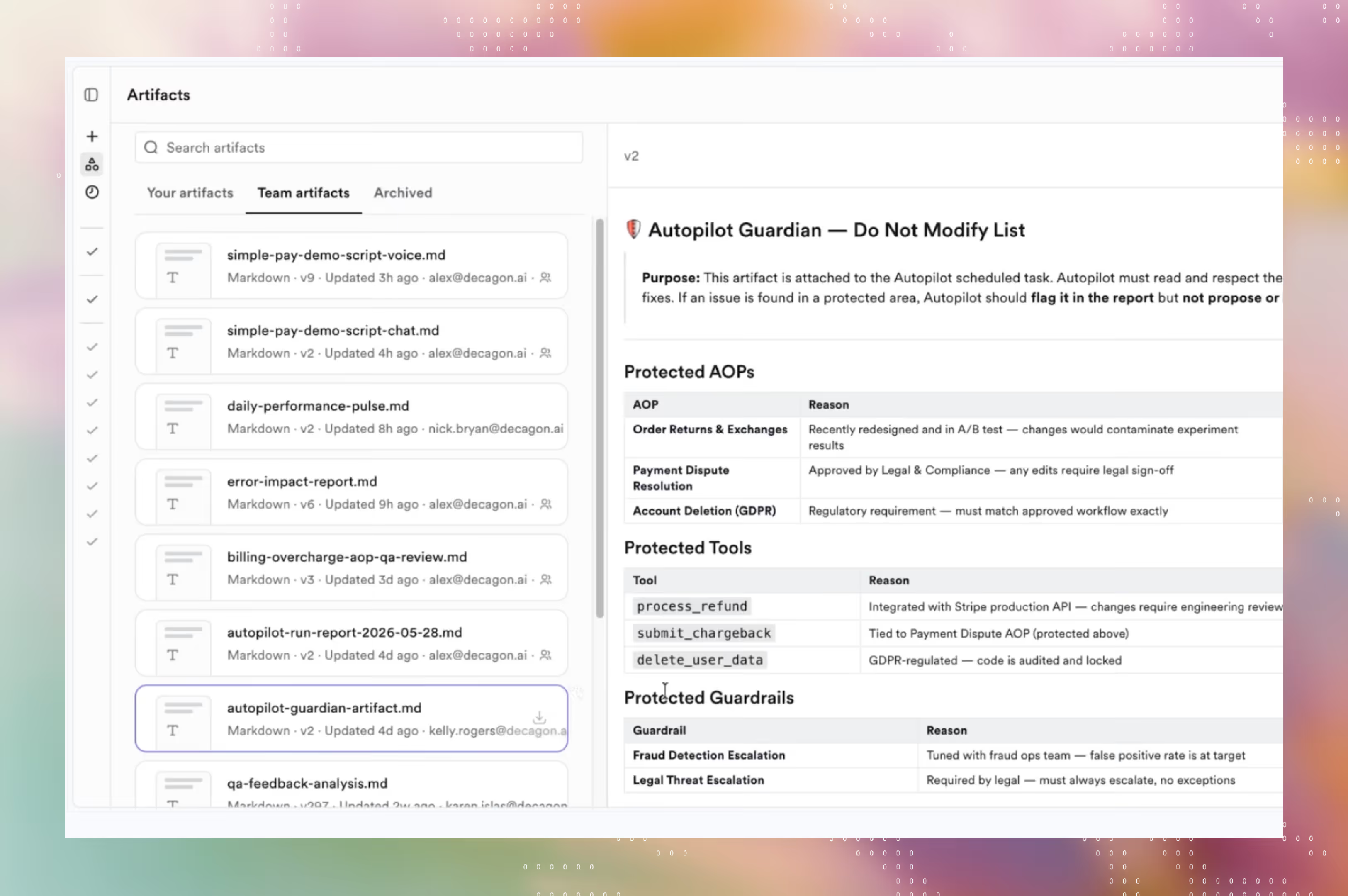
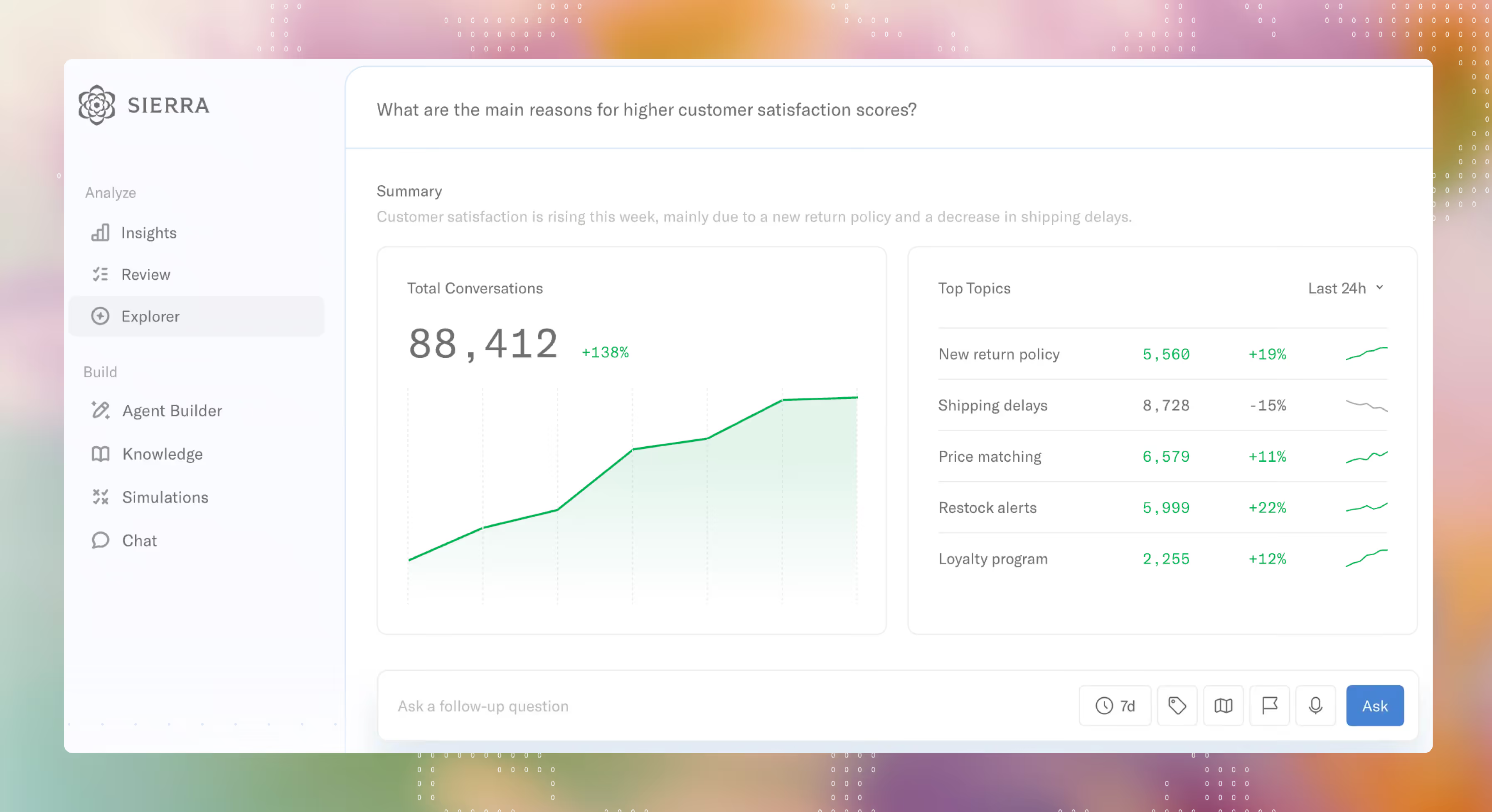
Sierra, co-founded by Bret Taylor (ex-Salesforce co-CEO, current OpenAI board chair) and Clay Bavor (ex-Google Labs), reached $150 million ARR in eight quarters. In May 2026, Sierra raised $950 million in a Series E at a valuation of over $15 billion, pushing total capital past $1 billion.
Over 40% of Fortune 50 companies are customers. Its platform (Agent OS) deploys agents across the customer lifecycle: insurance claims, mortgage origination, revenue cycle management, banking. Pricing is outcome-based — you pay when the agent resolves an interaction, not per seat. In March 2026, Sierra launched Ghostwriter, which builds and deploys specialized agents from natural-language descriptions.
Best for: Large enterprises with complex customer-facing operations (insurance, banking, telecom, retail). Outcome-based pricing is attractive at high volume.
Watch out for: CX-only, like Decagon. Not built for ITSM or EX. Pricing is sales-led.
If the platforms above automate customer interactions, Atomicwork focuses on the other half of the equation: what happens inside the organization. It’s an agentic service management platform built for IT teams managing a workforce that now includes both humans and AI.
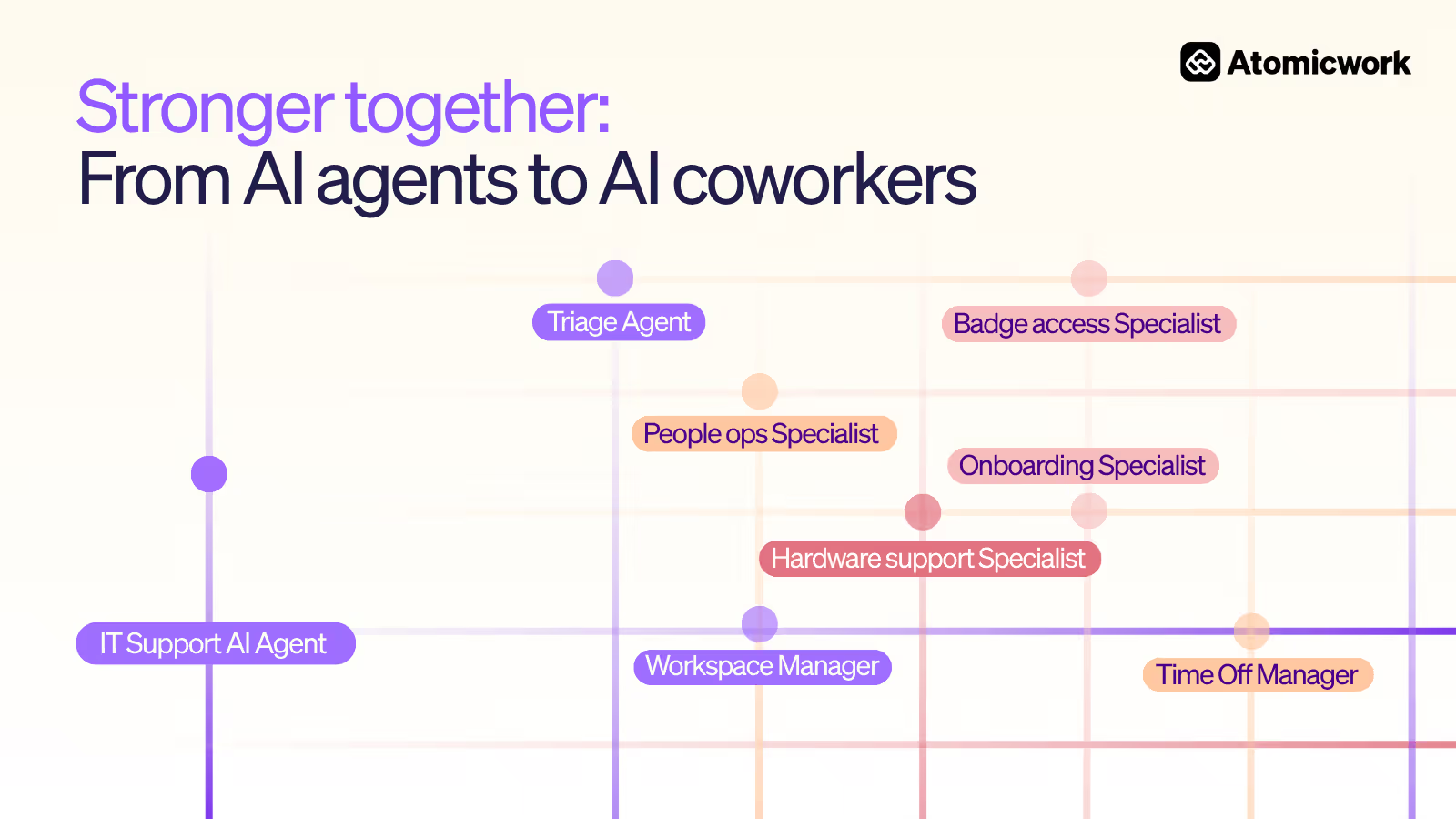
The architectural differentiator is that AI and data live in the same system. Where most platforms bolt an AI layer on top of a data layer — the AI can suggest and summarize, but a human still closes the loop — Atomicwork’s Coworkers read policy, understand context, and execute. The platform runs a multi-agent architecture with specialist AI coworkers for IT, HR, security, and facilities, coordinated by an orchestrator that delegates across specialties.
Where it gets interesting for this conversation is the governance model. Every AI coworker has identity, access policies, skills, tools, a budget, and audit trails — governed through what the platform calls Know (directory), Manage (access and governance), and Update (change management). These map directly to ITSM constructs IT teams already understand. External agents from other vendors can be registered via MCP and governed under the same framework, which means Atomicwork can act as a governance layer for agents it didn’t build. The platform is built on Azure AI Foundry with an ensemble AI architecture, and was mentioned in Satya Nadella’s earnings call alongside Epic, Fujitsu, and LG.
Best for: IT teams at 200–5,000 employee companies that need agentic capabilities for ITSM, employee support, and cross-department service management. Strong for organizations that want to govern their AI workforce with the same rigor they apply to human workforce management.
Watch out for: Newer entrant with narrower brand awareness than Kore.ai or ServiceNow. If your primary use case is CX rather than EX/ITSM, look at Sierra or Decagon instead.
.avif)
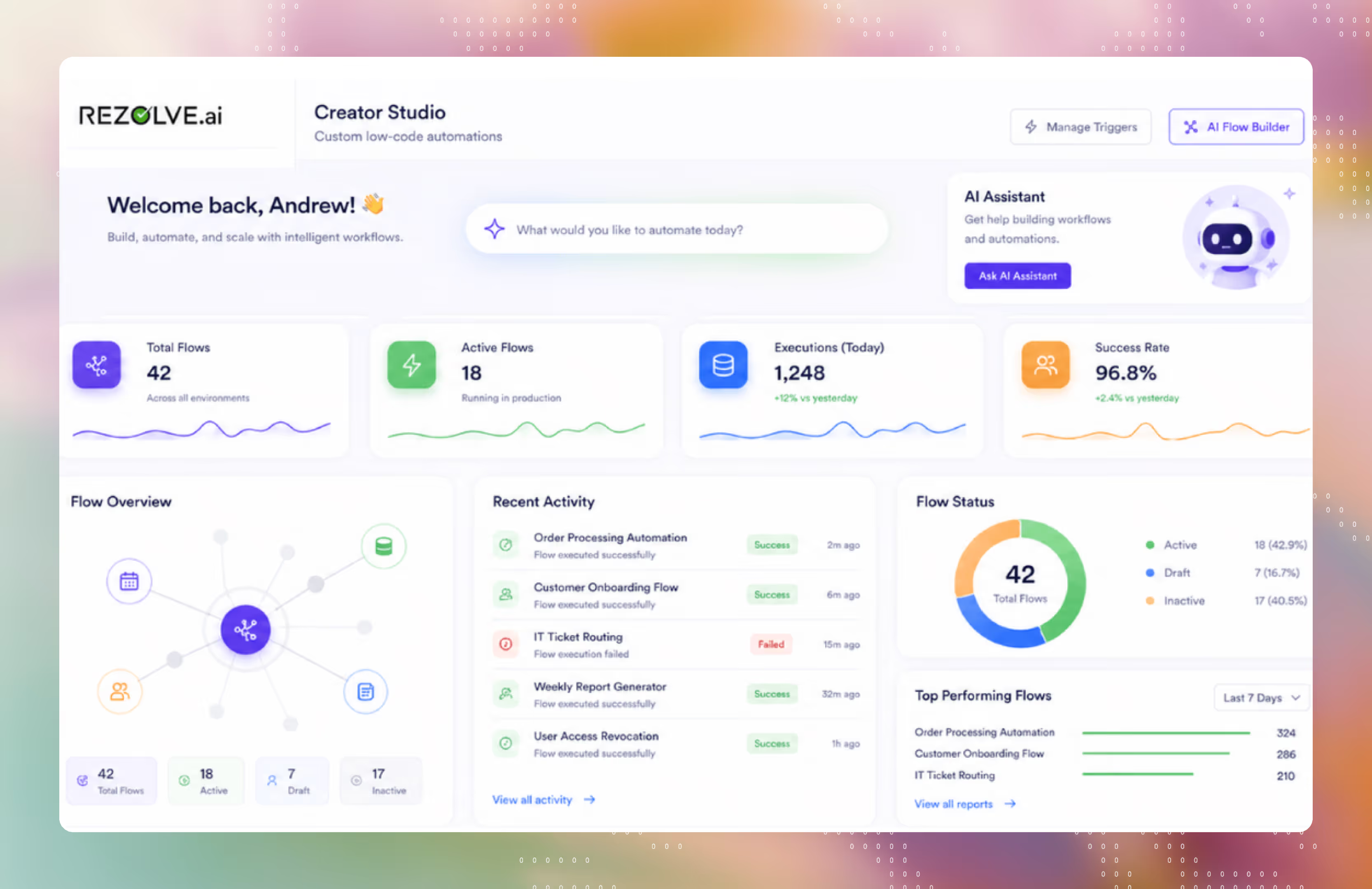
Rezolve.ai is purpose-built for IT and HR employee support. Its headline product, Agentic Sidekick 3.0, claims up to 70% autonomous resolution of employee support tickets. The platform is chat-native, embedded in Microsoft Teams and Slack, and has no separate portal. It comes with integrations across ITSM, HR, ERP, and collaboration tools.
Best for: Organizations that want autonomous employee support embedded in Teams or Slack, especially mid-market companies looking for a lighter-weight alternative to ServiceNow.
Watch out for: Narrower scope than multi-domain platforms. Primarily L1 IT support and HR workflows. Less mature governance tooling than ServiceNow, Atomicwork, or Kore.ai, which offer fuller agent lifecycle management.
Here’s where the terminology gets slippery. A framework is not a platform. Choosing LangGraph or CrewAI means you’re building a platform from scratch — not buying one.
You certainly get maximum control over how agents reason, act, and hand off, but you’re on the hook for governance, observability, deployment infrastructure, and maintenance. If that tradeoff appeals to your engineering team, these five frameworks are getting the most enterprise traction right now. (For a deeper technical comparison, see our guide to AI agent frameworks.)
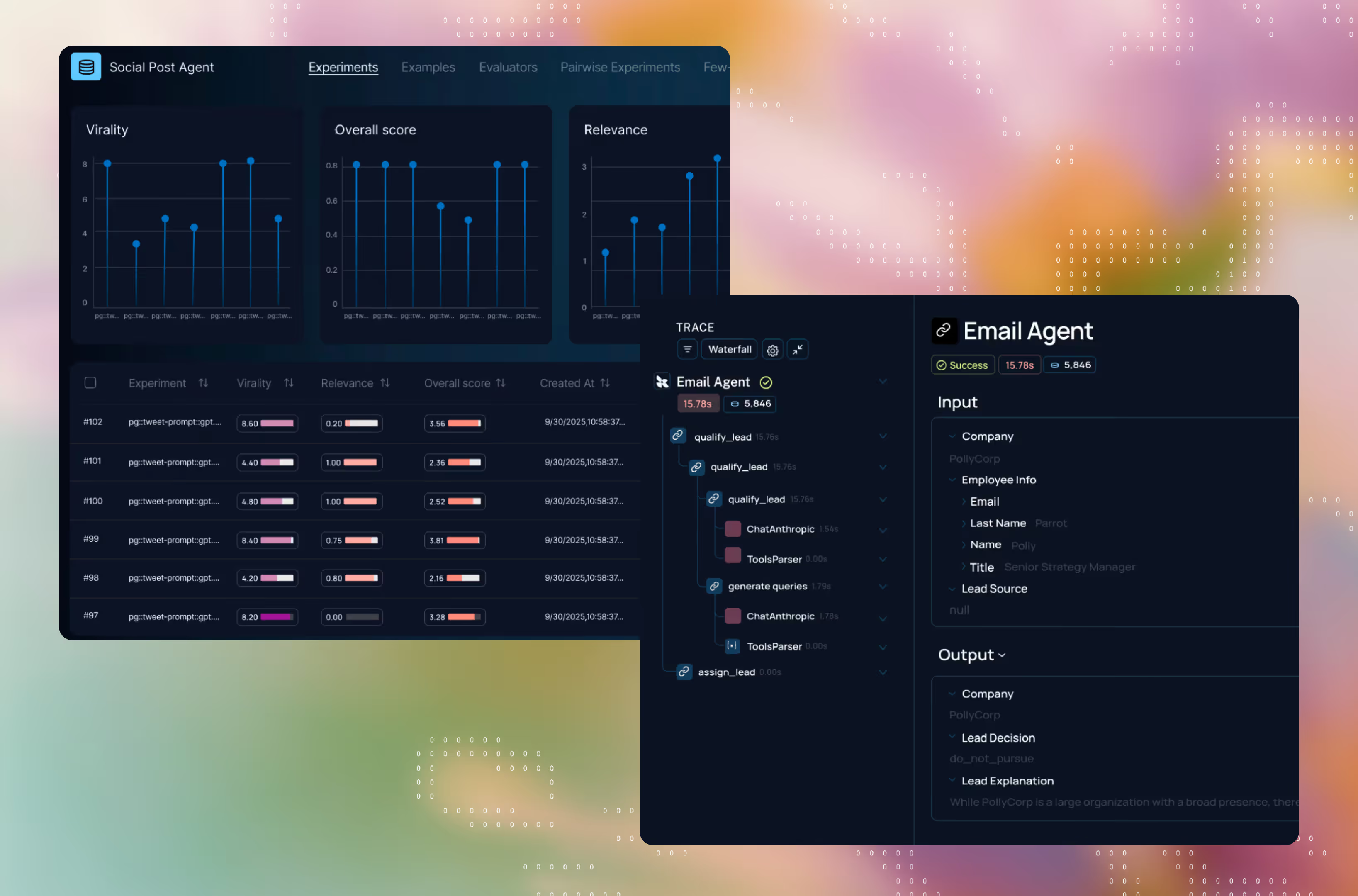
LangGraph is among the most production-deployed agentic frameworks in the ecosystem. It uses a graph-based stateful orchestration model — agent workflows defined as directed graphs with nodes, edges, and state management. LangSmith provides observability. Surpassed CrewAI in GitHub activity during early 2026.
Best for: Engineering teams building production-grade, complex multi-agent systems. The most mature choice for enterprise deployment.
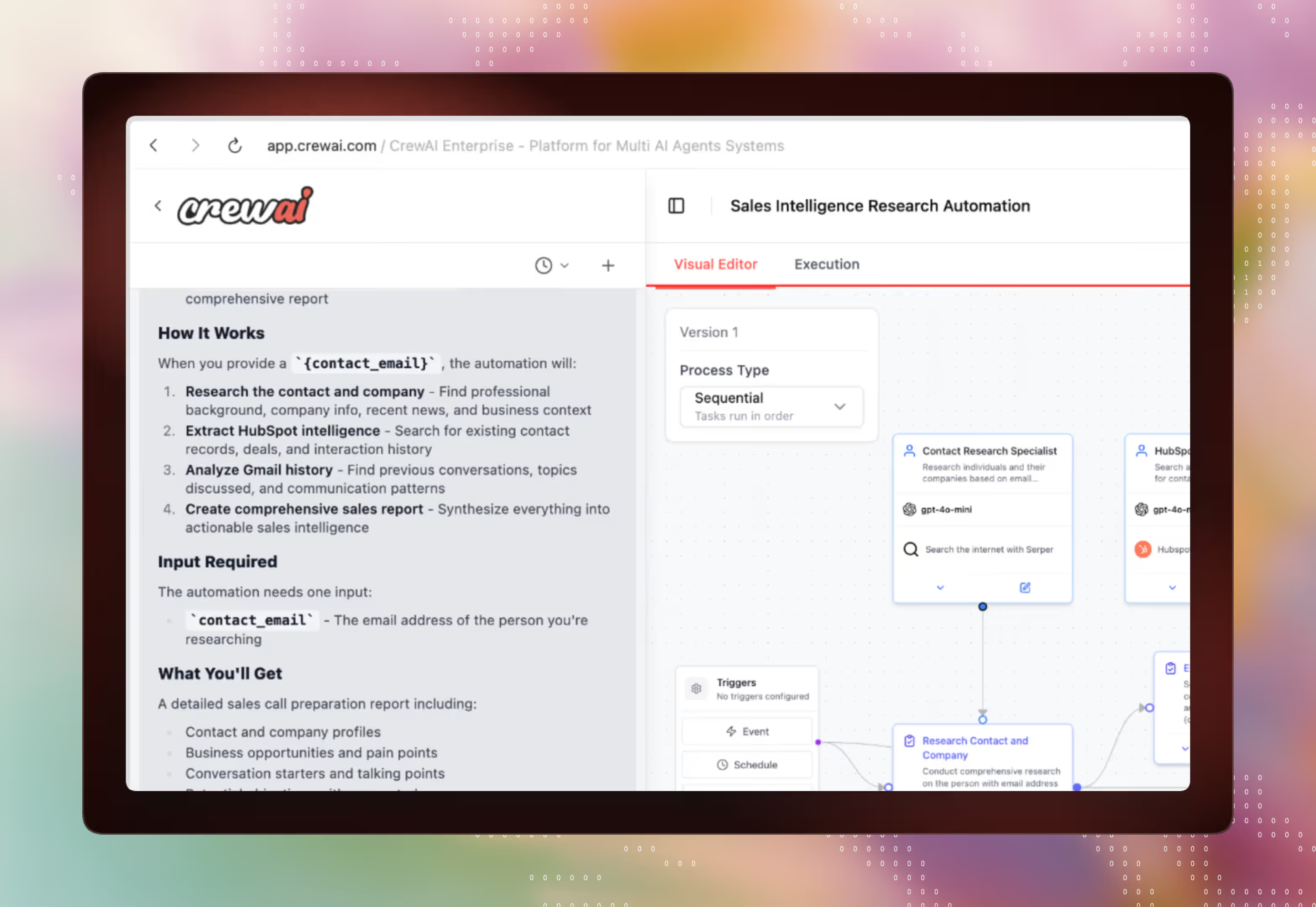
CrewAI takes a role-based approach: you define agents with roles, goals, and backstories, then assign them to tasks. It’s more intuitive for stakeholders who think in team structures rather than graph nodes. Growing enterprise features, strong docs, and an active community. Less mature governance than LangGraph.
Best for: Teams that want multi-agent orchestration with a gentler learning curve. Strong for prototyping and mid-complexity workflows.
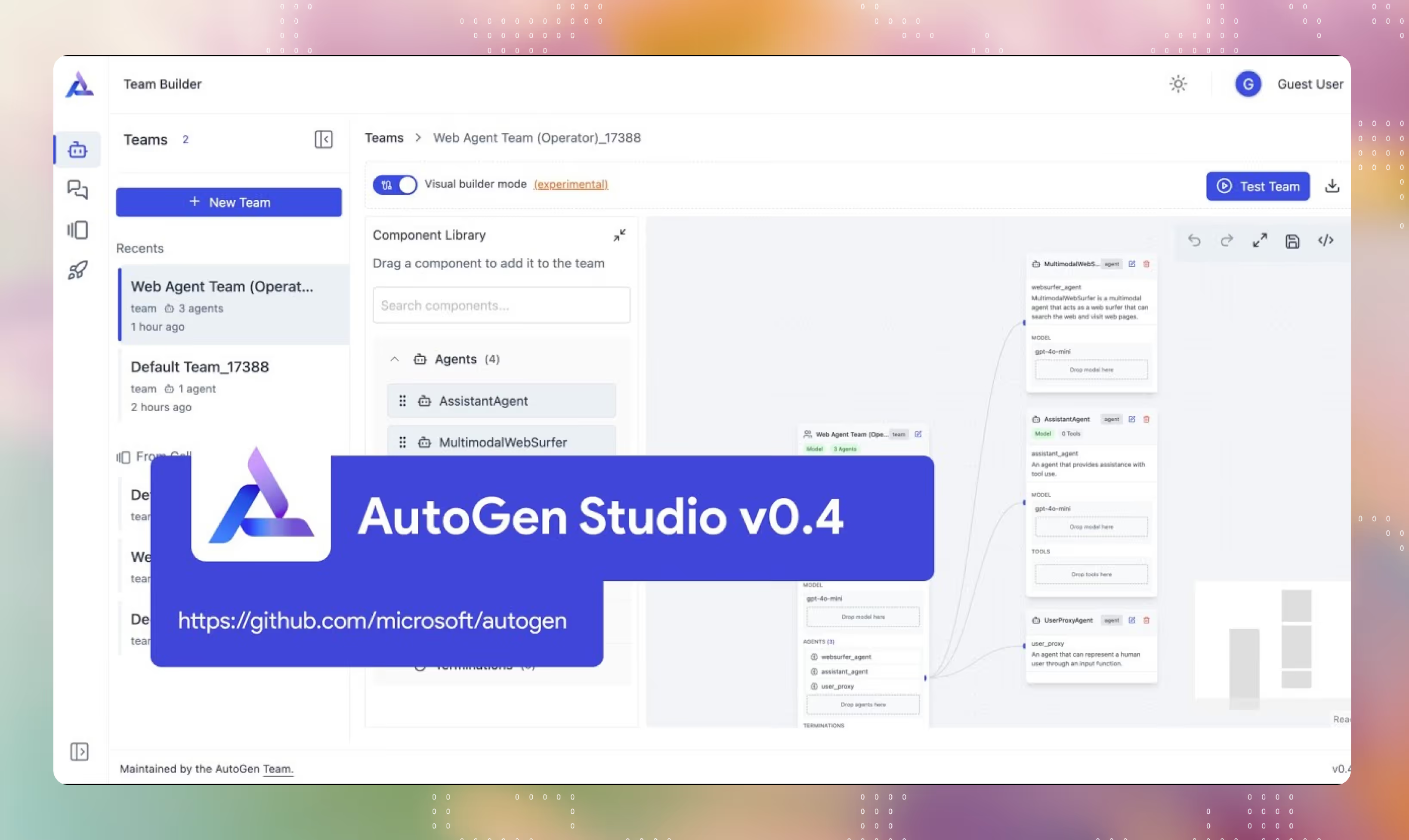
Microsoft’s framework uses a conversation-based paradigm — agents collaborate through group chat, with dynamic participation for debate, consensus, and peer review. Now in its AG2 iteration with expanded features. Good where agents need to reason together, not just hand off sequentially.
Best for: Workflows requiring multi-agent deliberation or consensus (code review, research synthesis, complex reasoning chains).
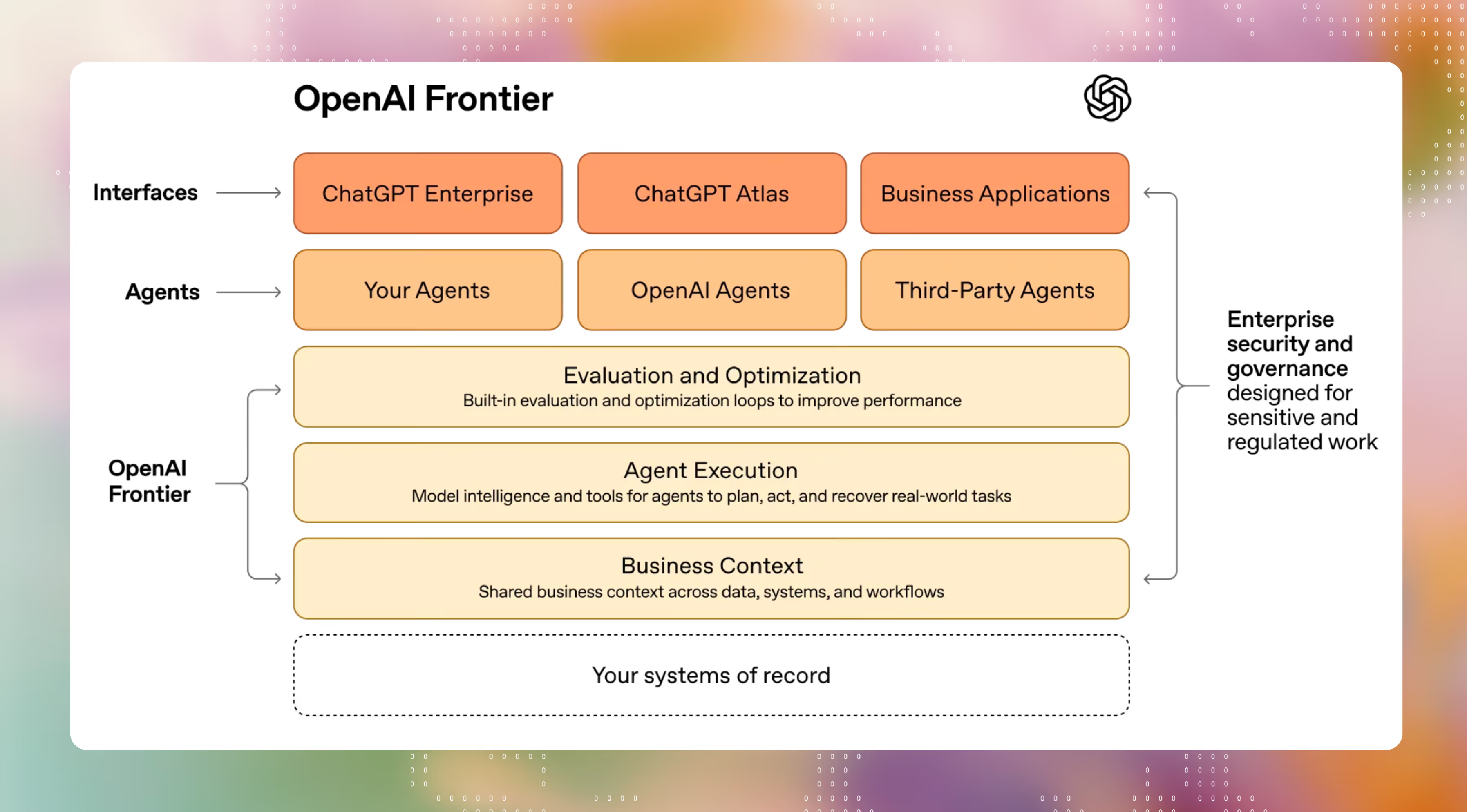
Fastest setup if you’re building on OpenAI models. Session persistence and structured-output handling are strong. Less mature for complex enterprise orchestration than LangGraph, but efforts are underway to improve it quickly.
Best for: Teams building OpenAI-native applications who want the shortest path from prototype to deployment.
Every platform above is evaluated on orchestration, integration depth, and model support. Almost none are evaluated on the question that actually determines whether agents run in production: who governs them?
Gartner predicts that by 2027, 40% of enterprises will demote or decommission autonomous AI agents due to governance gaps identified only after production incidents occur.
Forrester now distinguishes between the ‘build’ plane (how you develop and deploy agents) and the ‘orchestration’ plane (how you coordinate them in production), and is evaluating the emerging ‘agent control plane’ as a distinct market category. That’s a clear signal the industry recognizes that building agents and governing agents are different problems requiring different tooling.
The challenge sharpens when agents come from multiple vendors. A real enterprise in 2026 might run ServiceNow agents for ITSM, Salesforce Agentforce for CRM, custom LangGraph agents for internal tools, and a third-party HR bot. Who provides the unified governance layer? Who manages agent identity, access, lifecycle, and performance across that mix?
This is where the AI-workforce framing becomes practical. The governance problem for AI agents maps almost exactly to the one IT already solved for human workers. Agents need a directory (who are they), access controls (what can they touch), a lifecycle (onboard, review, offboard), budgets (cost per team versus value delivered), and performance tracking (output quality, satisfaction).
The platforms that win this market will be the ones that let IT manage agents the way they manage every other workforce member. That’s the criterion most buyers aren’t applying yet, and the one that’ll matter most a year from now.
You don’t need to evaluate all 15. Start with where you are and what you need.
The one question to ask every vendor on your shortlist: “How do I govern agents I didn’t build on your platform?” If the answer is “you can’t,” you’re buying an agent builder, not an agent management platform. You’ll probably need both.
Building an AI workforce is an IT infrastructure project. If you’re looking for a platform that treats agent governance with the same rigor as identity governance and change management, book a demo to see it in action.
.avif)