The biggest ideas from

all in one place.
read the recap

For IT leaders, it is past the point of deciding whether to 'deploy' AI agents; it's now all about where to put them, how to manage them, and, critically, which platform provides the governance to do so without things getting chaotic.
The numbers make the urgency clear. According to Gartner's 2026 CIO and Technology Executive Survey, only 17% of organizations have deployed AI agents today, but 60%+ expect to within two years which is the most aggressive adoption curve of any emerging technology in the survey. Meanwhile, Deloitte's State of AI 2026 report found that while worker access to sanctioned AI tools rose 50% in one year, fewer than 60% of those with access actually use them in their daily workflows. The gap between access and adoption is a governance problem - which can be fixed when AI agents are treated as coworkers, as part of your workforce.
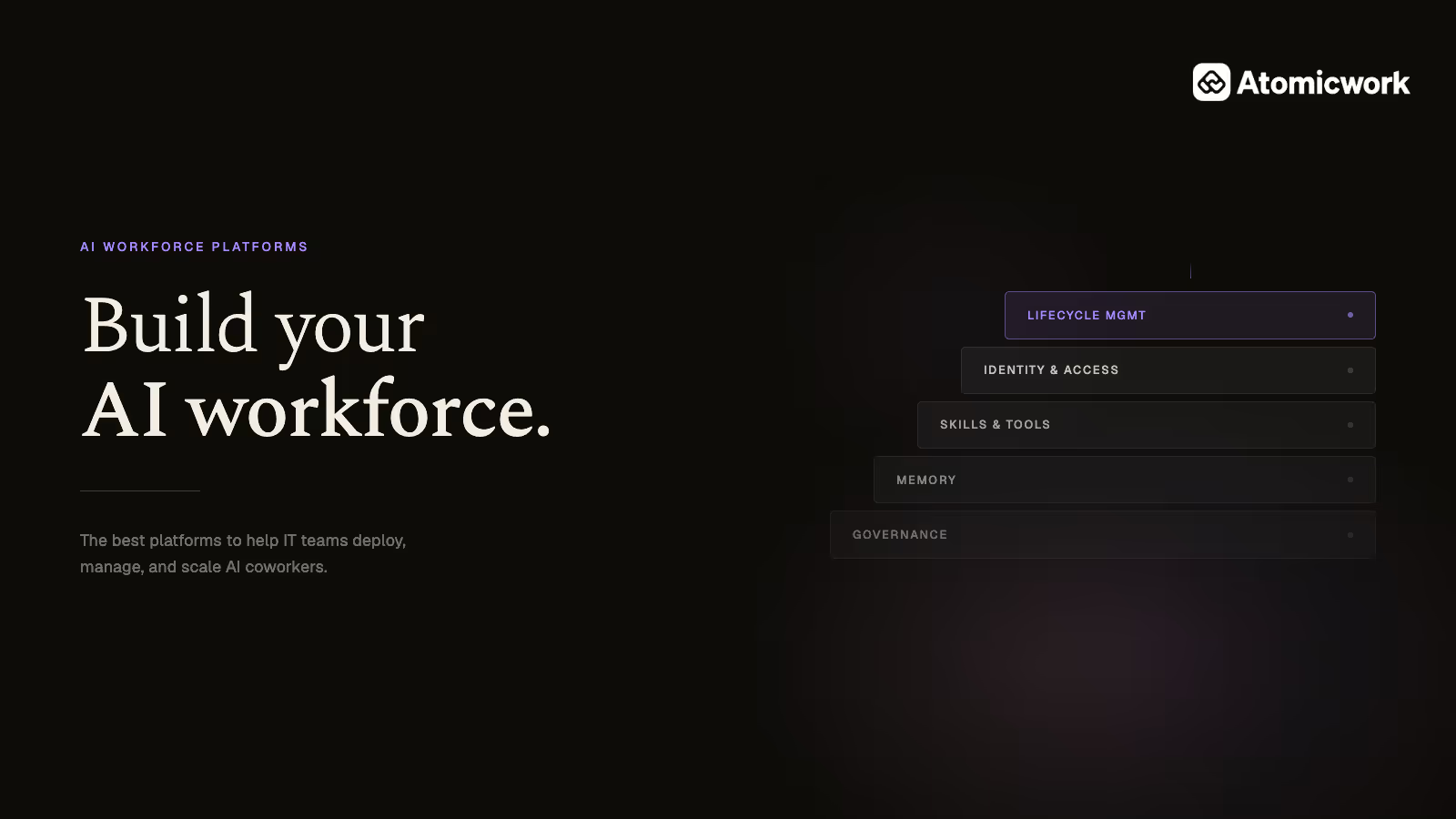
An AI workforce platform bridges this gap between executing jobs and governing agents. This guide compares 14 platforms that are actively positioning around the AI workforce concept. These tools are built to deploy, govern, and manage AI agents as members of your workforce. We evaluate each through the lens an IT Director actually cares about: What can I govern?
An AI workforce platform is an infrastructure for deploying, governing, and managing AI agents as first-class workforce members alongside humans. That means identity, access, lifecycle management, budgeting, and performance tracking are built into the platform architecture.
Here's what an AI workforce platform is not: ITSM tools with AI features, like Freshservice, Jira Service Management, or ManageEngine, have added AI for ticket deflection and routing. Useful, but agents in those systems don't have identity, lifecycle, or budget. The AI is a feature of the ticket system, not a workforce member.
RPA and workflow automation tools like UiPath or Zapier automate tasks and screen-level actions, but agents are ephemeral scripts — they run a job and disappear. HR workforce planning tools like Workday's legacy analytics, Visier, or Eightfold do predictive modeling for human teams. No AI agent deployment. Chatbot builders are single-purpose conversational interfaces without orchestration, multi-agent coordination, or workforce management.
The way to think about it: every dimension you use to manage a human employee — identity, access, budget, skills, performance, lifecycle — should apply to an AI workforce member, too. If a platform can't manage those dimensions for agents, it's a tool, not a workforce platform.
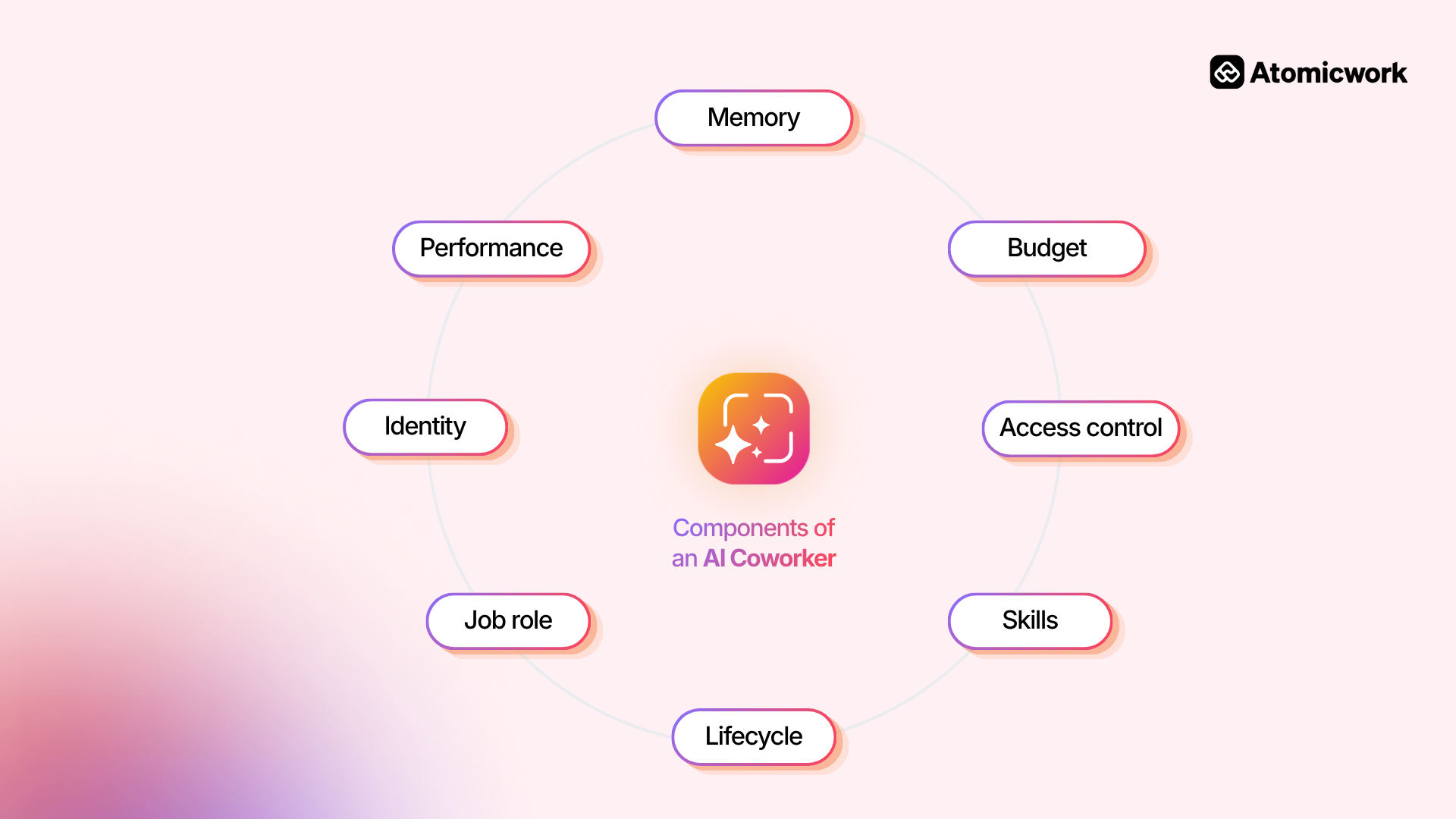
One useful distinction to keep in mind throughout this guide: an agent is task-oriented and ephemeral. It completes a job and exits. An AI coworker is a persistent workforce member with a role, skills, tools, budget, and reporting hierarchy. The platforms on this list support the latter.
Related resource: AI agents vs. AI coworkers - Key differences
Every platform below actively uses "AI workforce," "AI coworkers," "AI employees," or "agentforce" in their public positioning. Legacy ITSM tools with AI features are discussed above for context, but excluded from this comparison.
| # | PLATFORM | CATEGORY | KEY CAPABILITIES | BEST FOR |
|---|---|---|---|---|
| 1 | ServiceNow | Agentic Service Mgmt | Autonomous Workforce, AI Control Tower | Fortune 500 enterprises |
| 2 | Atomicwork | Agentic Service Mgmt | Atom AI coworkers, Know/Manage/Update, MCP | Mid-market IT (200–1,000) |
| 3 | OpenAI Frontier | AI Coworker Platform | AI coworkers with identity, memory, governance | Enterprise (limited preview) |
| 4 | Artisan | AI Employee Platform | Ava AI BDR, autonomous outreach | Sales teams |
| 5 | Salesforce Agentforce | CRM-Native Agents | Atlas Reasoning Engine, Einstein Trust Layer | Salesforce-native orgs |
| 6 | Microsoft Copilot Studio | Ecosystem Agents | Agent 365 control plane, M365 integration | Microsoft-first enterprises |
| 7 | Workday (Sana) | Enterprise AI Platform | Sana for ITSM, Illuminate agents | Large Workday enterprises |
| 8 | Dust | Multiplayer AI | Shared workspaces, memory, 100+ data sources | Knowledge-work orgs |
| 9 | Glean | Knowledge + Agents | Knowledge graph, AI search, Glean Agents | Enterprise knowledge teams |
| 10 | Relevance AI | No-Code Agent Builder | Visual builder, 2,000+ integrations | GTM & ops teams |
| 11 | Lindy | No-Code AI Employees | Plain-English agents, 5,000+ integrations | Non-technical teams |
| 12 | Gumloop | No-Code Agent Builder | Visual workflows, Gumstack security | Enterprise ops teams |
| 13 | Kore.ai | Enterprise Agent Platform | Multi-agent orchestration, CX + EX | Large enterprises |
| 14 | CrewAI | Open-Source Framework | Multi-agent, model-agnostic, dev-first | Engineering teams |
Based on the different types of platforms available, we've put them under 4 main categories:
These platforms are built as service management infrastructure for both human and AI workforces. Agents aren't add-ons here — they're first-class users of the platform.
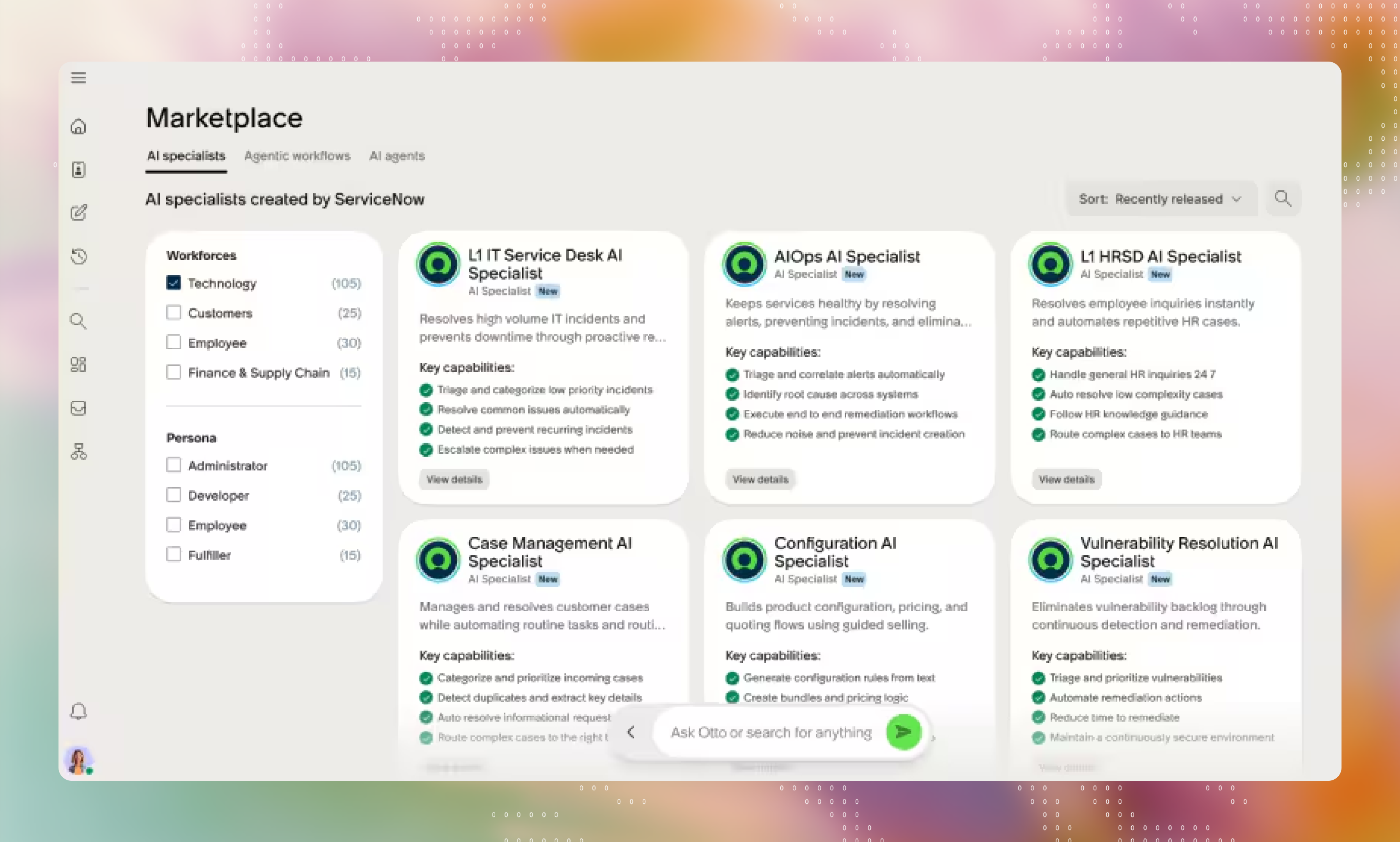
ServiceNow launched Autonomous Workforce at Knowledge 2026, deploying AI specialists for L1 service desk, CRM, HR, and security that execute work with defined scope, authority, and governance. The AI Control Tower provides agent discovery, risk scoring, and governance across ServiceNow and Microsoft environments. The $2.85 billion Moveworks acquisition adds conversational AI and enterprise search depth.
Best for: Fortune 500 enterprises already on ServiceNow. The governance is deep but walled — extending it outside the ServiceNow ecosystem takes significant effort, and cost and complexity are high.
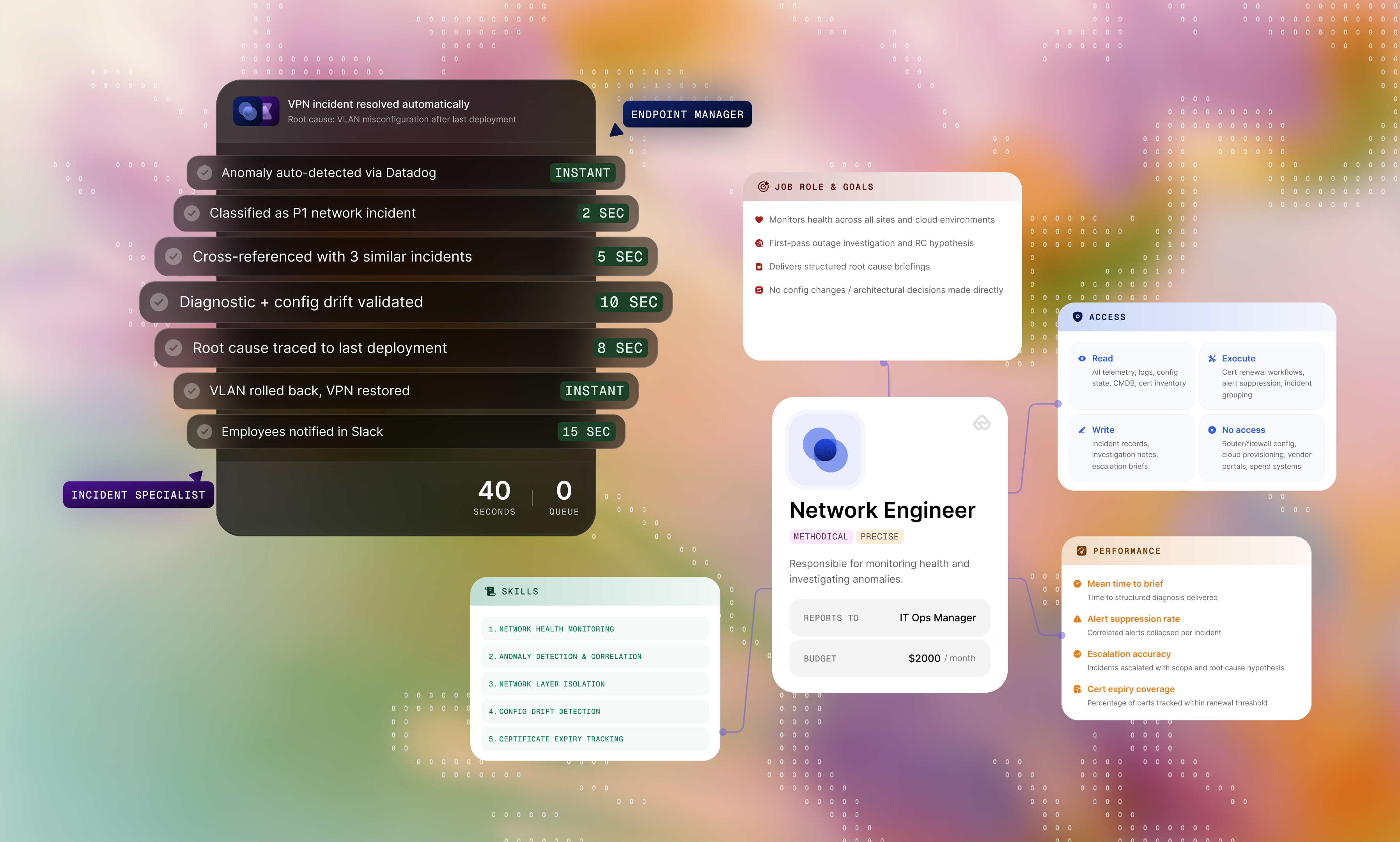
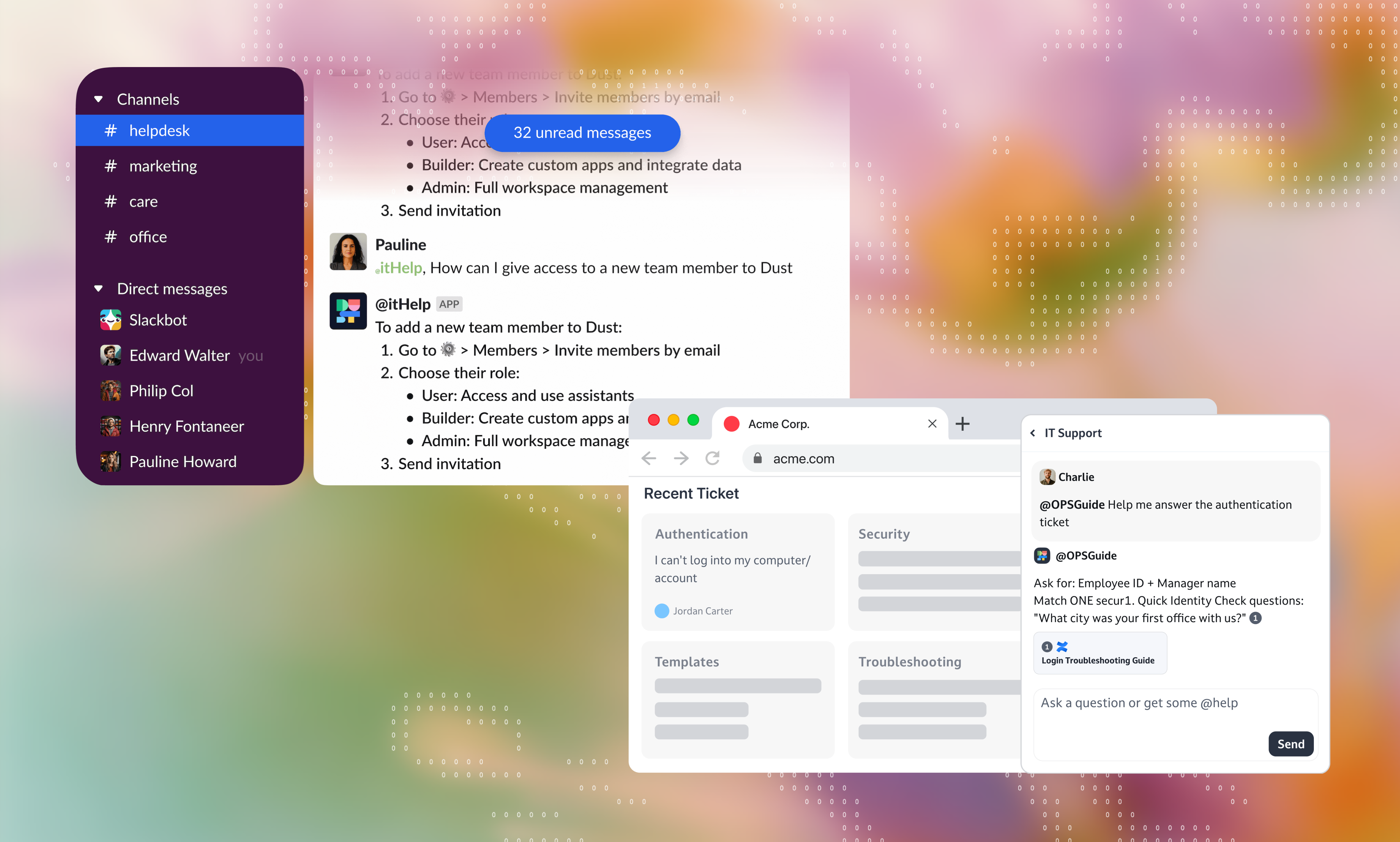
Where ServiceNow brings AI workforce to the enterprise top end, Atomicwork built an agentic service management platform for the mid-market, designed from the ground up for both human and AI workforces. The core differentiator is architectural: AI and data live in the same system, so agents can read policy, understand context, and execute without a human in the middle.
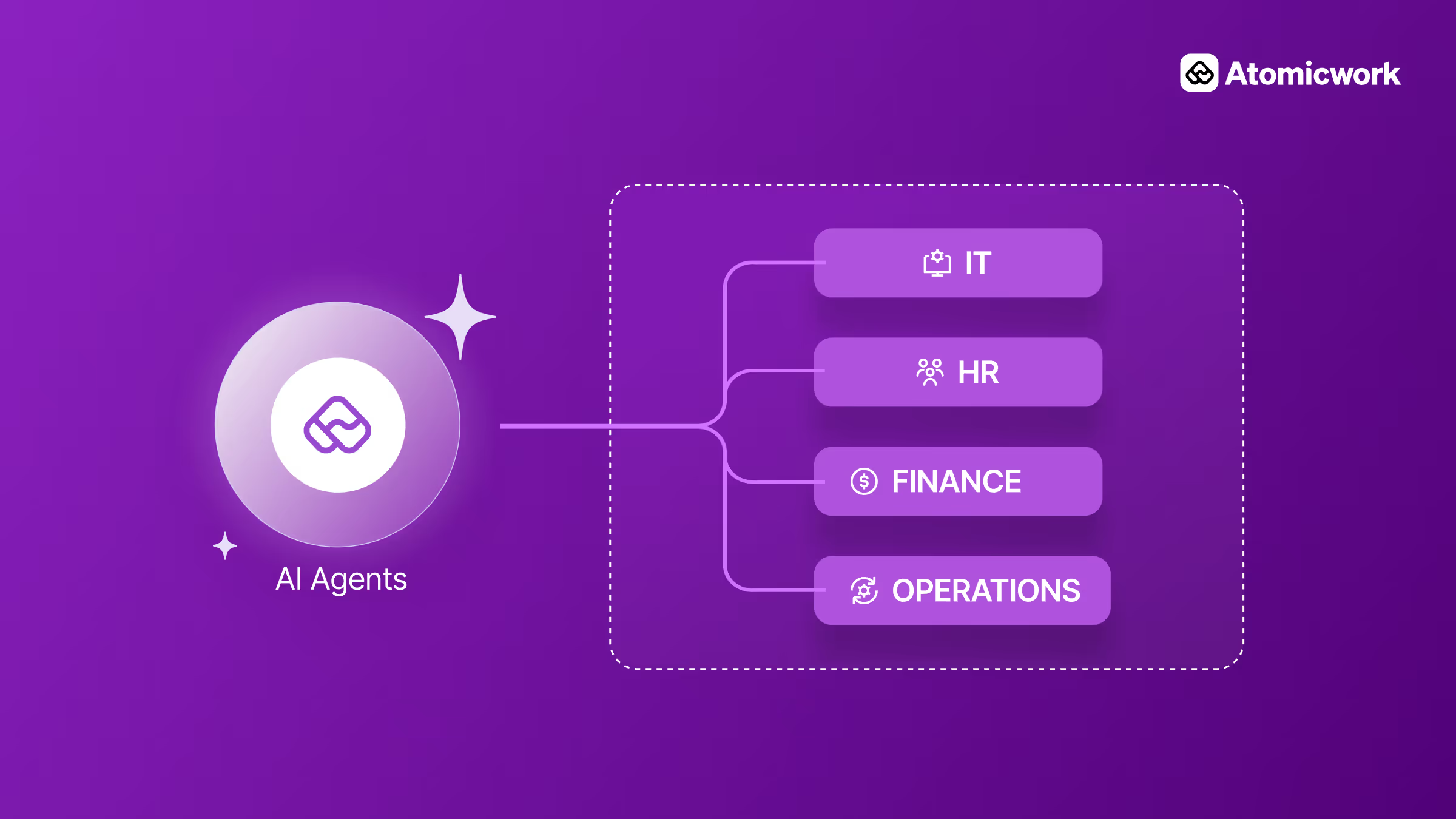
Atomicwork's Atom decomposes into specialist AI coworkers — hardware, software, security, HR ops — each governed through eight dimensions: identity, access, skills, budget, performance, lifecycle, governance, and collaboration. The platform deploys on top of existing ITSM (Atomicwork, ServiceNow, or JSM) and connects to 560+ enterprise tools via MCP.
Best for: IT teams at 200–10,000-person companies. Earlier-stage ecosystem than ServiceNow, but purpose-built for the AI workforce use case.
These platforms explicitly position AI agents as "coworkers" or "employees," with identity, memory, and managed lifecycle baked into the product.
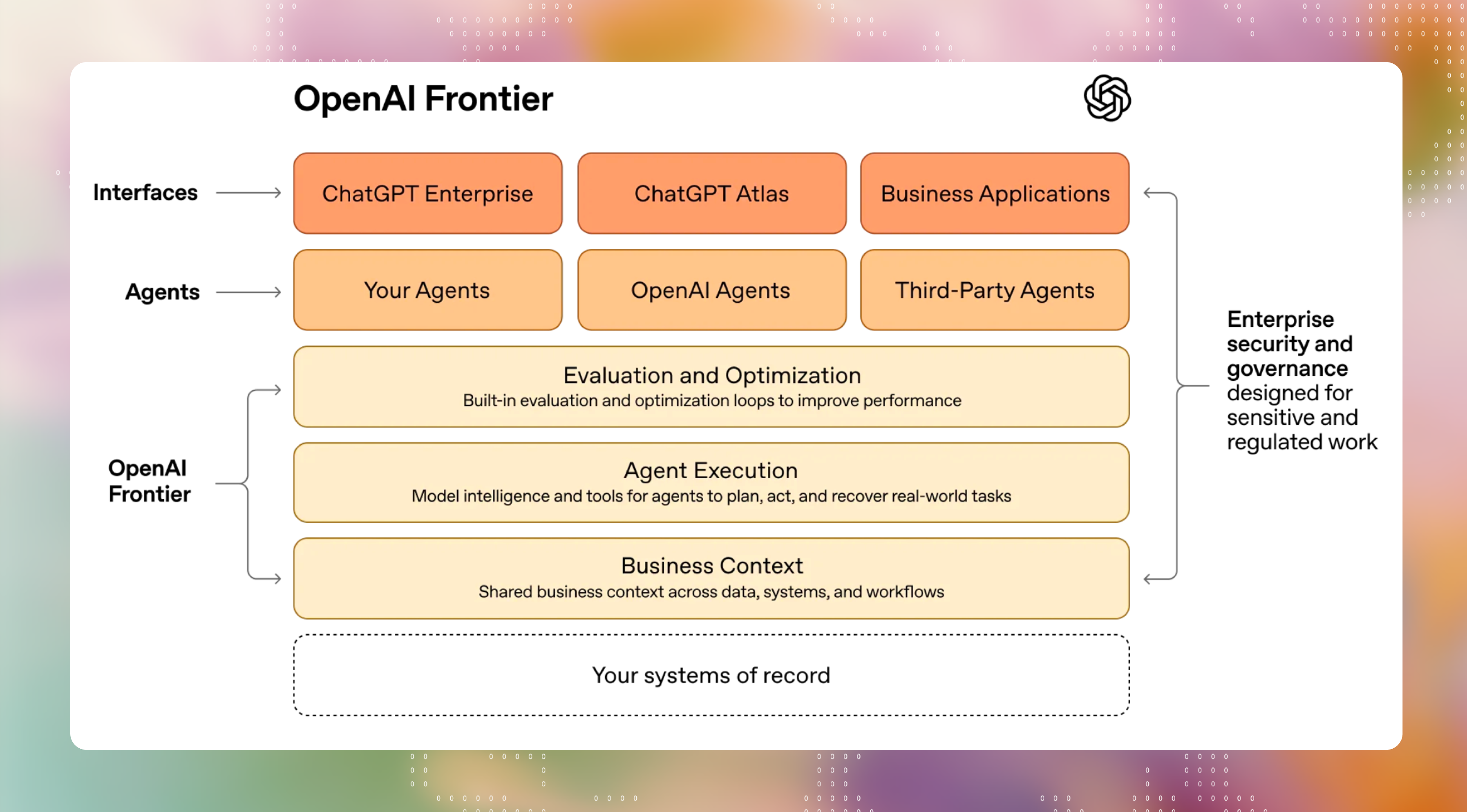
Launched in February 2026, Frontier is OpenAI's enterprise play. They explicitly call agents "AI co-workers" that you "hire," "onboard," and even give "performance reviews." Each coworker gets its own identity, customizable permissions, and memory that compounds over time. Multi-model support means you're not locked to OpenAI's own models. Early customers include Uber, Intuit, State Farm, HP, and Oracle, with Frontier Alliances (McKinsey, BCG, Accenture, Capgemini) providing deployment support.
Best for: Enterprises wanting the OpenAI ecosystem with coworker-level governance. Still in limited preview, pricing isn't public, and ecosystem lock-in is a real consideration.
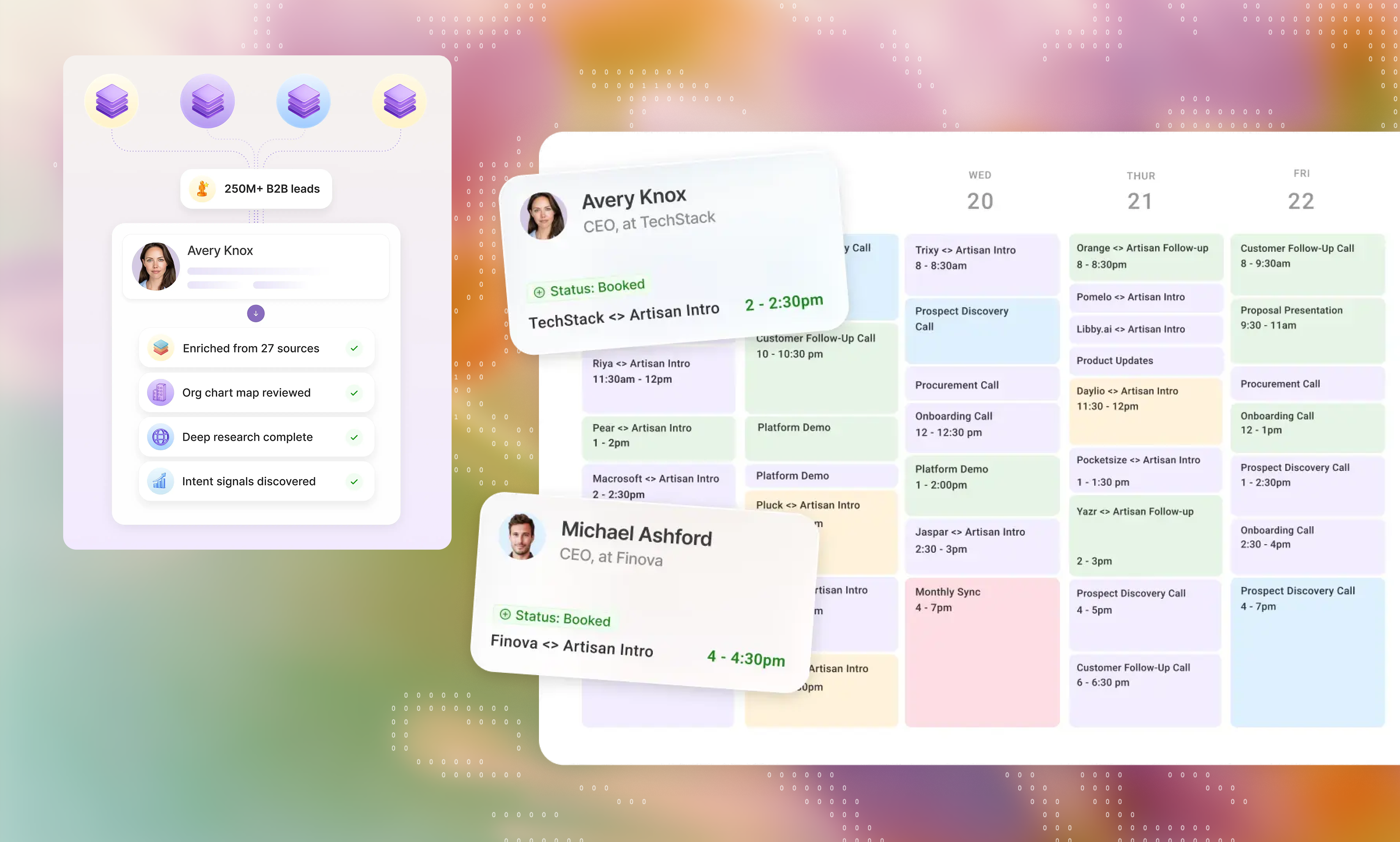
Artisan builds "AI employees" called Artisans. The flagship is Ava, an autonomous AI BDR that handles lead discovery across 300M+ B2B contacts, personalized outreach, and meeting booking. YC-backed with a $25M Series A, they're expanding beyond sales into recruiting, customer support, and operations.
Best for: Sales-led organizations wanting full SDR automation. The "stop hiring humans" positioning is deliberately provocative, and this isn't an IT governance platform — it's a vertical workforce play.
Agent platforms deeply embedded in a specific ecosystem. Strong within their walled garden; governance is scoped to that ecosystem.
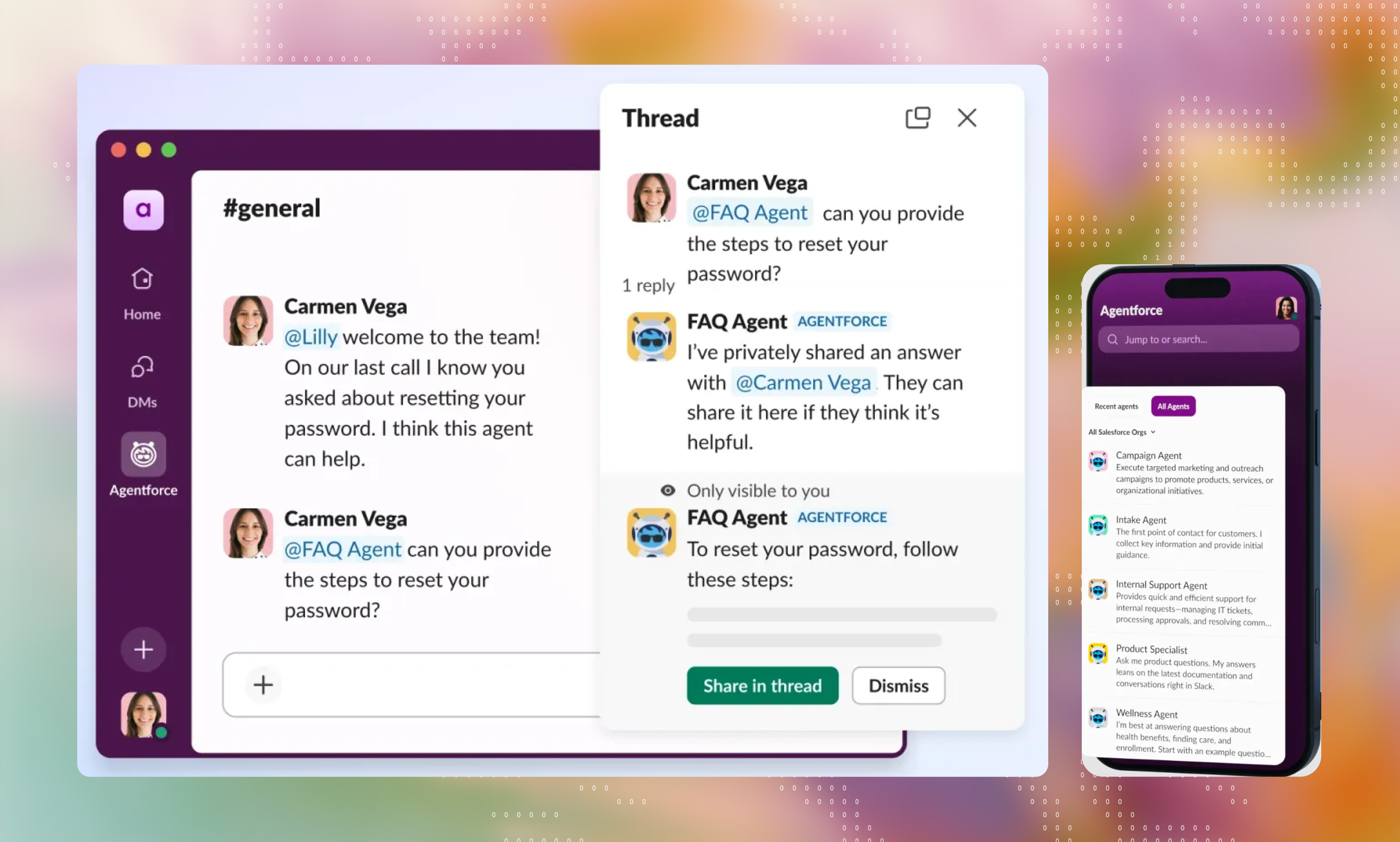
CRM-native AI agents powered by the Atlas Reasoning Engine, with the Einstein Trust Layer handling data masking and grounding. Agentforce 2.0 adds multi-agent orchestration and MuleSoft integration for cross-system action. "Agentforce" is Salesforce's explicit agent workforce brand.
Best for: Salesforce-native organizations. The limitation is scope: governance is CRM-centric, not designed for cross-functional IT workforce management.
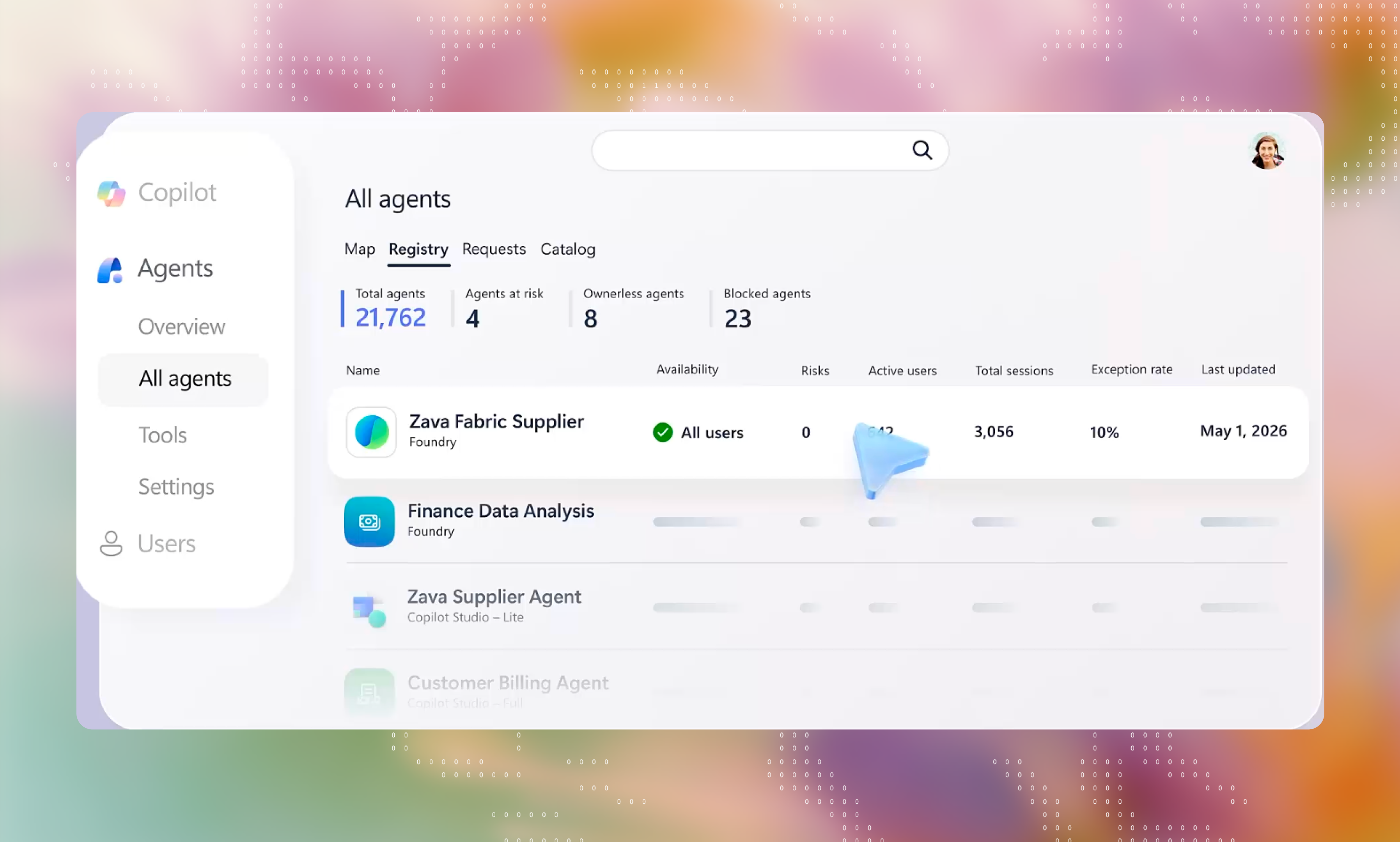
The agent builder for the M365 ecosystem. Agent 365, announced at Ignite 2025, is the control plane for managing and governing agent fleets across Microsoft's stack. GPT-5 integration is GA.
Best for: Microsoft-first enterprises. Governance is scoped to Azure and M365 — cross-platform agent management requires significant integration.
Workday acquired Sana for $1.1 billion in November 2025 and recently launched Sana for ITSM on May 21, 2026. Agents are built directly on Workday's data context (org structure, approval chains, policy rules) and follow the same governance models customers already use for hiring, payroll, and workforce management. Illuminate agents now cover HR, finance, and IT. This is Workday's first direct move into the ITSM market, competing with ServiceNow.
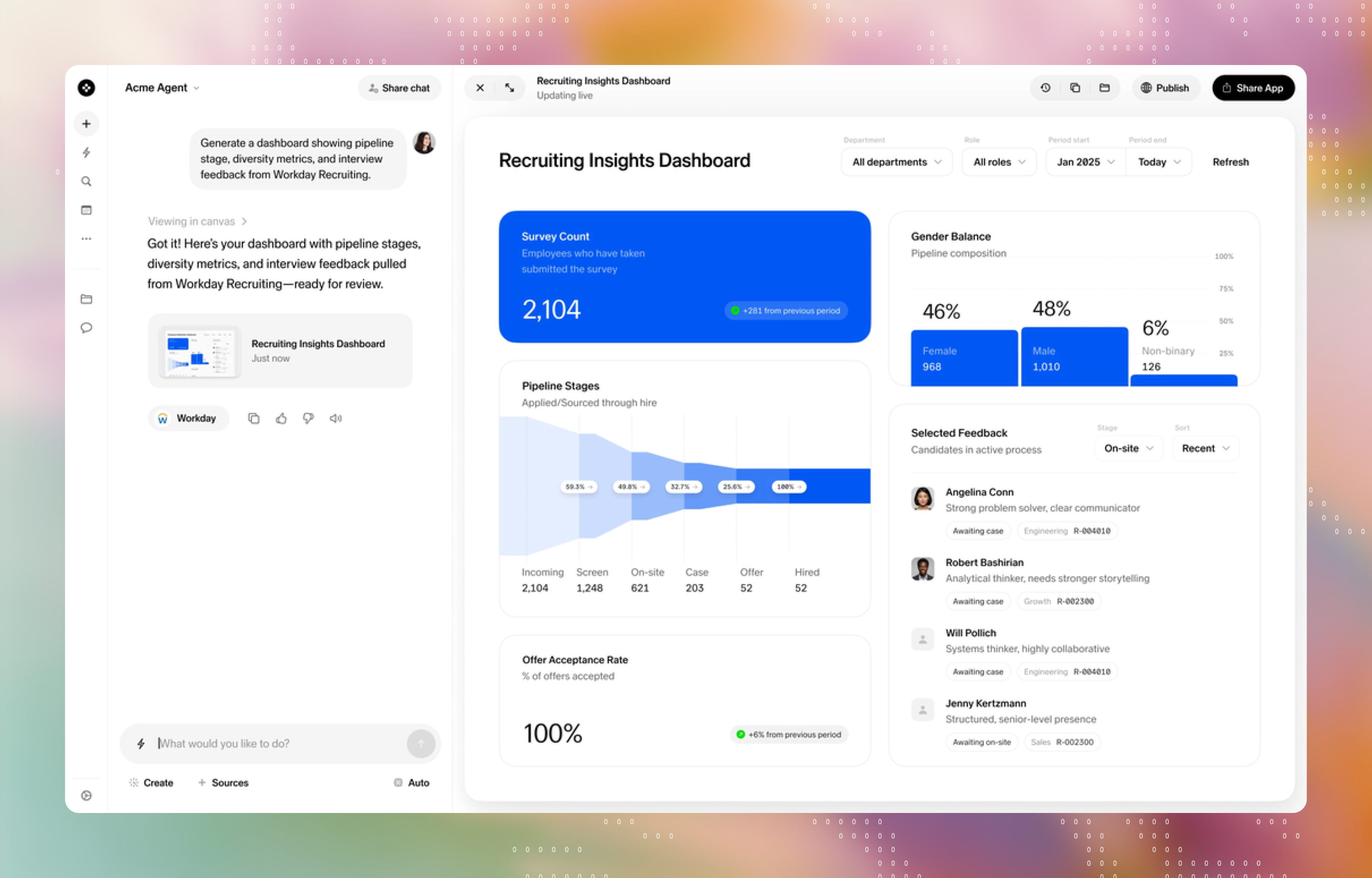
Best for: Large Workday enterprises wanting AI agents governed by the same data and policies as their human workforce. The ITSM capability is brand new — early adopter availability H2 2026, GA later this year.
A newer category. These are platforms where agents and humans share context across the organization, compounding intelligence rather than siloing it.
Dust just raised a $40M Series B (May 2026, led by Sequoia and Abstract, with Snowflake and Datadog participating). Their thesis: most enterprise AI is single-player — one person, one assistant, and context disappears into a private chat window. Dust makes AI multiplayer with shared workspaces, memory, feedback loops, and 100+ data source integrations. 3,000+ organizations, 300,000 agents deployed, 70% weekly active usage, zero churn in 2025.
Best for: Knowledge-work organizations wanting AI to compound across teams. Enterprise governance features are still maturing, but this is a newer entrant with increasing traction.
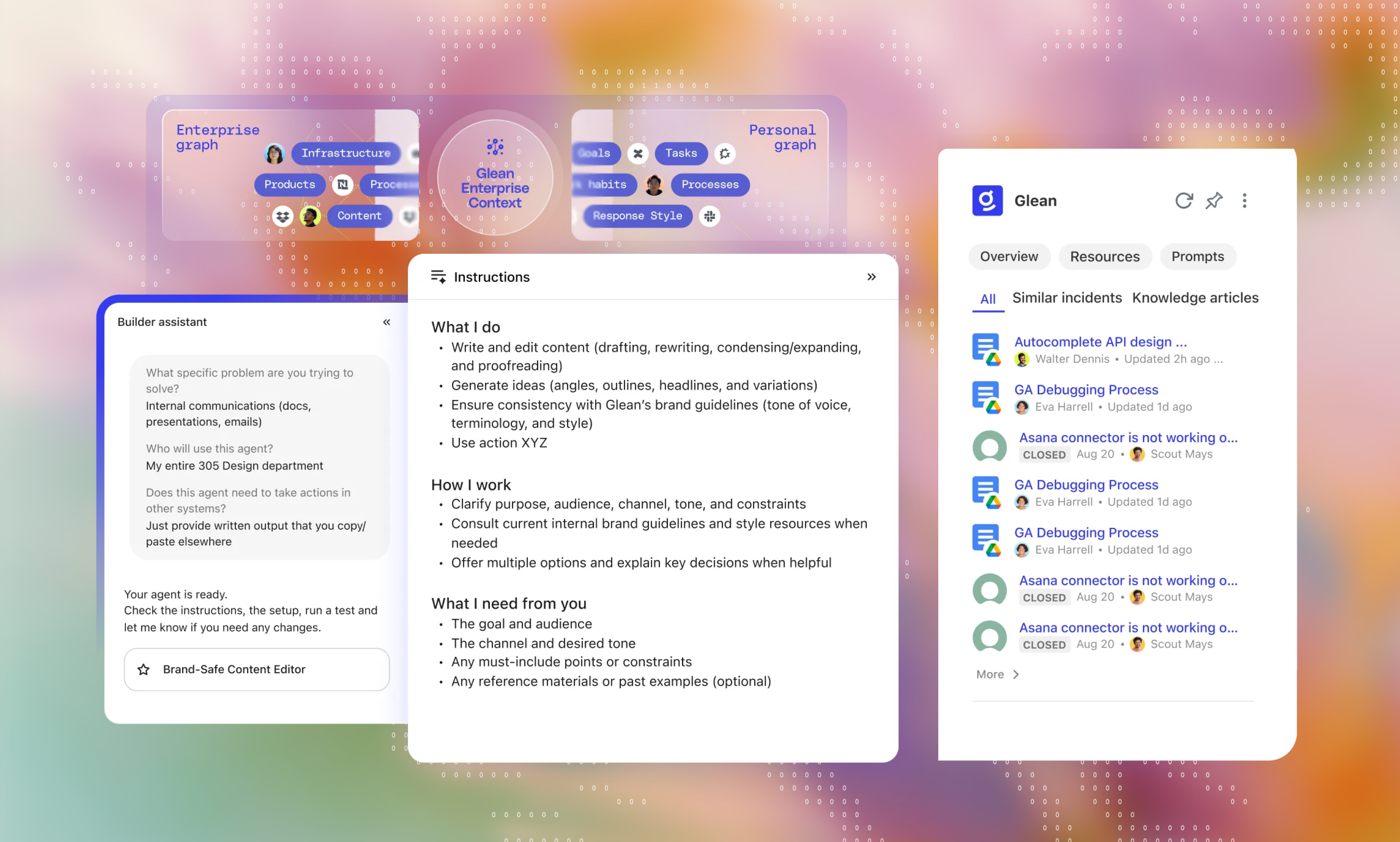
Glean is an enterprise knowledge platform valued at $7.2 billion, with emerging agent capabilities. The enterprise knowledge graph maps people, content, activity, and permissions, so Glean Agents can answer questions and trigger workflows grounded in company context. Supports LangChain and OpenAI SDK for custom agent building.
Best for: Organizations wanting AI agents built on top of company knowledge. Stronger at search and discovery than agentic workflow execution. Forrester's Cognitive Search Platforms Wave (Q4 2025) notes that the connector ecosystem is narrower than some competitors.
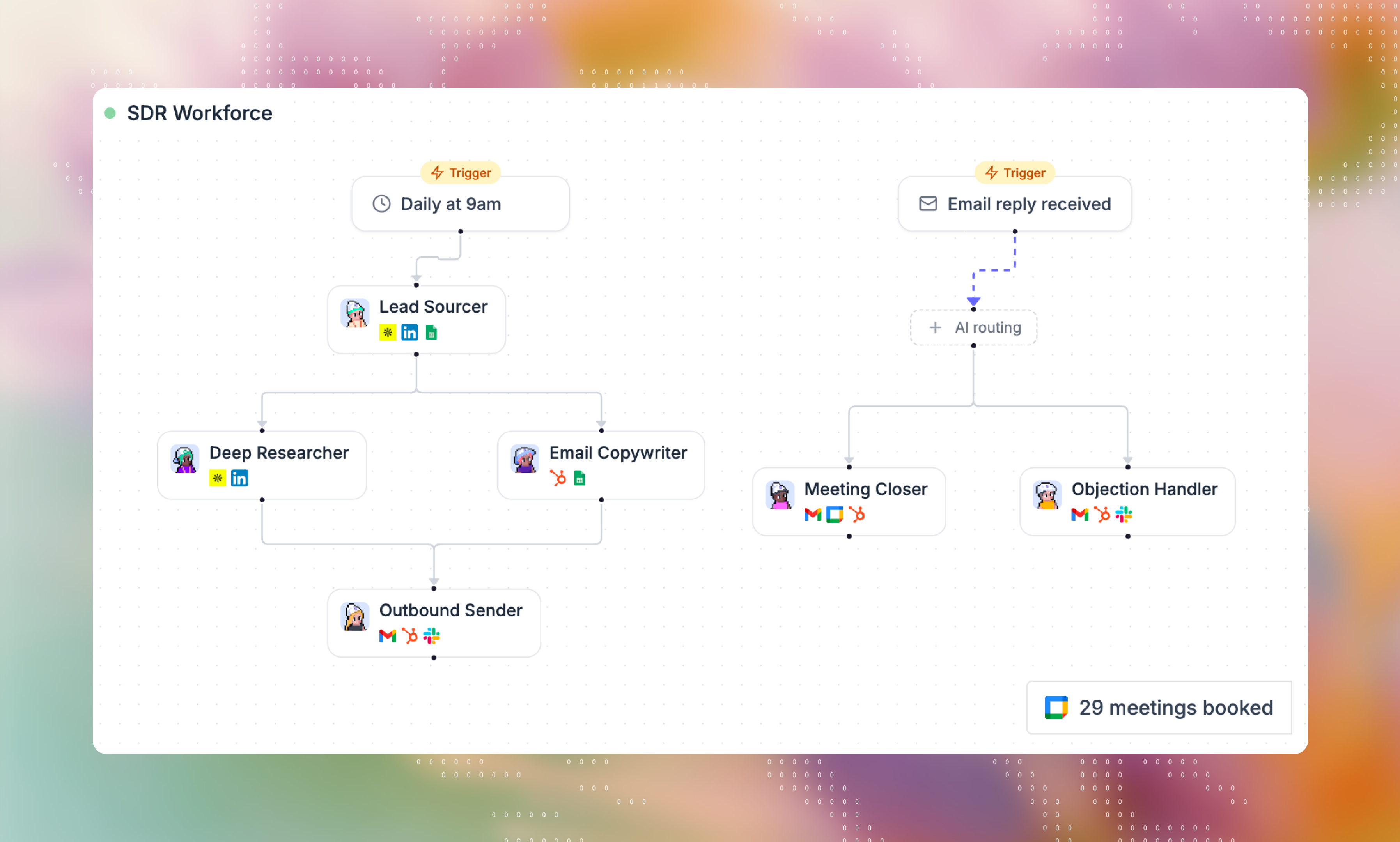
Platforms for building and orchestrating AI agents across business functions. Range from no-code visual builders to open-source frameworks.
Relevance AI is a no-code "AI workforce" builder with a visual drag-and-drop interface for creating specialist agent teams: BDR agents, research agents, and custom agents. 2,000+ app integrations and fast mid-market growth.
Best for: GTM and ops teams building agent workflows without engineering resources. Credit-based pricing can complicate budgeting, and enterprise governance features (SOC 2, advanced RBAC) are still maturing.
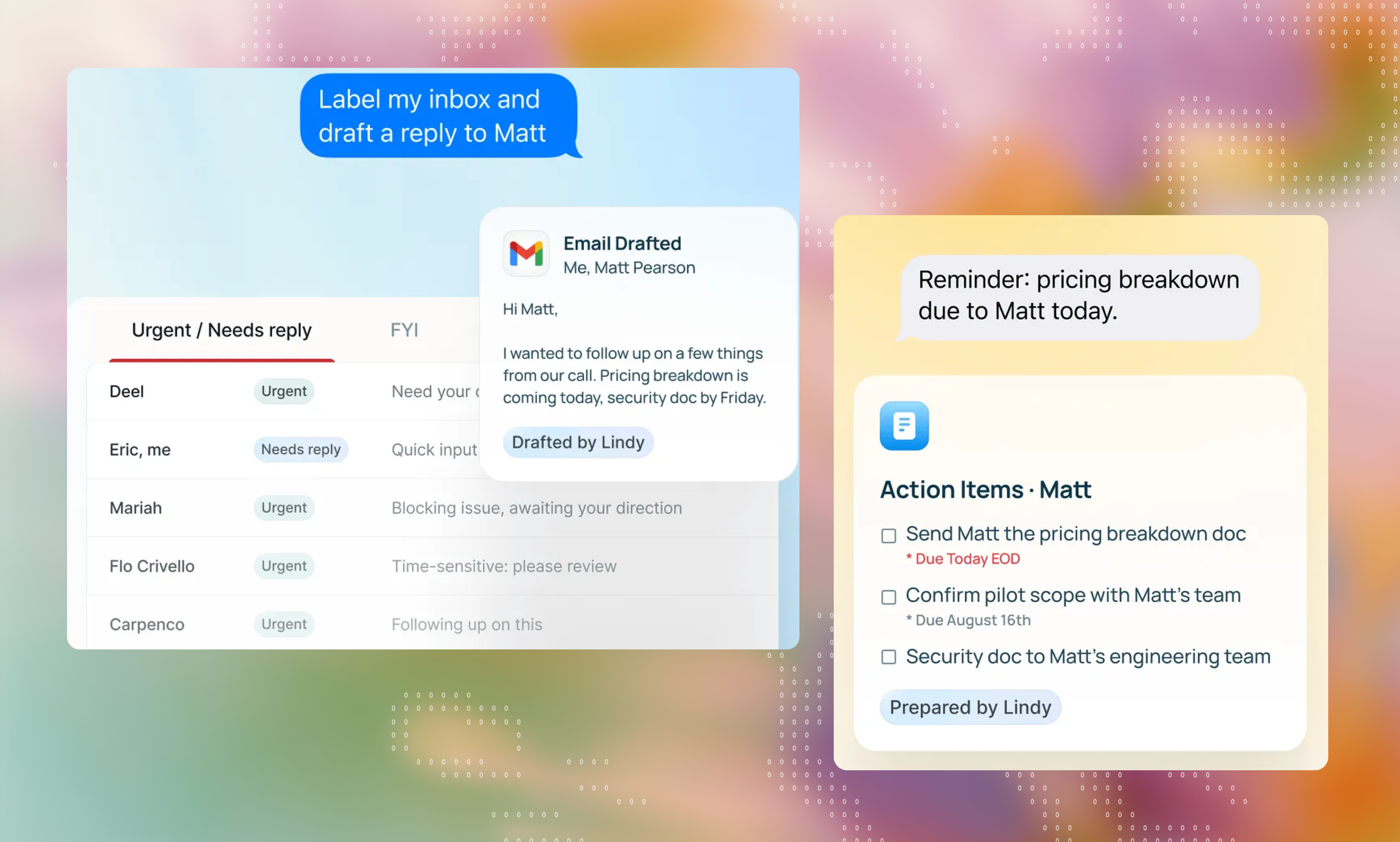
A no-code "AI employee" platform, Lindy is where you create agents by describing tasks in plain English. 5,000+ integrations, Agent Swarms for multi-agent orchestration, Gaia phone AI for voice, Computer Use for browser automation. SOC 2, HIPAA, and GDPR compliant.
Best for: Non-technical teams automating scheduling, sales outreach, and meeting notes. Credit-based pricing and a governance ceiling at enterprise scale.
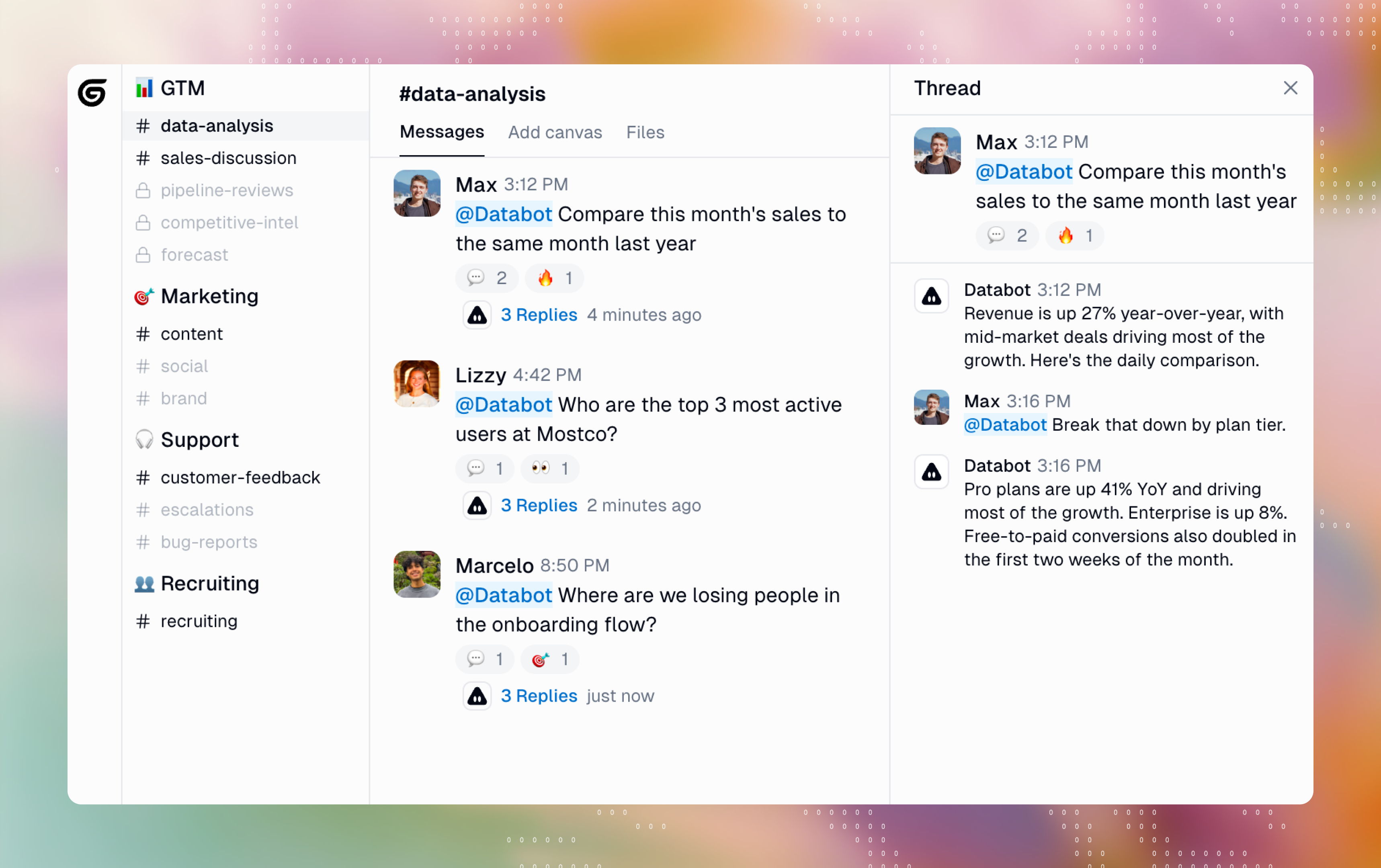
Fresh off a $50M Series B led by Benchmark (March 2026), Gumloop is a no-code agent builder already in use at Shopify, Ramp, Gusto, Samsara, Instacart, and Opendoor. Visual workflow builder with AI-native logic in every node. The differentiator is Gumstack, a security platform for monitoring and controlling data usage across all your AI agents, including third-party tools like Claude Code and ChatGPT.
Best for: Enterprise ops, support, and sales teams wanting no-code agent building with serious security infrastructure. Newer platform with less brand recognition than established players.
Kore.ai is an enterprise-grade agent platform with multi-agent orchestration, pre-built agents, and governance baked in. Spans customer experience, employee experience, and process automation. No-code and pro-code tools, cloud and model-agnostic. Recognized by both Gartner and Forrester, it uses an "enterprise-wide AI workforce" messaging.
Best for: Large enterprises wanting a horizontal platform for both customer-facing and internal agents. Heavyweight deployment that is best suited at scale.
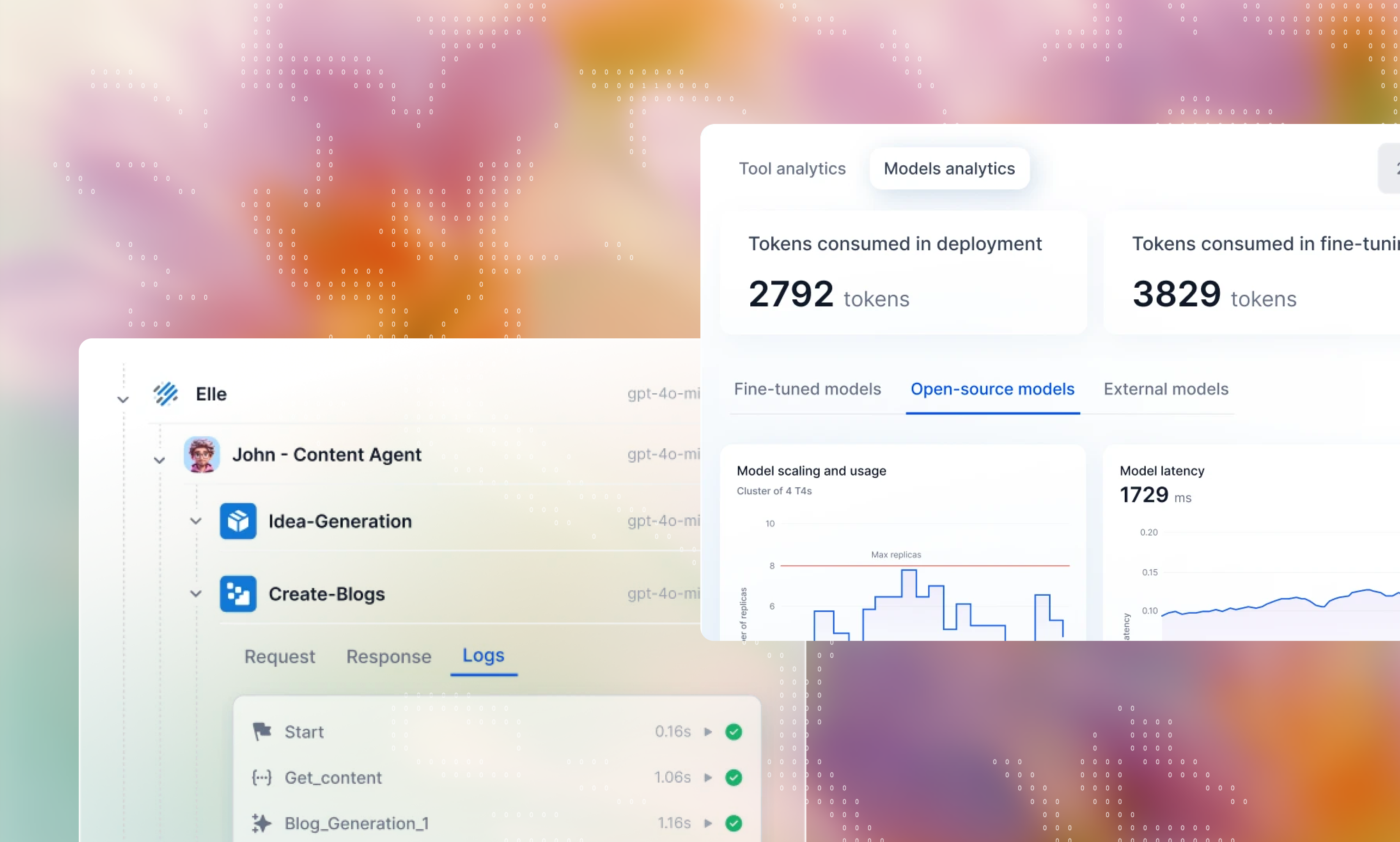
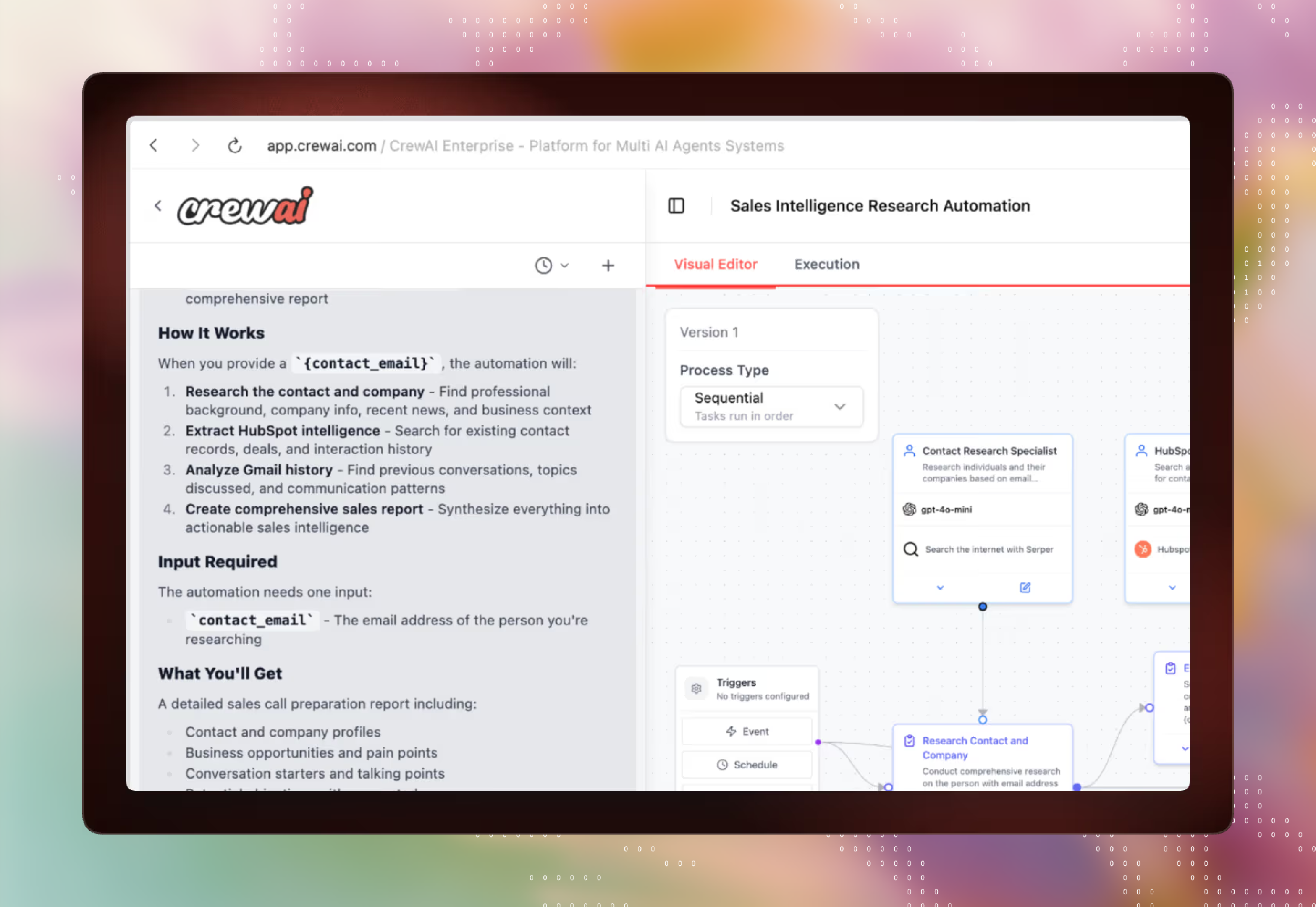
Open-source multi-agent orchestration framework popular with engineering teams, Crew AI is model-agnostic, has a flexible architecture and a strong community.
Best for: Technical teams wanting full control over agent architecture. No enterprise governance UI, no built-in compliance — requires engineering investment to productionize.
You've got the landscape, but the harder question is: which of these actually fits your organization? Here's the framework that matters for IT leaders evaluating AI workforce platforms.
Agent governance: Can you register, discover, risk-score, and audit every agent running in your environment? The difference between a centralized agent registry (like ServiceNow's AI Control Tower or Atomicwork's centralized registry) and scattered deployments across teams is the difference between infrastructure and shadow IT.
Identity and access: How are agent permissions scoped? Role-based access, least-privilege enforcement, and approval workflows matter just as much for AI agents as they do for human employees — maybe more, because agents can act faster than any human can review.
Orchestration: Single-agent task execution is table stakes. The real question is multi-agent coordination: handoff protocols, escalation rules, human-in-the-loop controls. Can your agents collaborate without creating a coordination mess?
Lifecycle management: Onboarding, versioning, and decommissioning. Is the agent a persistent workforce member you can manage over time, or an ephemeral script that someone spun up in a random afternoon experiment?
Budget and cost attribution: Can you track compute cost per agent, per team, against value delivered? Treating AI agents like headcount — with real cost attribution, spend limits, and ROI tracking — beats treating them like another SaaS line item.
Integration architecture: MCP support, API depth, and the ability to bring external agents under governance. Can agents connect to your existing tools without building custom integrations for each one?
Platform independence: This one got more important in 2025. Moveworks was acquired by ServiceNow for $2.85 billion. Aisera was acquired by Automation Anywhere. Independent options are consolidating fast. Can you switch models, clouds, or ITSM backends without rebuilding everything? Vendor portability isn't theoretical anymore.
The AI workforce platform category is forming faster than most IT leaders expected. The 17% deployment stat from Gartner will look quaint in 18 months as the wave is coming regardless. What separates the organizations that scale successfully from the ones that end up with agent sprawl is a simple question: Did you start with the governance infrastructure, or did you bolt it on later?
The platforms that win this category will be the ones that treat agents as workforce members — with identity, lifecycle, budget, and performance tracking — and not just as task runners. Given the acquisition wave of 2025, platform independence matters more than it did a year ago. Before picking a vendor, ask whether you can switch models, clouds, or ITSM backends without rebuilding.
Start with the governance question, not the agent question. The platform you can't govern is the one that fails at enterprise scale.
Atomicwork's AI workforce platform gives IT teams the infrastructure to deploy, manage, and scale AI coworkers alongside their human workforce. See how it works.