Q1'26 product updates: Nova release

Every enterprise AI software promises fast, accurate answers and most deliver on turn one. The real test is turn two.
When a user asks Atom "I can't access Salesforce", and Atom resolves it, and if the same user follows up with "what about Zoom?" - it tells you everything about how good the AI actually is. Does it start from scratch, re-run the same lookups, and make the user wait again? Or does it remember?
What we shipped
The Nova release is a significant upgrade to Atomicwork's AI engine (one could almost say that it almost feels like it’s a brand new experience), eight changes to improve how Atom, the Universal AI Agent, reasons, responds, and handles the edge cases that used to break flow. Our goal, as always, is to provide the kind of conversational, agentic experiences employees experience in their everyday lives through other agents like Claude or ChatGPT.
IT, HR and other service teams of all shapes and sizes use Atom to deflect level 1 employee requests and automate level 2 requests in the flow of work through Slack, Teams, email, browser or portal via chat, voice and vision. These changes impact how employees get help in the flow of work for their IT and HR queries including access provisioning, software troubleshooting and more.
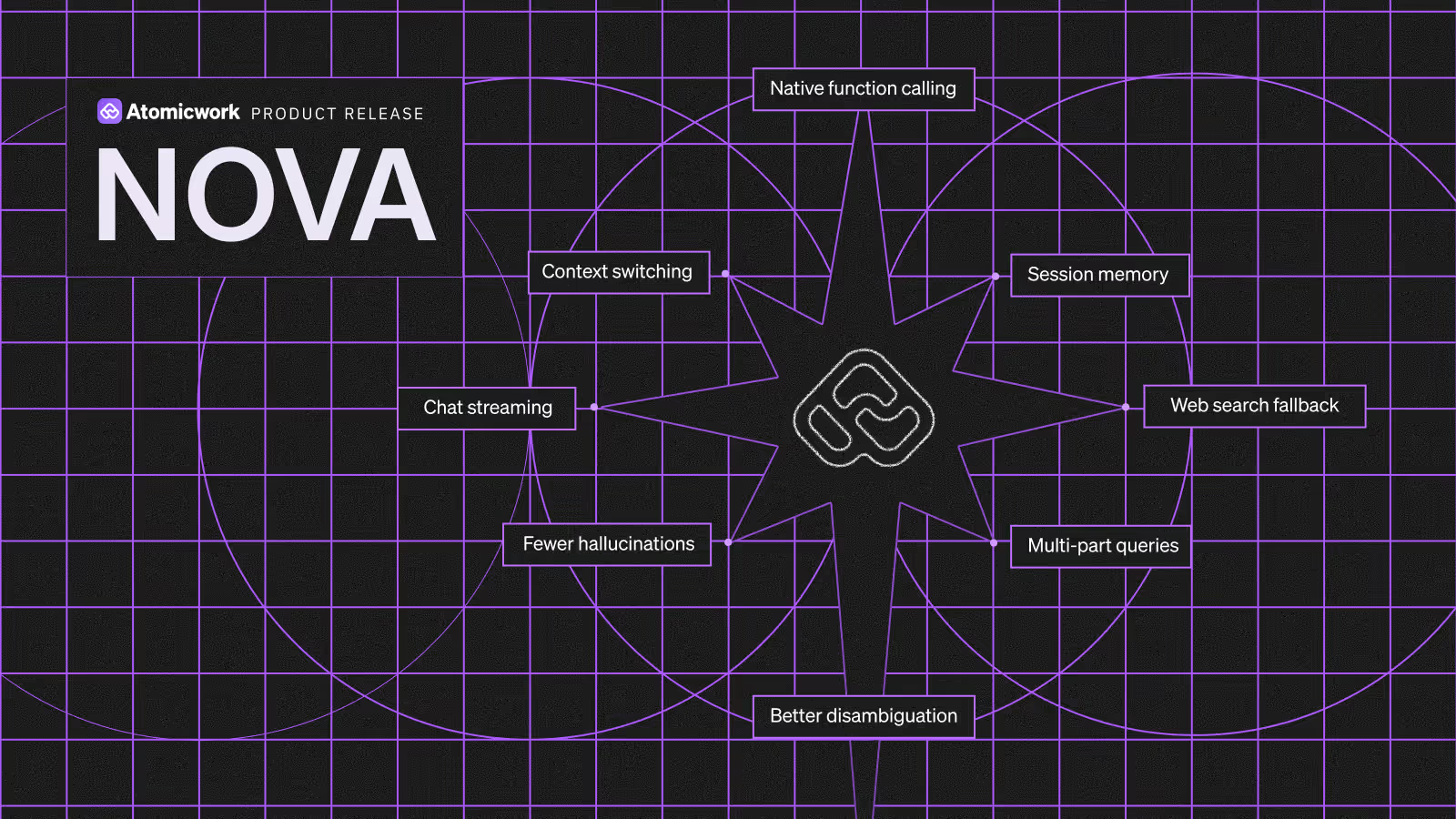
- Native function calling: Atom now decides which tools to use on its own. Previously, tool selection was handled through prompting, which meant inconsistencies, especially in complex or multi-step requests. With native function calling, the model makes those decisions at the architecture level. Actions execute more consistently, with fewer failures.
- Session memory: Atom retains context across an entire conversation. Follow-up queries reuse what's already been established without re-fetching the same information, no losing track of who the user is or what was already resolved. In practice: a user asks about a Salesforce access issue, Atom resolves it, and then asks "what about Zoom?". Atom already knows the user, their access profile, and the context. The second turn is as sharp as the first, and materially faster.
- Better disambiguation: When a request is ambiguous, Atom now asks the right clarifying question instead of guessing or giving a generic response. "I'm locked out" used to get a generic follow-up. Now it gets: "Are you locked out of the physical office, or a specific app?" That's the difference between an AI that understands IT context and one that's just pattern-matching on keywords.
- Multi-intent queries: Ask two things in one message, get both answered - separately and completely. Atom now correctly identifies that a single message contains multiple distinct requests and handles each one. No more getting half an answer because the second question was folded into the first.
- Web search fallback: When Atom can't find an answer in the internal knowledge base, it can now search the web — scoped to admin-enabled categories only — and tells the user it's doing so. No silent gaps. Users know when Atom is working from internal knowledge versus external sources.
- Fewer hallucinations: When Atom doesn't know something, it says so. The Nova release also brings approximately 50% fewer hallucinations compared to the previous version. The improvement is structural with better grounding, better calibration on confidence, and cleaner handling of the edge cases that used to produce confident wrong answers.
Chat streaming: Answers that arrive, not just appear
We've rebuilt the response delivery architecture so Atom's answers stream to the user in real time, rather than arriving all at once after a processing delay.
While it might sound like a cosmetic upgrade, it's not. The time between "I sent the message" and "I'm reading an answer" is where users form their opinion of an AI Agent. A response that begins arriving immediately — even if the full answer takes the same total time — dramatically changes the perceived quality of the interaction. It's the difference between feeling like you're talking to an assistant and feeling like you're waiting on a loading screen.
For IT teams dealing with high ticket volumes, that perception matters. End users who trust AI come back to it. End users who don't, route around it.
Control: Customers can author and govern more of the platform
a. Admin Assist
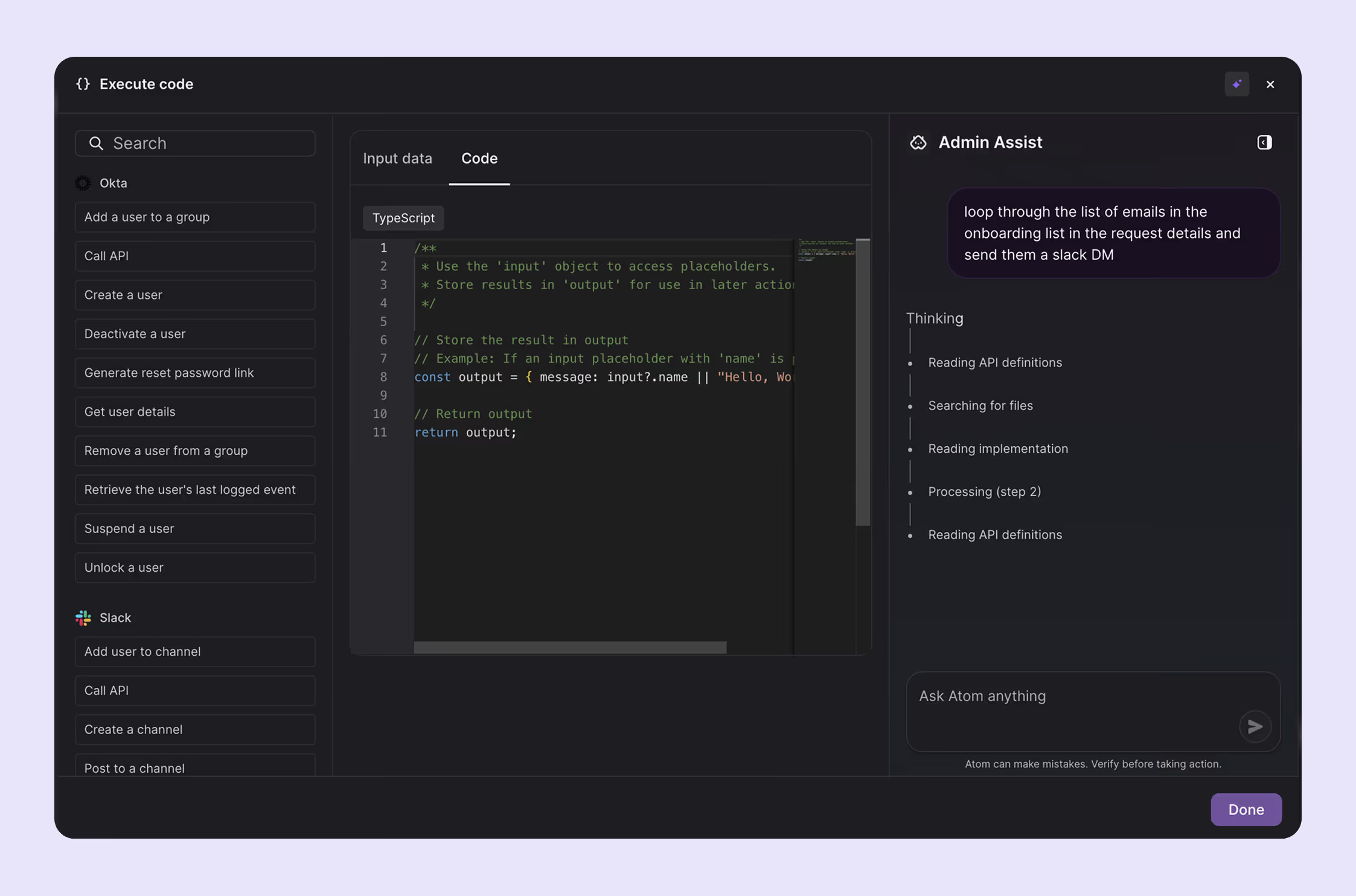
Admins can now build workflows by describing the automation steps in natural language.
Instead of navigating a workflow builder, an admin describes what they need: "When a new employee joins, provision access to Okta, Slack, and Jira, and send them a welcome message." Atom turns that into a working workflow.
b. Sandbox
Full sandbox-to-production change management is now available.
Admins stage configuration changes, workflows, and integrations in a Sandbox tenant, validate them, and promote to Production through a controlled path. Nothing reaches production until it's been reviewed.
This is the governance layer enterprise IT teams have been asking for and what procurement teams look for before signing. IT leaders who've been hesitant to make significant changes in production now have a structured path: test, validate, ship, and roll back cleanly if needed.
c. Drive higher deflection rates
Atomicwork continuously analyzes your account conversations and surfaces specific areas where AI deflection is low and suggests what to do about it. We added support for two types: Add (no article exists for a topic generating volume so we draft one from how those requests were actually resolved) and Edit (an article exists but isn’t landing. We show what’s off and suggest changes). Every recommendation cites source conversations so you can review before publishing.
d. Just-in-time access & continuous identity governance
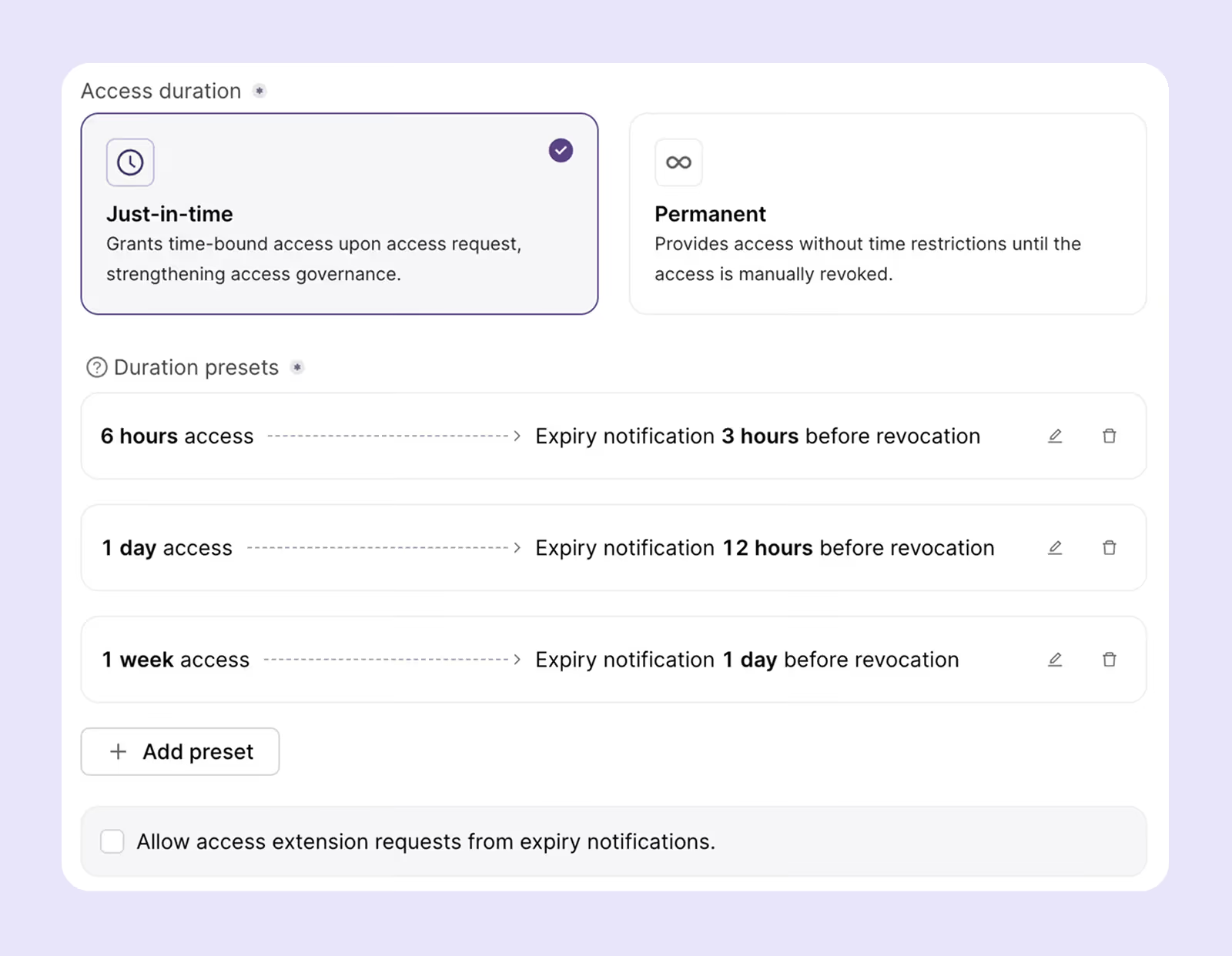
Atomicwork now supports time-bound access management with automatic expiry. End-users get reminders before expiry and can request access extensions with full context. Admins get a centralized Grants view with instant revoke, and an integrated audit trail for approvals, extensions, and revocations. This is live today if you’re on Agentic IGA and a good time to try it if you’re not.
e. Custom domain support
Personalize your Atomicwork portal URL as it.yourcompany.com instead of yourcompany.atomicwork.com. This capability allows you to leverage your brand and makes the experience feel personal.
Platform
a. Smarter approval handling
Reminders for approvers sitting on pending requests, and when a ticket is resolved, closed, or cancelled, any open approvals are auto-cancelled and approvers notified.
b. Call API in code actions
When built-in actions aren’t enough, make direct API calls to any connected integration like Okta, Azure AD, Google Workspace, PagerDuty, Datadog, and more from inside the workflow builder. Auth runs through your existing connectors, so no extra setup.
c. New integrations
Eight new connectors were added this month: JumpCloud, DocuSign, Rippling, Workday, ADP Enhanced Time, Google Maps, Cloudflare, and Outlook Calendar.
d. Agent signatures
Every human agent in your service team can set up a unique signature with rich text, links, and images. Once configured, it auto-populates every time an agent opens the reply editor and can still be edited per reply.
Experience: The surface customers look at every day
a. UX and navigation upgrade
New navigation for end users and agents with expanded settings for admins and a cleaner hierarchy with less friction between configuration areas.
This is the first in an ongoing set of investments in the surface layer. Adoption is directly tied to experience. End users who find the tool intuitive use it more. Agents who can navigate settings quickly ship faster. We'll keep investing here.
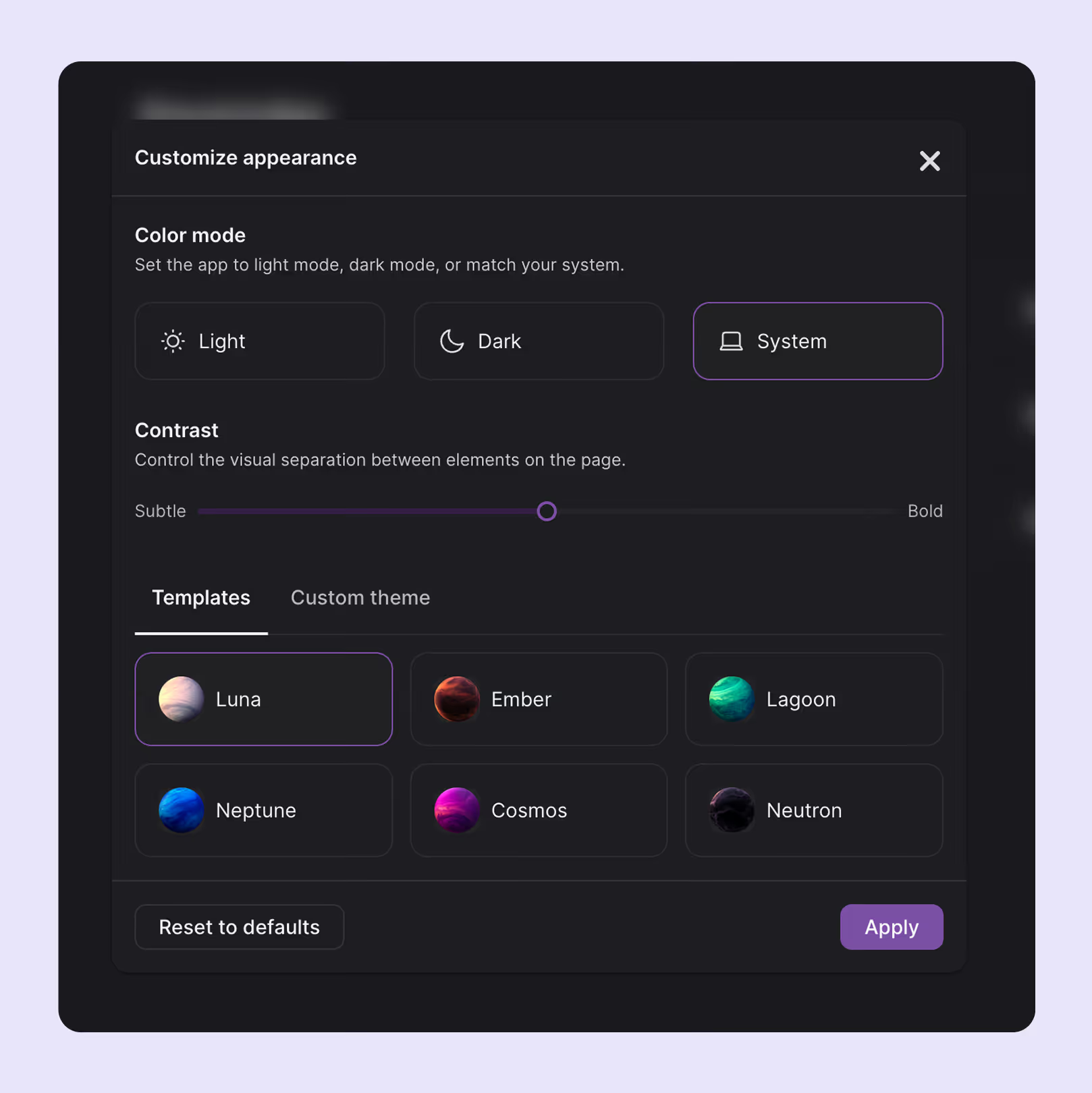
b. Theming
End users, agents, and admins can now personalise Atomicwork — colors and themes on top of light or dark mode.
People spend significant time in the tools they use for work. A surface that can be made to feel like yours lowers the ambient friction of using it every day.
Why this Nova release matters
This is a deliberate shift in where control sits:
- Admins author more with Admin Assist
- Admins govern change management themselves using our Sandbox
- Atom responds faster, holds context, and says so when it doesn't know with our upgraded AI Engine and streaming experience
- The surface bends to the user with cleaner UX and theming
Every item moves Atomicwork closer to a platform customers run, not just use.
And this release is the foundation for what's next. The session memory, streaming, and infrastructure updates we shipped this release is what makes it possible for us to keep moving towards the dream of end-to-end autonomous IT run by Atomicwork so that the IT team can focus on higher-value projects.
Every organization will run two workforces - human and AI. IT governs both. We're building the platform for that.
Not a customer yet? Book a demo to see the full Nova release in action.