starts in
04
days
04
hrs
04
min
Your new workforce won't be all human. Join the

conference to learn how to manage it.
request invite

IT change management is no longer about workflows, forms, and approval chains. In 2026, it’s about executing change in the flow of work where context, speed, and risk signals matter more than ticket states. This shift marks the rise of agentic service management, where work agents evaluate risk, take action, and involve humans only when needed. As per Market Research Future analysis, the change management software industry is projected to grow from 3.018 USD Billion in 2025 to 7.474 USD Billion by 2035.
This guide looks at the change management tools modern IT teams evaluate in 2026, comparing traditional workflow-driven platforms with newer, agentic approaches that prioritize context, speed, and operational risk over ticket volume.
In 2026, IT change management software not just manages change records, it is a system that executes, evaluates, and governs change in real time using context-aware intelligence. Instead of routing every change through static workflows and approvals, modern platforms:
Human oversight remains, but intervention is reserved for high-risk or high-impact changes, not routine execution.
An IT change management platform helps organizations systematically manage changes to their IT systems with workflows, approval processes, and impact assessments, so changes—whether they involve software updates or infrastructure modifications—are made in a structured and controlled manner. For IT teams, using a change management software translates to:
This evolution reflects a broader shift: from managing change as a process to executing change as an intelligent operation.
Here’s a look at 17 of the best change management tools that meet the needs of modern IT teams in 2026.
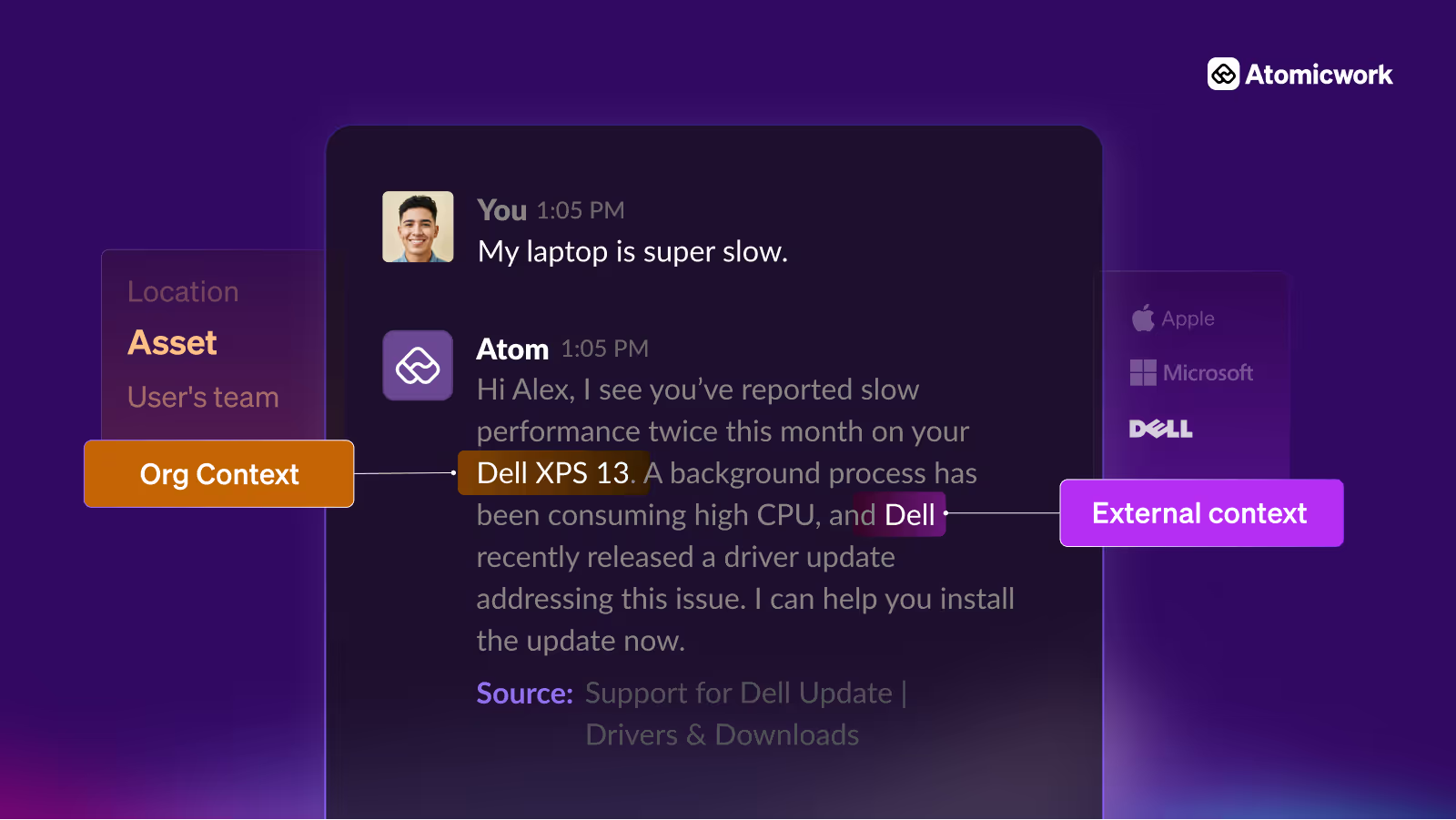
Atomicwork is an agentic service management platform built to execute IT change in the flow of work, not just to route approvals through workflows. Instead of treating every change as a ticketed process, Atomicwork uses AI coworkers to evaluate context, assess risk in real time, and take action, automating low-risk changes while escalating complex decisions to humans with full visibility.
Key features:

Trusted by global names like Ammex Corp and Catalyst Education, it’s built to save costs and improve how your team handles IT change management.
It is every organization's dream of having a centralized, intelligent, and effective service management platform that can be applied universally across all business functions. Atomicwork, through Atom, achieves not only that but also introduces state-of-the-art AI technology that will revolutionize how organizations work and search for information. - Syachfri Tjhia, Head of IT, Catalyst Education
Autotask PSA by Datto is the cloud-based change management platform you need for maximum profitability. It offers real-time metrics that let you monitor everything from customer-side changes to internal operations and resource management.
Key features:

A flexible change management platform, BMC Helix comes with a customizable change management framework for teams to tailor their IT processes for specific use cases like software deployment, network configuration, and security updates.
Key features:

Serviceaide ChangeGear is a smart, cloud-native IT change management platform that’s designed to grow with your business and deliver modern, efficient service experiences. For a change, it is also certified by 12 ITIL processes.
Key features:

Freshservice by Freshworks is a unified cloud-based ITSM platform with change incident management capabilities and role-based access control.
Key features:

InvGate, chosen by names like PwC and Collins Aerospace, delivers a highly customizable no-code change management platform. With features like an AI-driven virtual agent and a robust service desk, it's known for ease of adoption and data-driven change visualization.
Key features:

With a structured workflow for change requests, Issuetrak enables users to assess risks and manage changes for more than 470 IT teams so they can run disruption-free. Its focus on efficiency and automation makes it a popular choice for organizations seeking to reduce the time and cost associated with change management.
Key features:

Jira Service Management is an agile-oriented ITSM platform that supports DevOps teams in managing changes. Its tight integration with Jira makes it a favorite for software-driven environments.
Key features:

ManageEngine by ServiceDesk is a robust, ITIL-ready help desk software used by 100,000 organizations globally, and is known for its ease of setup and full integration, requiring minimal customization to get up and running.
Key features:

Micro Focus by Opentext is a no-code change management platform that connects all disparate data sources. It gives you a complete 360-degree view of your IT systems, making it easier to manage everything in one place.
Key features:

ServiceNow is an enterprise-level ITSM platform designed for large organizations with complex IT environments. One of the standout features is how it helps cut down on alert fatigue—it only sends you notifications when you're the direct approver, so you won't get bogged down by unnecessary alerts.
Key features:

SolarWinds Service Desk is a lightweight, user-friendly change management platform suitable for SMBs. It balances simplicity and functionality and comes with hassle-free scheduling for your change windows and blackout times.
Key features:

SysAid is a full-service ITSM platform built to automate IT change management and comes with in-app guidance, and deep knowledge integrations, and a centralized compliance tracker.
Key features:

Last year, TeamDynamix snagged an 'Honorable Mention' in the Gartner® Magic Quadrant™ for ITSM, speaking to the platform’s change management capabilities. With its intuitive interface and integration with other TeamDynamix products, it’s no wonder so many organizations are turning to it for a complete ITSM solution.
Key features:

TOPdesk is a workplace change management solution designed to help leaders easily manage organizational change. It’s built for leaders who want to streamline organizational change, cut costs, and get a clearer picture of employee feedback—all within a single, easy-to-use platform.
Key features:

HaloITSM is a fast-growing, mid-market ITSM platform with a modern interface and workflow-centric change management. It’s often adopted by teams replacing legacy service desks that want faster setup without enterprise complexity.
Key features
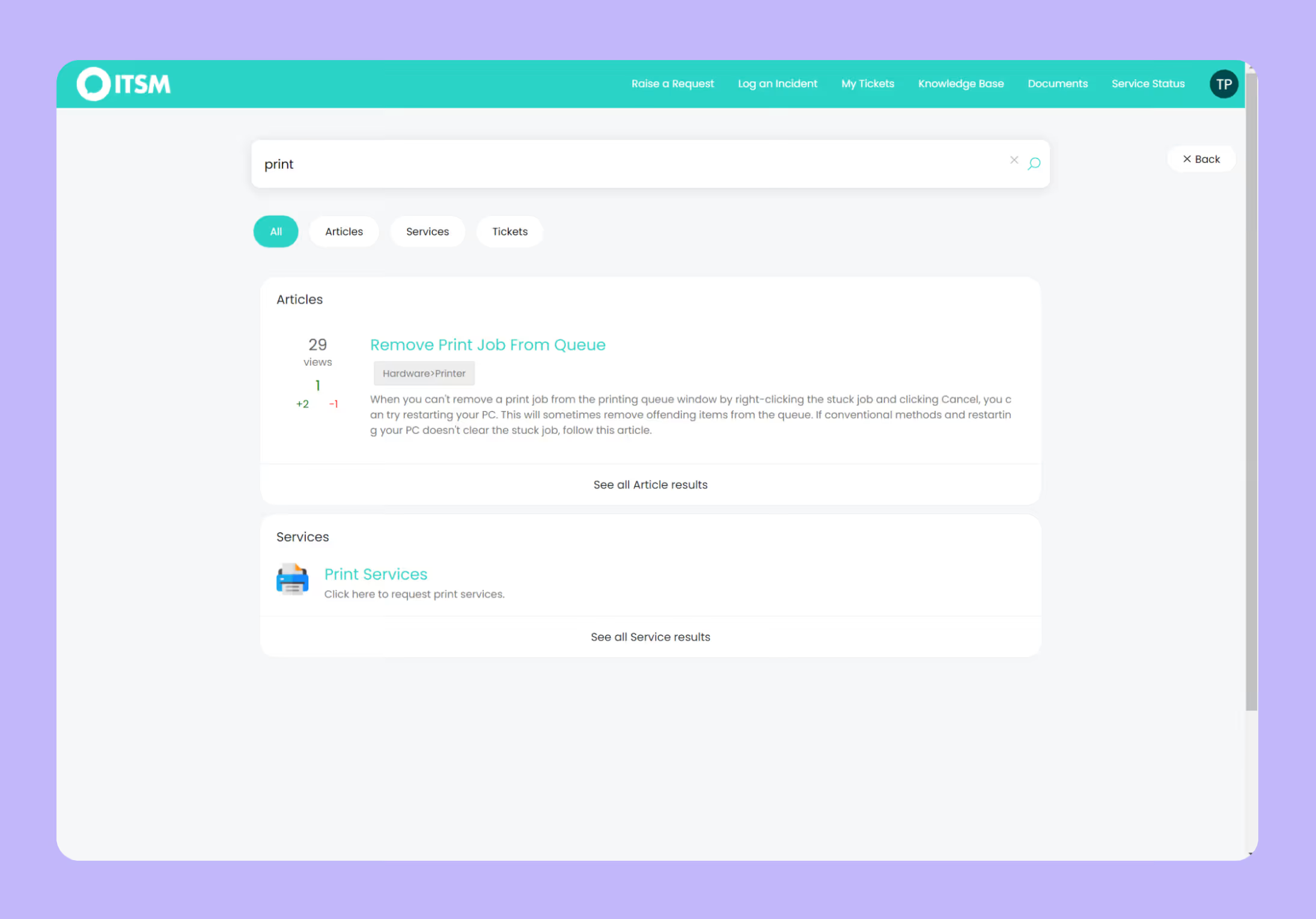
Ivanti Neurons extends traditional change management with strong automation and telemetry-driven insights, particularly across endpoint and infrastructure operations.
Key features
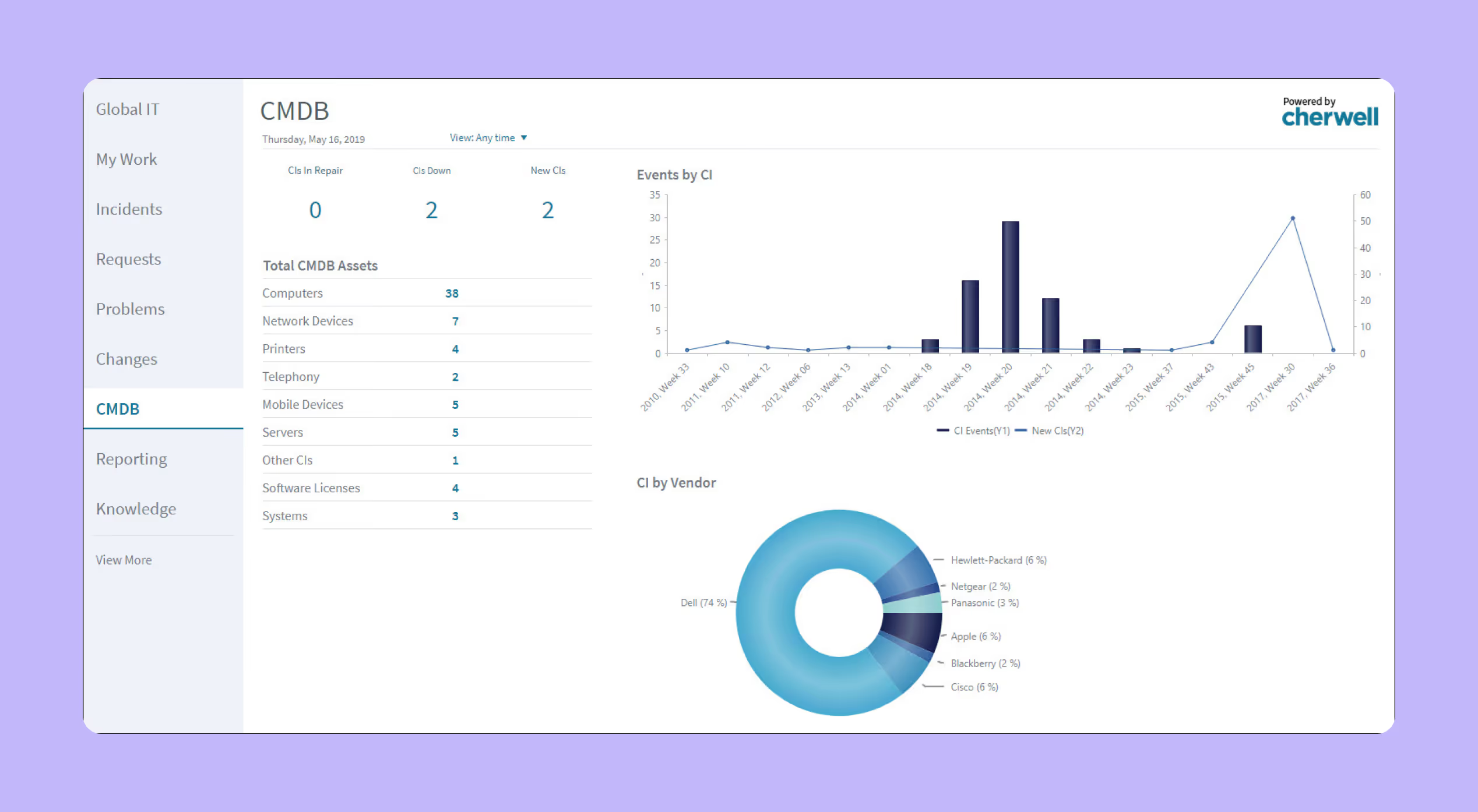
Choosing the right IT change management tool isn’t a one-size-fits-all process since each organization has its own ITSM needs and preferences. That said, there are some key factors to keep in mind:
Your IT environment likely involves multiple tools across different teams—DevOps, cloud management, CI/CD pipelines, security, and monitoring systems. The right change management tool should fit in —not disrupt—your existing IT workflows. But let’s say the integrations aren’t up to par. In that case, you’ll want to consider how much time it’ll take to train your team and whether you’ll need to build custom APIs. Will it be a simple plug-and-play solution that you can set up yourself within a few hours, or will it still require a programmer for deployment? If the effort outweighs the benefits, it might be time to keep looking for a better fit.
One of the biggest concerns with changes in IT environments is unintended consequences. Your tool should help you foresee the ripple effects of changes across your infrastructure, applications, and services. Think about it: if you're planning a change to your database in a large global organization, the last thing you want is to accidentally disrupt other connected systems. This is where the right change management tool will help you visualize how your proposed changes will impact everything from your CRM to your customer-facing applications. By getting this insight, you can avoid outages and performance issues that often come from well-meaning changes.
Look for change management tools that are ready for the AI workforce for not just the approval process but also risk assessments, change deployments, and rollbacks. In large enterprises, where hundreds of changes might be happening every month, Atomicwork’s AI coworkers can evaluate the risk of proposed changes based on pre-defined parameters, and fast-track low-risk changes while flagging high-risk ones for further review. The end goal should be to create speedy change lifecycle that work for you, not the other way around.
Being audit-ready at all times is a non-negotiable for most enterprises. You need a tool that captures and stores all change-related information, providing detailed, time-stamped audit trails. This way, when auditors come calling, you have everything—from change requests to approvals—documented in one place.
Choosing a change management tool isn’t a decision you should hurry. Look for an all-in-one ITSM platform that has built-in features for change, asset, incident, and problem management. You’ll want something that automatically approves change requests, provides AI-driven change reports, schedules migrations for off-peak hours, and even addresses post-migration issues—all while keeping notes for future projects. This one-stop shop is like having a toolbox where every tool fits just right, enabling IT management and improved team productivity. Try Atomicwork today to watch your change success rate soar!